
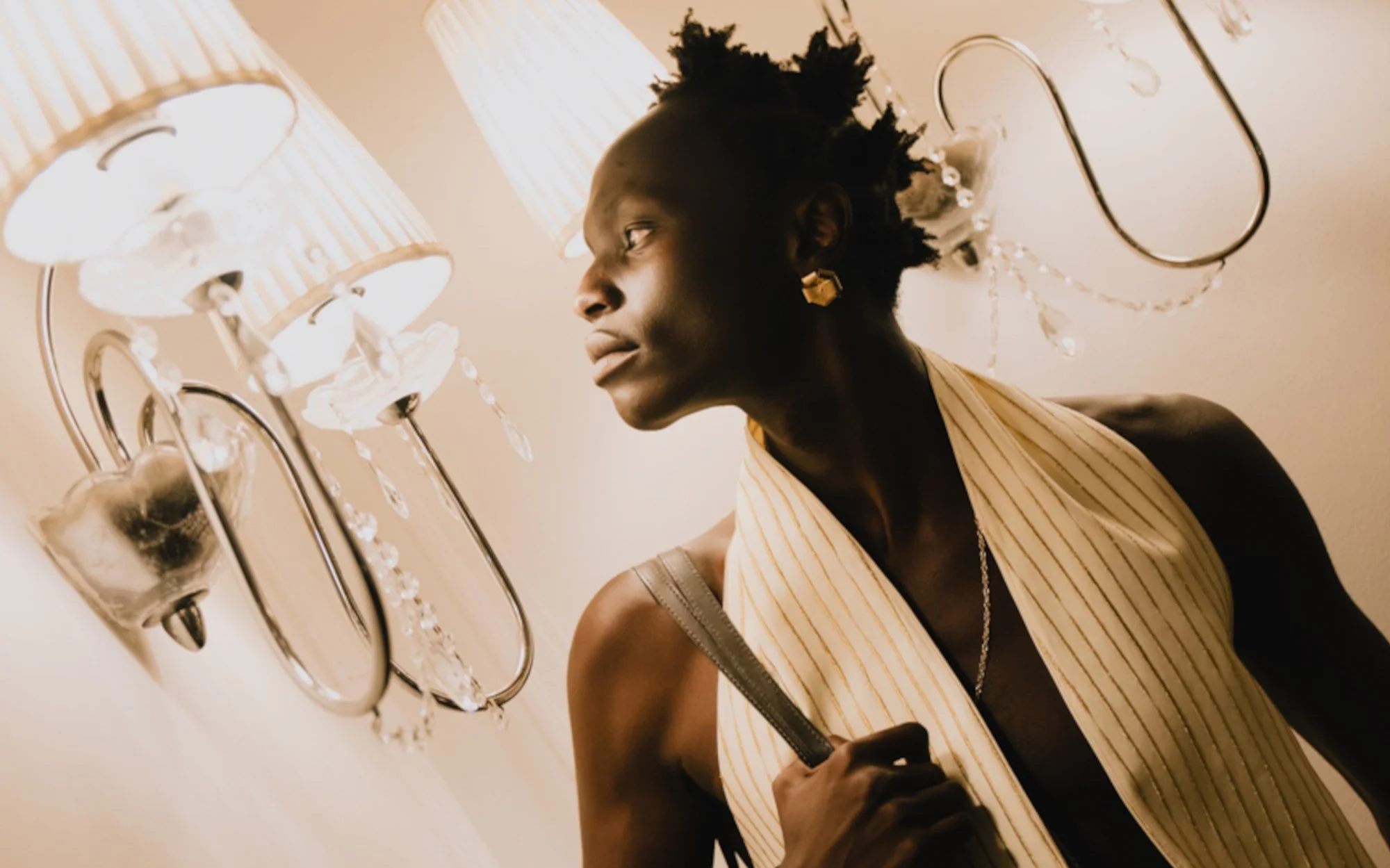
Cape Town’s slow fashion event is budding with love, freedom and memory
It is said that rose plants have an average lifespan of five years. Their rubescent petals bloom, season after season, until their last – unless cultivated with creative care and a biophilic sensibility. Such unmistakable flair is evident at Cape Town’s Mount Nelson, a Belmond Hotel, as it hosts the fifth annual edition of Confections x Collections (CxC) this November. Curated by Twyg magazine, CxC 2026 has this year brought together four of Africa’s most inventive fashion designers – from Cape Town and Johannesburg to Nairobi and Harare – for three days of salon-style showcases that transform this landmark, with its mirthful marshmallow-pink exterior, palm tree-flanked driveway and verdant gardens, into an ever-budding haven of creative excellence.
With its onus on intimate, slow fashion presentations, CxC champions cultural heritage and artistic expression above the usual pizzazz of fashion weeks. We are gathered here for a thoughtful appreciation of style with substance. Signature treats and tipples, crafted in dialogue with the designers’ work and the 2026 theme, A Wonderland in Bloom, elevate each afternoon tea gathering as we’re invited to experience not only the garments but also the creative minds and meticulous processes behind them.
“It’s getting ready for the world or for the version you want the world to see"
Jamie Kimani
Chapter I
Coming into view on the hotel’s emerald lawns is Sevaria’s ‘Afro Ceremonial’ collection. Inspired by the ritual of getting ready, Jamie Kimani’s presentation draws on childhood memories of accompanying the women in his family to the hair salon. The Kenyan designer explores this form of beauty adornment as self-expression and transformation: “It’s like getting into character,” he explains. “It’s getting ready for the world or for the version you want the world to see.”
Hair is ingeniously employed as both material and metaphor, most notably in a striking fringe red dress crafted from synthetic hair extensions, alongside pieces constructed from sisal fibre, handwoven cotton, polypropylene and other reclaimed fabrics. The designer’s colour palette references the dress of the semi-nomadic Rendille women of North Kenya with cobalt blues, lemon-fresh yellows, ruby reds and textured neutrals electrifying the runway across jumpsuits, wrap dresses, miniskirts and blazers. Brass jewellery referencing scarification motifs is a collaboration with Michael Nguthu.
“I don’t have to look so far [for inspiration]. Things are just in front of you. You just have to pay closer attention,” Kimani notes, underscoring his resourceful approach to material selection. Notably, plastics from Nairobi’s Gikomba Market reflect his commitment to upcycling, while collaborations with local weaving communities are a conscious act of craft preservation.
“What I would like to preserve is community, craftsmanship and care"
Onesimo Bam
Next on the lawn, Onesimo Bam’s ‘Progression VII’ series challenges our founding ideas of what constitutes fashion. The eponymous Cape Town-based label consistently asks us to question what makes anything a thing: a dress, a fashion show, a runway, or even a “finished” garment. Unbound by traditional fashion show formats, Bam experiments at the intersection of fashion, performance and accessibility – previously staging shows in a church and on the street. And here, the scene is set by an original spoken-word performance by award-winning poet and writer Zizipho Bam that itself spirals in shape and form.
What’s gradually revealed is a tribute to Onesimo Bam’s mother, weaving memory and music into encasing silhouettes that evoke maternal safety, comfort and protection. “I was honing in on the feeling of my mom and missing her,” he explains. “I was listening to music that she would listen to and immersing myself in her world.” Drawing on his upbringing in the Eastern Cape, where gardening and tending to plants were part of everyday life, he has found joy and stimulation in the slow, rewarding process of watching the labour of his hands grow. And the poet’s words echo: “My Rose, you are the greatest love story I have ever known. May you bloom forever and ever and ever and ever more.”
Garments are thoughtfully reconstructed from existing clothing, bedding, curtains, and canvas donated by artist friends, alongside natural fibres and materials. An oxblood leather and red cocoon dress punctuates the brand’s signature monochromatic palette across structured jackets, drapey dresses and other size- and gender-neutral pieces, demonstrating the designer’s commitment to simplicity and inclusivity. While raw edges, exposed threads and deliberately unfinished details reflect his philosophy that “imperfection can also be perfection.”
These understated pieces are given further meaning by his models, cast from his close circle and creative community (among them Zizipo Poswa, Fhatuwani Mukheli and Tandekile Mkize) who have always supported his work. For Onesimo Bam, the value of these relationships surpasses the garments themselves. “What I would like to preserve is community, craftsmanship and care.”
“All my work is an ode to the lineage of the people that I come from and their essence”
Danayi Madondo
Chapter II
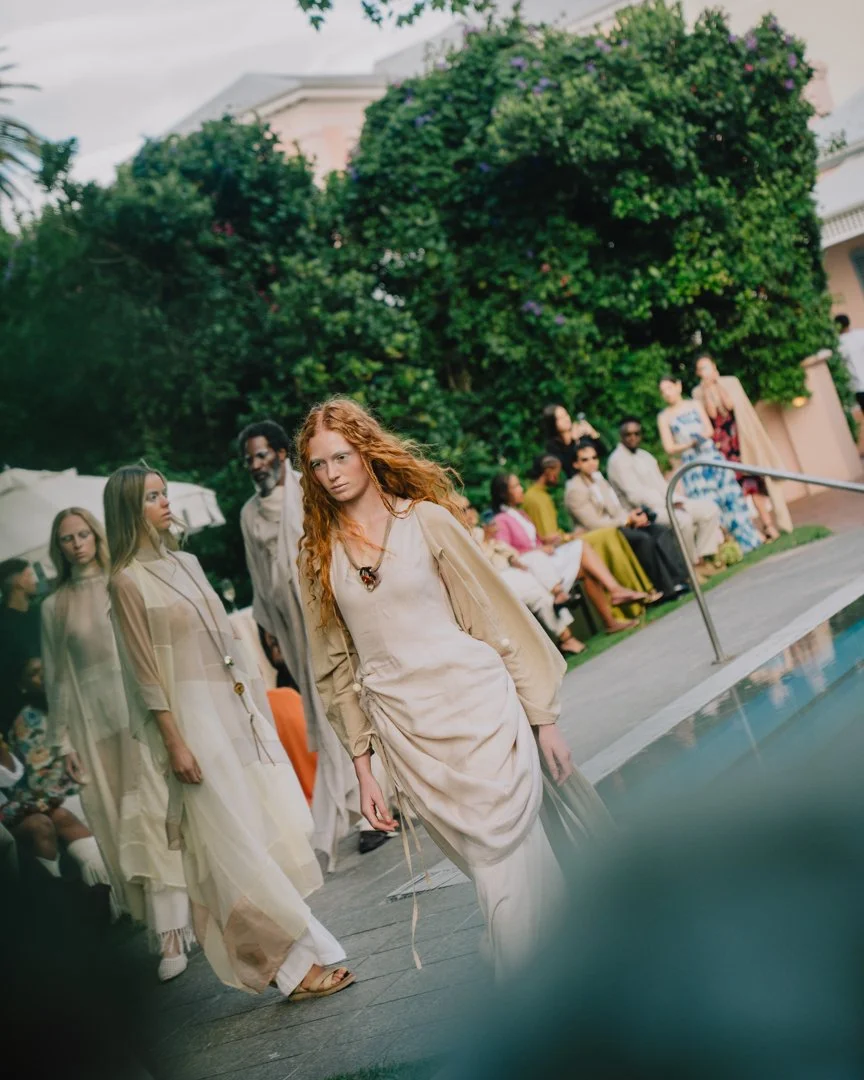
Danayi Madondo unveils Haus of Stone’s ‘paMUSUWO’ collection, an otherworldly offering that finds its perfect stage beside the Rose Cottage Pool, where her shimmering forms reflect in the tranquil water. “It's like we needed to be by a lake or a river,” Madondo reflects of her elemental setting. ‘paMUSUWO’, meaning ‘at the entrance’ in Shona, embodies the Zimbabwean designer’s vision of standing at the threshold of a new era. The collection honours the path that led her here while signalling what’s next. “We're at the gate; we're stepping into a new timeline,” she explains. This sense of transition is signalled by her use of indigo, a striking evolution from Haus of Stone’s signature off-whites and muted neutrals. “I am in my evolution season,” the Harare-based artist affirms.
Fluid silhouettes, artful draping and layered garments draw inspiration from Zimbabwean dress traditions and textile practices. These references fuel a broader exploration of identity, heritage, and the preservation of artisanal knowledge by deftly challenging received notions of what African luxury can be. “Sustainability has often been framed from a Western lens, whereas it should be contextual to the site and the culture where it is being birthed,” Madondo adds.
Further setting the tone, a tranquil soundtrack of waves and birdsong features ‘Munaye’ by Mokoomba, a song written in the wake of loss that serves as an homage to her father, who passed away last year. “All my work is an ode to the lineage of the people that I come from and their essence,” she explains.
For Madondo, fashion’s true impact lingers beyond the visual – a resonance that remains with the audience. “It's about the experience and how you feel inside when you walk away.” And what we felt like is a return to ourselves, to a natural world and to a calming sense of something familiar.
“There's something to be said about fashion that can heal someone by taking them to a place that reminds them of a joy, a pride, a pain"
Wanda Lephoto

Chapter III
The triptych concludes with the return of CxC stalwart Wanda Lephoto, whose latest collection, ‘Mister Brown’, draws on memory, masculinity and Black African histories as its narrative springboard. “The brand is primarily concerned with people,” he explains. “People come first. Our people and the stories I grew up with in Johannesburg.”
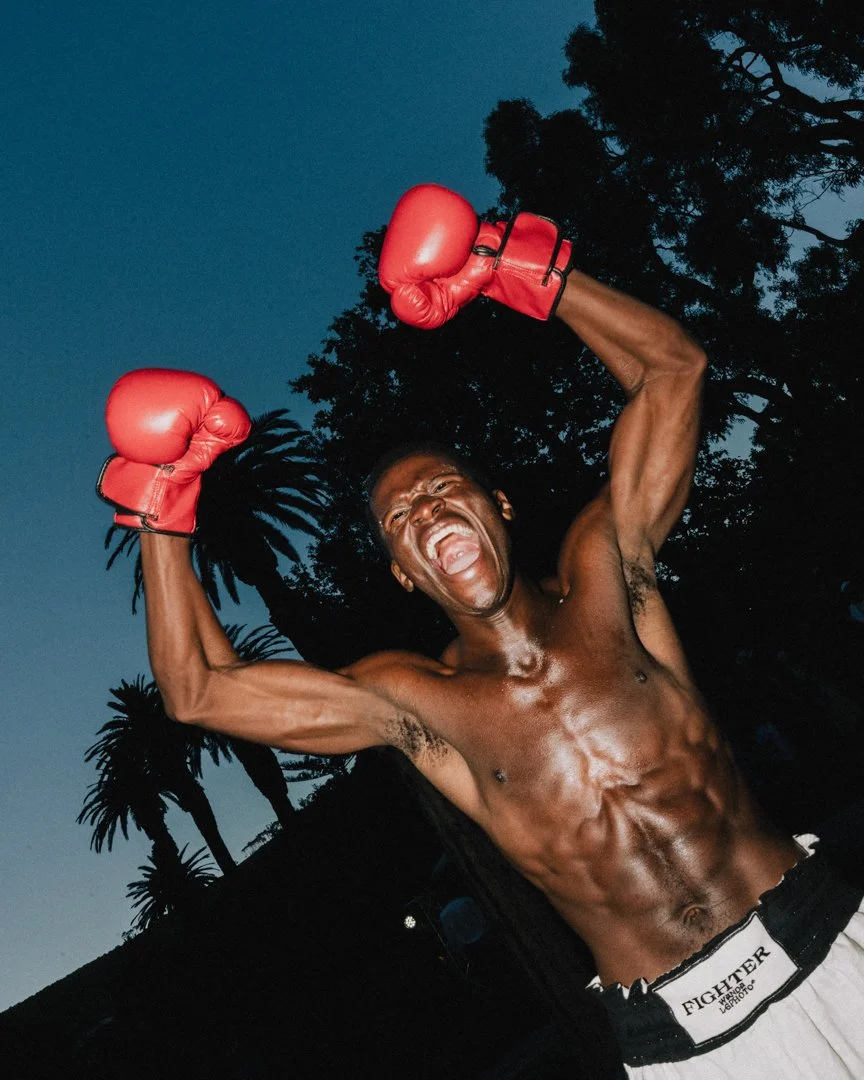
Built around a fictional character that Lephoto describes as “an extension of who I am,” ‘Mister Brown’ draws on the sartorial and philosophical greatness of iconic figures such as Nelson Mandela, Muhammad Ali, Malcolm X, James Baldwin, Fela Kútì and André Leon Talley. In this context, clothing becomes a vessel for culture and memory, bridging past and present. “There's something to be said about fashion that can heal someone by taking them to a place that reminds them of a joy, a pride, a pain, a feeling,” he reflects.
As Lephoto’s show commences in the stately Sherwood Room, we’re reminded of James Baldwin’s words: “The world is held together, really it is held together, by the love and the passion of a very few people.” And here, that love comes from the brand’s collaborators, with the designer crediting all the artists, makers and friends whose contributions have carried the label forward. “It's about the conversation. And what we're bringing to making our lives bigger and richer – more beautiful but also meaningful.”
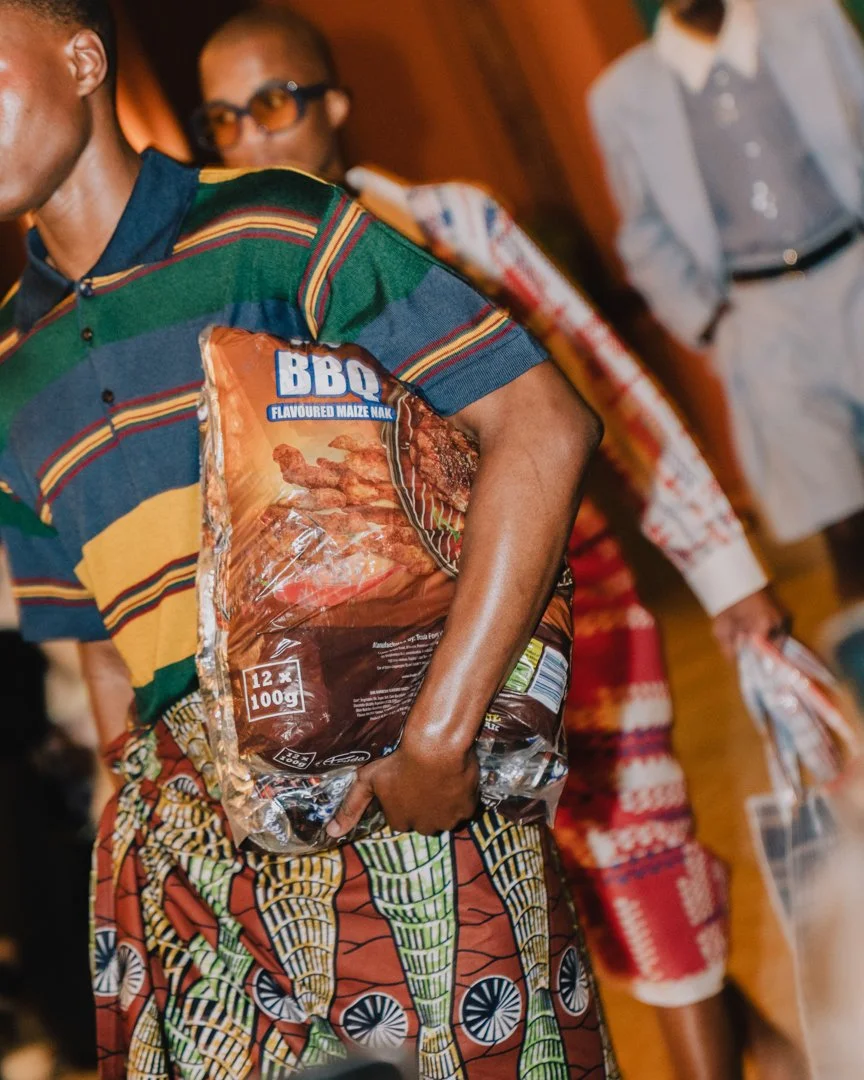
Models don’t just walk. Each one embodies a character as a collection comprising stripes, Kente fabric and renewed interpretations of Lephoto’s Mie Fie SS24 pattern is revealed across dynamic silhouettes that evoke some of Africa’s most politically and socially strombolian eras. For example, the first look references Mandela’s early achievements as a pioneering lawyer. The model – attired in a generous navy wool suit and a striped shirt representing the flags of African nations – enters the centre and raises his fist in a gesture reminiscent of Mandela’s 1990 Robben Island release. Meanwhile, the ‘Fela Me Fie’ linen set reflects Kútì’s rejection of colonial influence and embrace of cloth as a statement of cultural liberation. “We have a responsibility to portray a collective experience and understanding of the historical context of our continent,” the designer reflects, adding that our relationships to these triumphant figures, “fundamentally become how we look at the world in which we build or want to build.”
This embrace of collective memory permeates all of the works presented at CxC 2026, highlighting the ways individuals prepare for the world, honour love and community and commemorate culture. Preservation is not limited to safeguarding existing traditions; it also involves discovering innovative methods to advance them. This dynamic is exemplified by Twyg magazine and Mount Nelson, A Belmond Hotel, whose collaboration reflects the relationship between preservation and renovation. CxC enables designers to honour inherited knowledge while envisioning new possibilities for the continent's creative industries. This legacy is not static; it can be cultivated, challenged and reimagined. Thus, preservation and reinvention function as complementary forces, each giving life to the other. Like a garden, it is through this understanding and careful tending that the landscape of African fashion may bloom.
Words Kemiso Yasmine Wessie
Photography Ross Nagel
Designers
Sevaria
Onesimo Bam
Haus of Stone
Wanda Lephoto
Visit Mount Nelson, A Belmond Hotel
Visit Twyg
OUTPUTS
Published on 18/11/2026