
Director and actor Cherien Dabis’s film challenges monolith representation of Palestinians
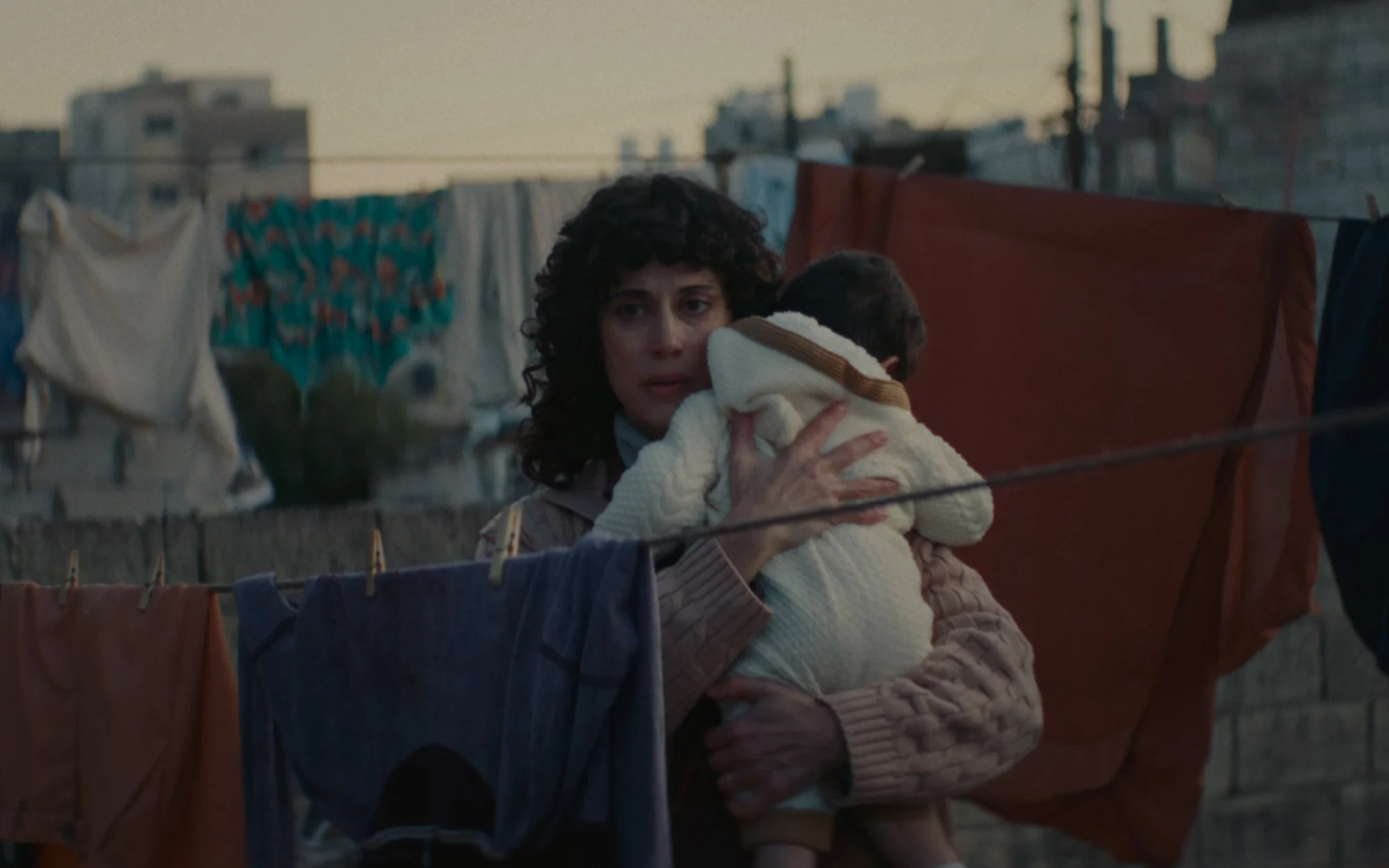
Cherien Dabis’s Oscar-nominated film ‘All That’s Left Of You’ takes historical events spanning seven decades and weaves a family story through them. The epic-drama opens with Noor, a Palestinian teen played by Muhammad Abed Elrahman, being killed by Israeli soldiers as they open fire at a peaceful protest in Nablus during the First Intifada. To hold the memory of her son, Hanan (acted by Dabis) narrates their family history from the loss of their home and orange orchard in Jaffa during the Nakba in 1948, up to this fatal incident.
From the nostalgia of the grandfather, Sharif, brilliantly played by the late Mohammad Bakri, to the thorny father-son relationship between Salim (Saleh Bakri) and Noor, this deeply moving intergenerational tale explores the consequences of ongoing displacement and traumas on individuals and family dynamics. Through the grievance and injustice of the medical and bureaucratic violence of Noor’s passing, Dabis highlights the different kinds of violence experienced by Palestinians, as well as their spirit of resistance.
The celebrated Palestinian American writer/director tell us more about the work, which was executive produced by Javier Bardem and Mark Ruffalo and has collected 20 film festival prizes.
What drew you to the ambitious format of a historical epic from the Nakba to the present day in this current context?
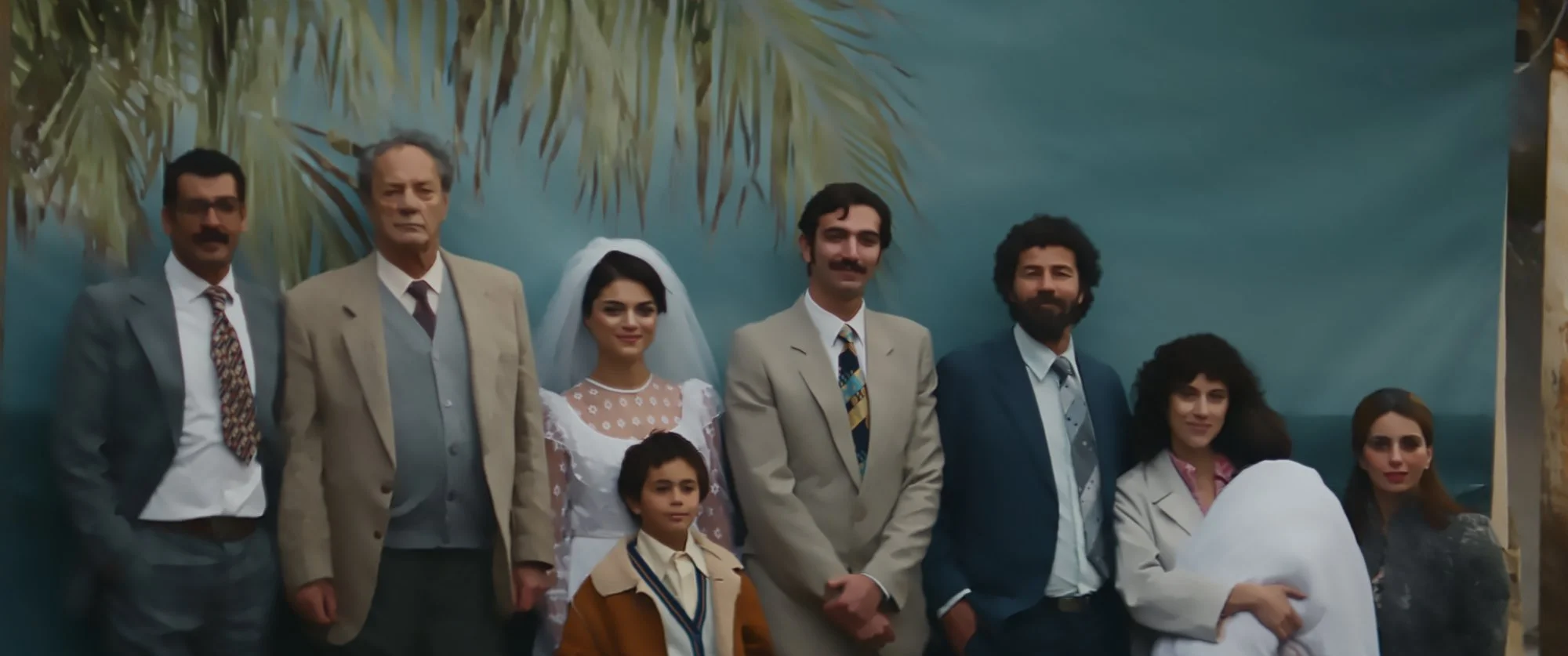
I always wanted to make a movie about the Nakba because it’s a history that’s long been denied. And I felt that I couldn’t tell that story without it being multigenerational because the Nakba never ended – it’s ongoing. I wanted to look at the devastating impact of that event on one family over time in order to highlight how history shapes us and changes the fates of families. How our identities are formed in relationship to our environment and also in relationship or in opposition to one another. I was inspired in part by observing the different generations of my own family and how events in Palestine shaped and changed who we are and who we became, particularly my dad. The film draws viewers into the rarely cinematically depicted domestic world, steeped in poetry, of a Jaffa orange-orchard landowning family before 1948.
“The Nakba never ended – it’s ongoing"
Which archives did you research to depict the daily life of this strand of the Palestinian society before the Nakba, and how was the process for your crew and yourself to reimagine this past?
We researched all the archives out there from the United National Relief and Works Agency for Palestine Refugees (UNRWA) photo and film archive to the Palestinian Museum’s digital archive to various news agencies. We even tapped into our crew’s family photos when necessary. There’s not a lot out there that shows urban life in Palestine in the 1940s. We had just a few resources so we really had to study those images, take in every detail and just really imagine and build the world from there. So many of us had grown up hearing stories from that time period. We all had a nostalgia for it, a nostalgia that I think is shared by so many Palestinians. It was quite a joyful process to immerse ourselves in it and to recreate what we once had, before all was lost.
In the role of Hanan, you refuse for the life of your son, Noor, to be decontextualised from the Nakba. How did you negotiate the parallel roles of your character navigating grief while directing?
In many ways, this film is a spiritual exploration of my own intergenerational trauma. So, exploring grief came naturally. It’s what I was also doing as a director but just from a wider angle. Acting and directing at the same time forces me to think of a story from different perspectives. These roles are both parts of the same storytelling process, and one part informs the other. My deep familiarity with the script and knowledge of the director’s vision helped me shape my point-of-view of the character of Hanan, for example. So, acting and directing at the same time streamlines the process, forces me to mine the depths of the material and my own intention and keeps me engaged in all parts of the creative process. It’s part of what I love about it. In this way, Hanan’s grief is an extension of what I envisioned as the director and an expression of my own intergenerational trauma. So, playing the part allowed me to go much deeper into what I set out to do as the writer / director. I got to explore the parts of me that inspired the film to begin with. Some days, it definitely made me a more vulnerable, emotional director. And that was just something I had to accept.
“Palestinians are often represented as a monolith. But we react and resist in different ways, and I wanted the characters to embody some of those ways"
Of course, as we were shooting this film, we were also watching a devastating genocide live-streamed on our devices. Art and life merged in the making this film, as we found ourselves making a film about what was happening as it was happening, which really further blurred the lines between the director and the character of Hanan. The actors and I felt that we were channeling our grief, the grief that we both felt and were witnessing, into the film. And that was deeply cathartic. The entire crew felt that grief as well, so I was far from alone in that process.
How was the process of working with actors from the Bakri family on a film exploring family dynamics and intergenerational traumas?
It was incredible. They’re the only acting family dynasty in Palestine. From the moment I started writing the script, I had them in mind for these roles. What better way to bring an intergenerational portrait of a family to life onscreen than to cast an actual family in the film. They resemble each other, not just in looks, but also their voices sound alike, and they have similar mannerisms. All of these things contribute greatly to believability. And the actor who plays teenage Noor is also related to them. He’s Saleh and Adam’s cousin. So, it’s four generations of one family, and each one of them is a phenomenal actor.
We lost the amazing Mohammad Bakri late last year, and it was devastating. Not only was he a giant of Palestinian cinema, he was a force of nature, an incredible person with a huge heart and unbelievable generosity of spirit. I consider myself so lucky to have gotten to work with him and know him in the making of this film. Mohammad and Saleh in particular had many scenes together onscreen, and they brought so much of their own relationship dynamic, nuance and depth to their onscreen father-son roles. It was really moving to see them work together.
“Hope in the film isn’t loud or triumphant. It’s often quiet and fragile, found in small gestures, in humor, in love, in the act of remembering, or simply in continuing"
Could you tell us about the process of articulating settler-colonialism in Palestine on screen and its layered violences on parenting, specifically on son and father relationships?
I wanted to show how the violence of occupation impacts people. Overall, this isn’t a violent film. There are only a few chosen moments of violence because the film isn’t about violence, it’s about the consequences of violence. How it infiltrates the domestic sphere and changes relationships between fathers and sons and husbands and wives. Even if you’re lucky enough to survive a moment of violence, there can sometimes be consequences that can change your entire life. And there are different kinds of violence under occupation. It’s not all physical violence, though there’s always the threat of that. There are also other kinds of violence shown throughout the film such as psychological and bureaucratic violence.
One of the most pivotal scenes in the film is when a father and son are stopped by Israeli soldiers during curfew. The father is humiliated in front of his young son, and he goes along with it in order to protect his son. But his son doesn’t see it that way. His son is shocked to see his father so helpless. And in that moment, he’s not only robbed of his childhood, his entire opinion of his father changes as he realises that his father has no power whatsoever to protect him. His father goes from a hero in his eyes to a coward — in an instant. And their relationship is changed for the rest of their lives. What happens when children realise their parents have no power to protect them? Well, the parents lose all authority for one. It’s devastating for both parent and child. This too is the impact of ongoing settler-colonial violence. Across generations, characters resist cultural erasure and the loss of hope, each in their own way.
How did you explore these tensions in your characters’ development?
I approached each character as a reflection of a different survival strategy. Under prolonged displacement and occupation, people don’t all respond the same way. Some cling more tightly to the past, memory and tradition. Others try to assimilate or distance themselves from the past in order to move forward and some live in constant tension between the two. I wanted the characters to embody these different responses rather than represent a single unified voice. Palestinians are often represented as a monolith. But we react and resist in different ways, and I wanted the characters to embody some of those ways.
Hope in the film isn’t loud or triumphant. It’s often quiet and fragile… found in small gestures, in humor, in love, in the act of remembering, or simply in continuing. Cultural erasure doesn’t only happen through the loss of land or language, it also happens internally, when people begin to doubt their own narratives or feel pressured to sever themselves from their history. The characters are constantly negotiating how much of the past to carry and how much to put down in order to survive. That is the tension of being Palestinian. I was interested in how identity is not fixed but shaped over time by environment, circumstance, trauma and personal choice. Each generation inherits both wounds and resilience. Their resistance isn’t always overt or political; sometimes it’s as simple as telling a story, attempting to heal, or refusing to forget. Those quiet acts, to me, are just as powerful as grand gestures.