
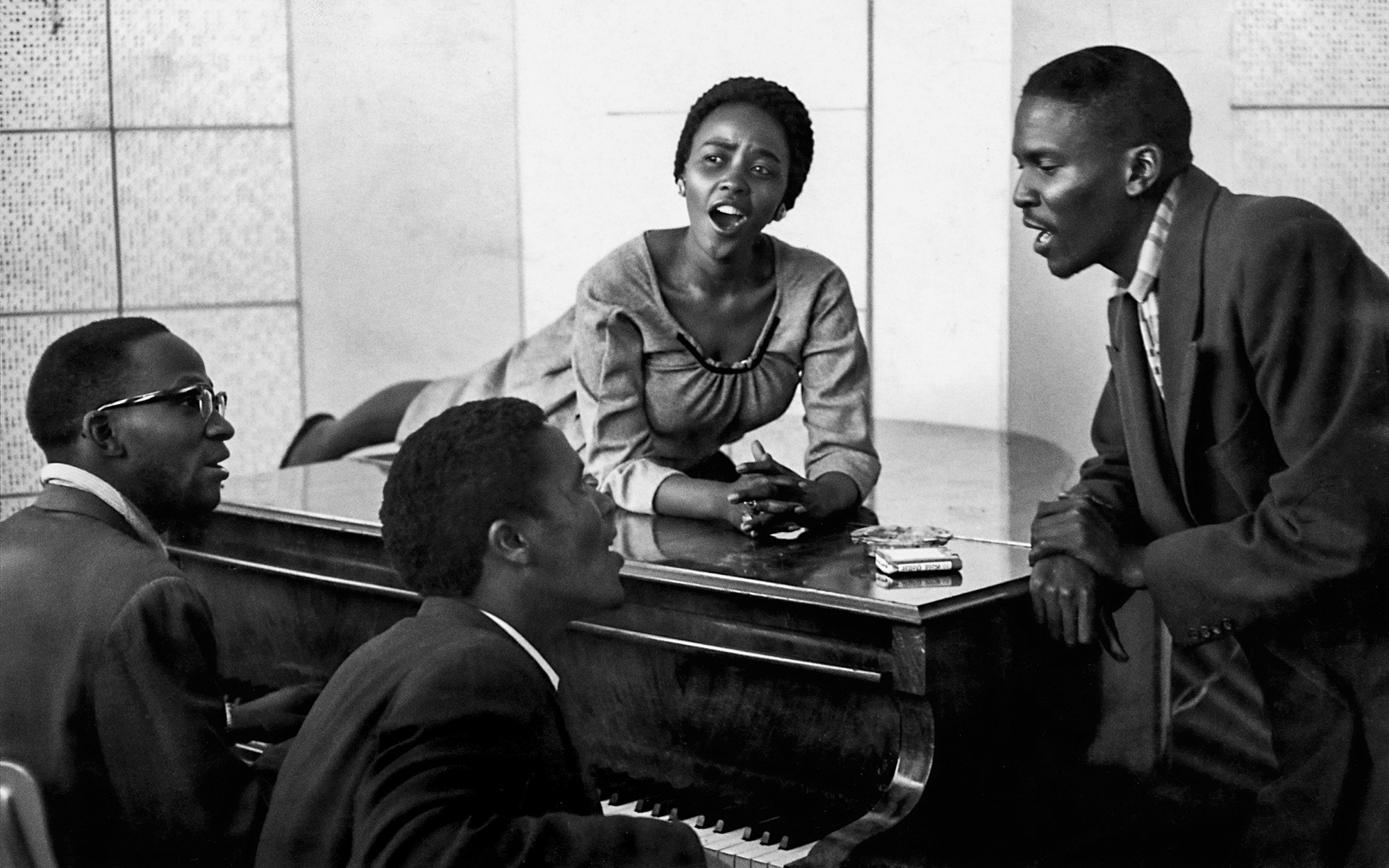
The jazz music archives of Drum magazine came alive during Investec Cape Town Art Fair
On a sweltering Saturday afternoon during Investec Cape Town Art Fair (ICTAF), Peffers Fine Art’s gallery space heaved with bodies as Bridges for Music jazz ensemble paid homage to some of South Africa’s most beloved musicians of the Sophiatown era. And surrounding the pulsing crowd was an exhibition of pivotal photographers from the archives of Drum magazine: Bob Gosani, G.R. Naidoo, Gopal Naransamy, Alf Kumalo and Peter Magubane.
Entitled ‘Back o’ the Moon – Listening Across Generations’, this special project of ICTAF interpreted the fair’s theme — ‘Listen’ — in thinking of jazz as both a sound and a space. Peffers operates not only as a gallery but as a custodian of the Drum archives, overseeing restoration and curation of this precious record of urban culture in mid-century South Africa, and working closely with the photographers’ families to bring them renewed visibility.
The result is an exhibition that showcases portraits of community, style, ferocious courage — and partying to match — with a jazz ensemble bringing it all to life in the here and now. Not only does this project present some of South Africa’s finest Black Modernist photography, it also reminds us how seminal figures such as Hugh Masakela, Dolly Rathebe, Miriam Makeba and Brenda Fassie moved across streets and stages to offer joy, dignity and visibility to their fellow citizens – a collective resistance to apartheid told through artistry.
As a ICTAF media partner, Nataal sat down with Ruarc Peffers, founder of Peffers Fine Art, as well as Trenton Birch and Yamkela Kasana of Bridges for Music Academy – a non-profit offering creative training to under-served youth – to discuss their collaboration on this programme.
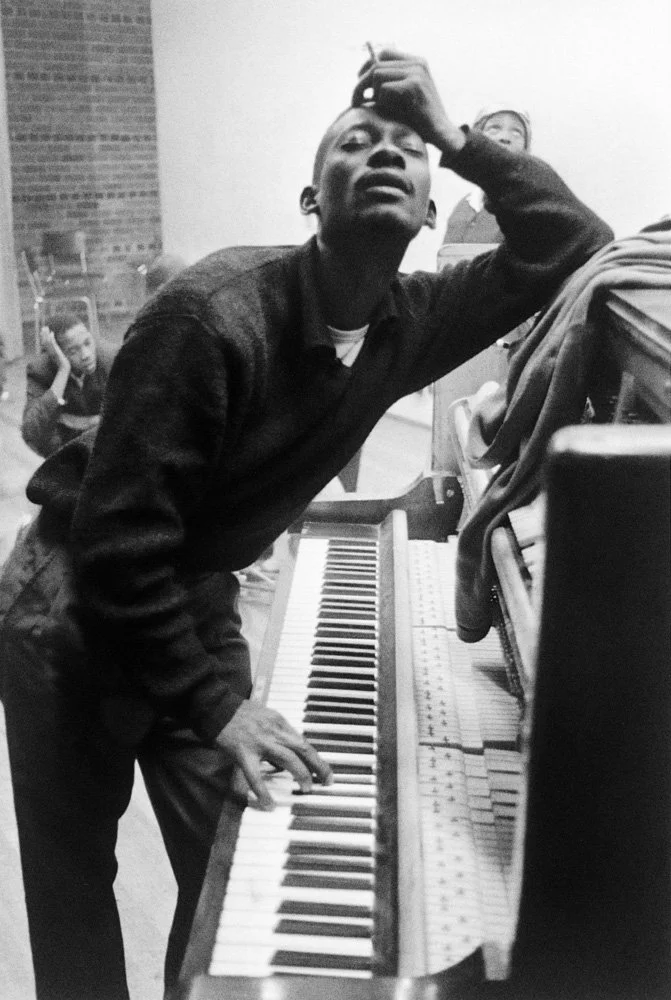
Alf Kumalo (1930-2012) © The Estate of Alf Kumalo. Gideon Nxumalo closes his eyes as he caresses the piano keys and holds a cigarette at a rehearsal, Soweto, c.1960s.
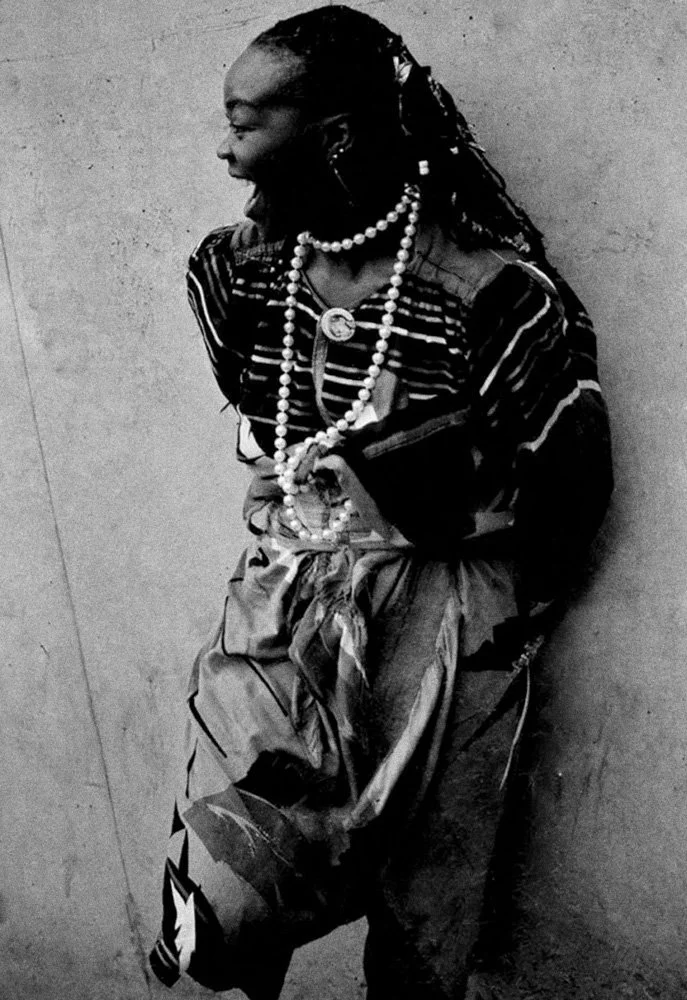
Alf Kumalo (1930-2012) © The Estate of Alf Kumalo. Brenda Fassie poses at Ellis Park, Johannesburg, April 1984.
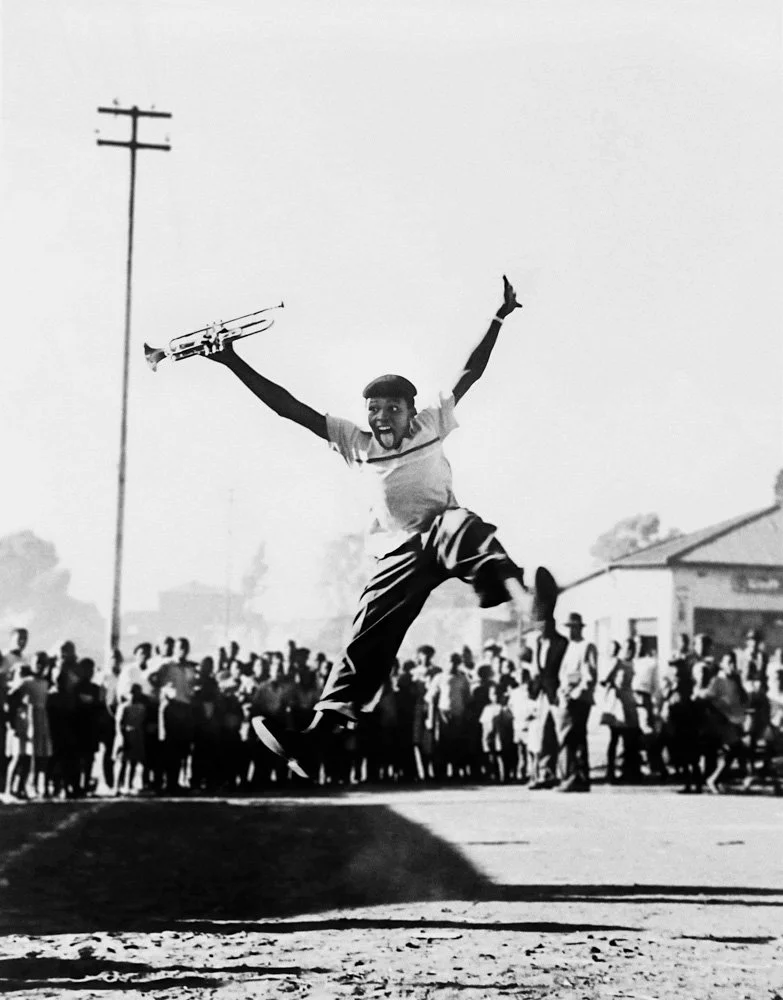
Alf Kumalo (1930-2012) © The Estate of Alf Kumalo. Hugh Masekela leaps into the air with delight after receiving a trumpet from American jazz legend, Louis Armstrong, 1956.
Nataal: Tell us about the process of choosing the images for this year’s presentation at ICTAF?
Ruarc: Well, there were thousands of negatives. It was a process of identifying what we were going to frame as the fine art body of work. Great artworks are absolutely definitive of the era in which they’re made. That’s what makes them so important and relevant. We needed to create a narrative that does justice to the story it tells, but also consider the people depicted in those images and honour them as well as the legacies of the artists. So, the work here is extracted from the archives as touchpoints and definitive moments, but also as beautiful images.
Nataal: Drum magazine and jazz alike have long been associated with improvisation, activism and collective exchange, but art fairs are often critiqued as exclusive spaces. How do you navigate this dichotomy?
Ruarc: Art fairs tend to flatten things into a commercial arc. You have to work within those parameters — but there are some great benefits such as the amount of eyeballs that have gone onto this presentation. There have been thousands of people who have come through and looked, engaged, had conversations. This is an environment where there is a captive audience.
Nataal: What is the relevance of the images today?
Ruarc: These images demonstrate an incredibly sophisticated, cosmopolitan Black culture that existed in this country in the worst time to be Black. When you look at Black culture in South Africa today — amapiano, contemporary art, photography, fashion — so much is indebted to what these guys were doing 50 to 100 years ago, in the most difficult environment imaginable. They were trying to preserve a culture when there were forces actively trying to erase them.
Nataal: Why stage a live performance during the programme, and how did the collaboration with Bridges come about?
Ruarc: There’s a synergy between what we’re doing and what Bridges represents. And as an NPO, based where they are (the township of Langa) they’re about community, upliftment, collaboration. That’s what the images are about too. Jazz also asks you to slow down. They’re playing for an hour, forcing you to be present. If a photograph kind of freezes time, jazz does the opposite: it extends time. It helps people to get a feel for what the images are about.
“These images demonstrate an incredibly sophisticated, cosmopolitan Black culture that existed in the worst time to be Black"
Nataal: How do the young musicians in the ensemble connect to the legacy of Sophiatown jazz today?
Yamkela: By finding themselves still living in township communities faced with the very same types of systemic challenges. Through music and mindfulness, the students find hope and freedom from suffering in their performance — which is how the legends of Sophiatown used music, dance and fashion for the very same.
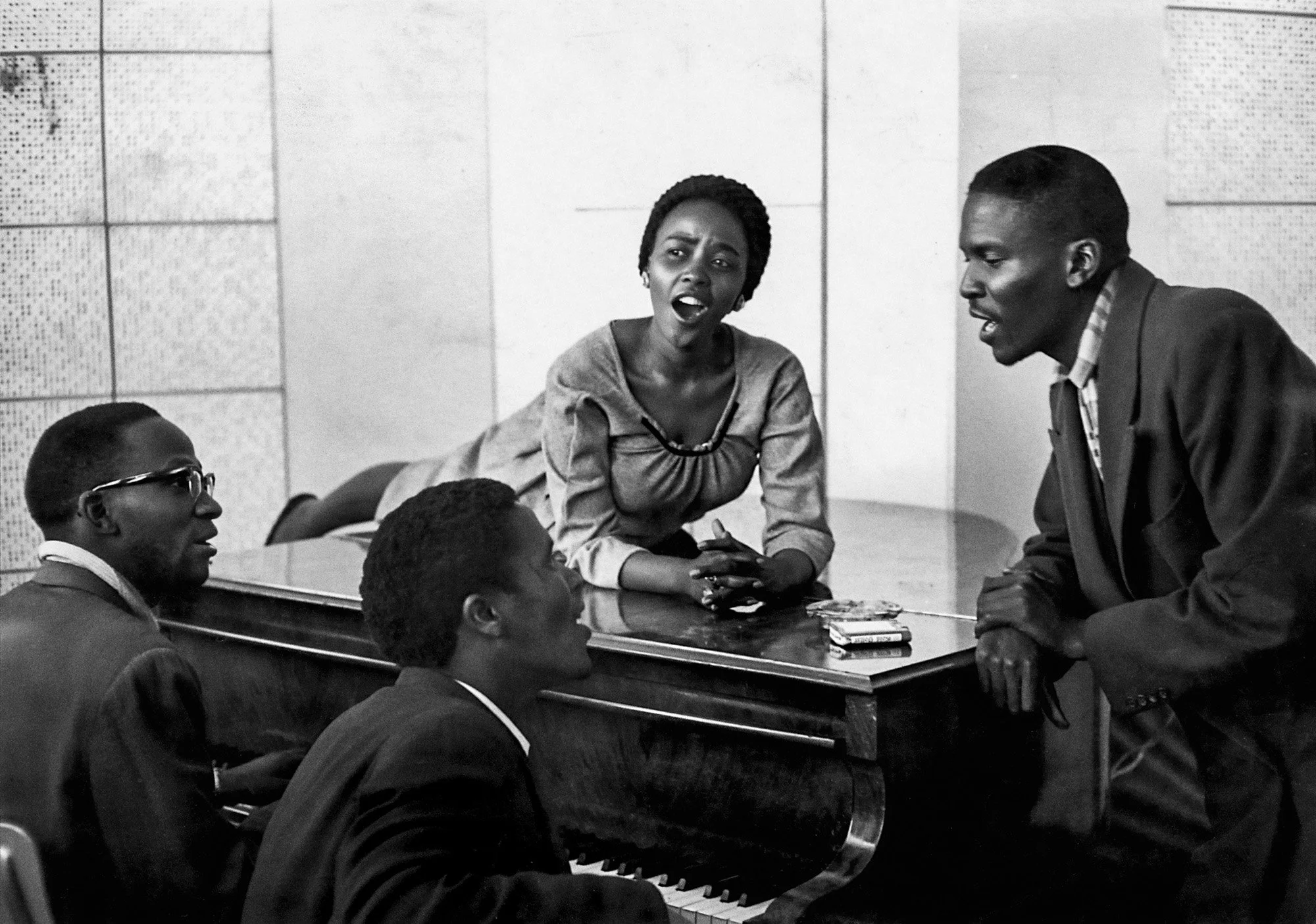
Peter Magubane (1932-2024) © The Estate of Peter Magubane. Hazel Futa singing on piano, c.1956.
Nataal: This performance was in a gallery setting rather than a traditional music venue. How do you feel it changes the way the music is perceived?
Trenton: It’s so intimate. It blew my mind. When you’re at a club or on stage, there’s distance. Here you really feel the energy. It was amazing. I’m quite involved in the AI space - AI artists etc. But one thing you can never replicate is a live music experience.
Nataal: What do you hope people take away from watching this performance?
Trenton: The performance made me proud to be South African. The art fair audience was so multicultural. It reminded me of the spirit of where we came from and where we’ve come to.
This story was created in collaboration with Letterhead.
All images courtesy of Peffers Fine Art.
Drum Archive (20th Century) © Drum Archive
Bob Gosani (1934-1972) © Drum Archive
Alf Kumalo (1930-2012) © The Estate of Alf Kumalo
Peter Magubane (1932-2024) © The Estate of Peter Magubane
G. R. Naidoo (1928-1982) © Drum Archive
Gopal Naransamy (1923-1998) © Drum Archive
Visit Peffers Fine Art
Visit Bridges for Music
Visit Investec Cape Town Art Fair
Visit Letterhead
Words Chloe Hirschman
Published on 25/02/2026