
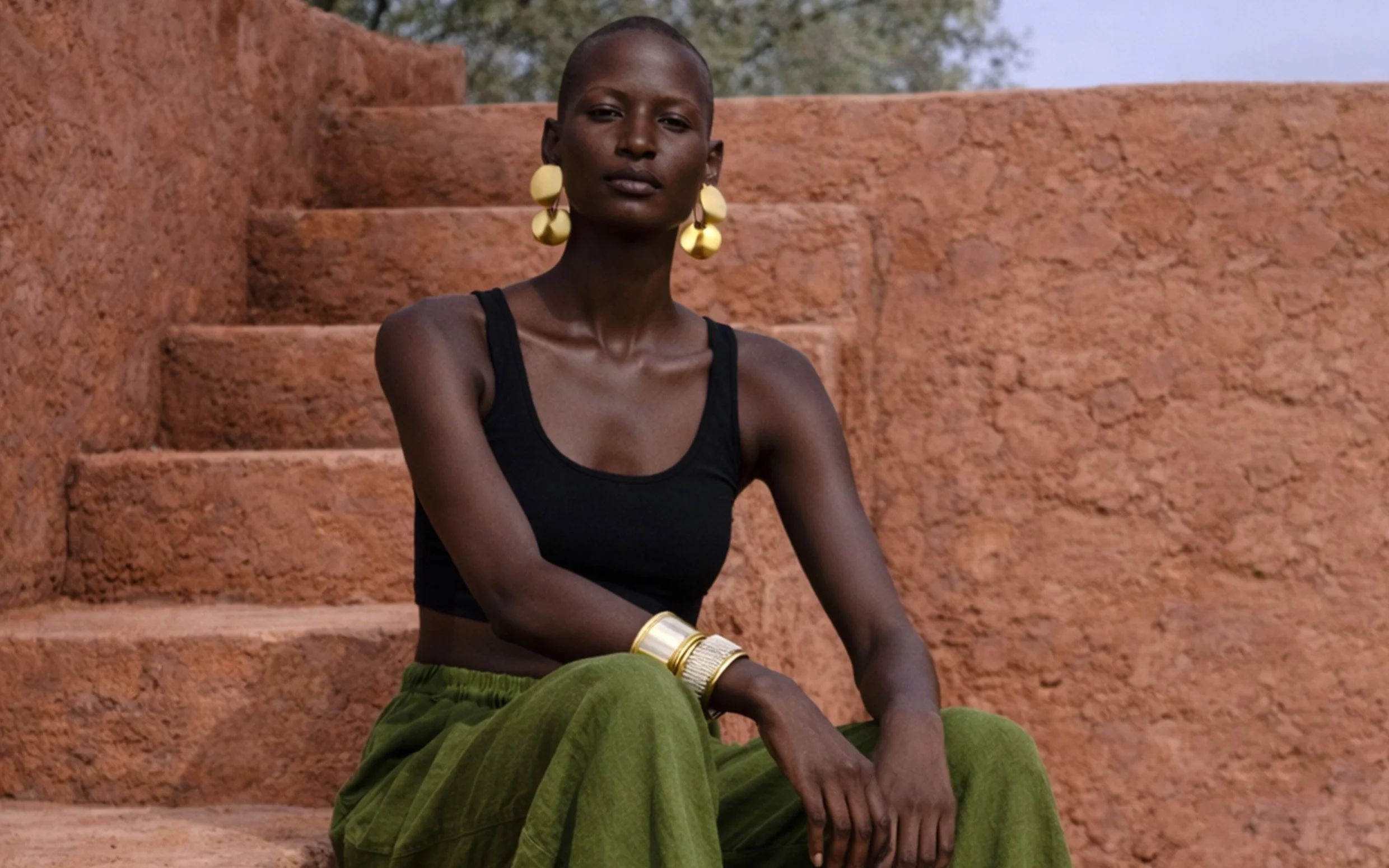
Tiaan Nagel introduces his curatorial vision for Merchants through an anniversary collection
I remember my very visit to Merchants on Long when it opened in 2010. From the urban hustle of Cape Town’s Long Street, its Victorian-era terracotta façade lured me inside to discover a forest-like cocoon filled with the very best African fashion. It felt directional and celebratory. Nothing else like it existed, then. And over the years, Hanneli Rupert’s concept store has continued to champion sincere design rooted in the continent. From giving brands such as Lukhanyo Mdingi and Sindiso Khumali their first rails, to popping up in London for the V&A’s landmark show ‘Africa Fashion’ show, it has helped to revolutionise the industry and give underrepresented talents the platform they deserve.
But now, as it celebrates its 15th anniversary, there’s no place for laurels. Instead Merchants (no more ‘on Long’) is keeping it moving with Tiaan Nagel at the helm. The respected creative director and his team are busy refining the brand’s gracious dialogue with African craft to ensure it stays relevant for the now and next. After all, curating a store as special as this isn’t just about discovering what’s new, it’s a conversation with your audience on what it means to embrace beauty with true meaning. So while the physical space evolves, Merchants releases ‘Fifteen’, a capsule collection that whispers its intentions through clean lines and earthy colours drawn from the southern African landscape. Here, Nagel invites me back to discuss what it really takes to move the needle in 2026.
What are your reflections on Merchants’ journey so far, and what that says about the wider African fashion scene?
Over 15 years, Merchants has become a launchpad for African design. We’ve built a platform where emerging designers can be seen, connect with the industry, and introduce new collections directly to an engaged audience. It’s a space for real-time dialogue between designer and wearer, and for brands to gain both local and international recognition.Many of those early names have since grown into globally respected voices; Maxhosa, Lukanyo Mdingi, Thebe Magugu, proof that when the infrastructure is right, African design doesn’t just participate, it leads.
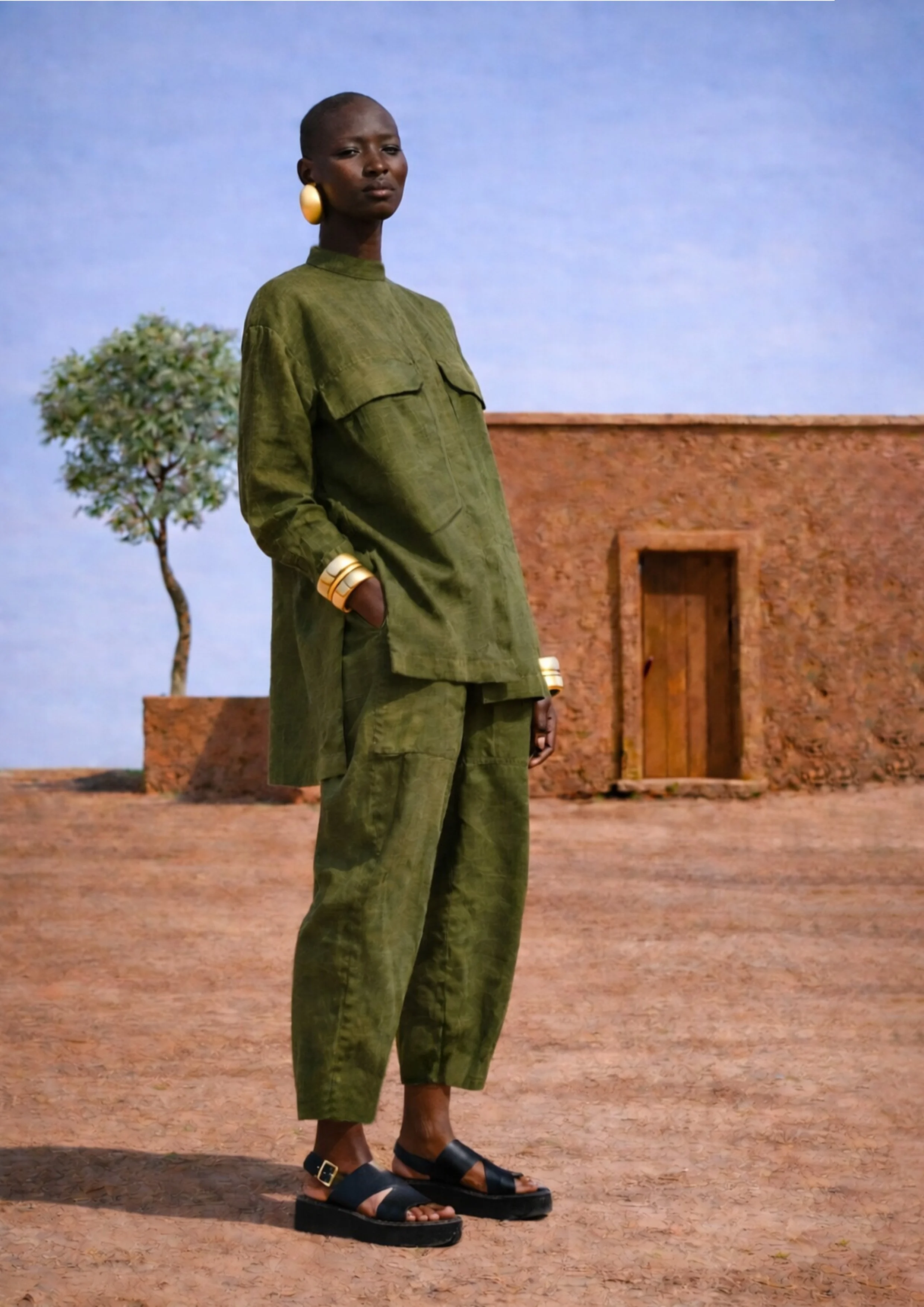
How do you frame the renewed approach to Merchants’s in-store curation?
My role has two parts: articulating the brand with clarity, and curating the best of African design with intention. It comes down to selection and context. Finding pieces that have something to say, and placing them in a way that creates a coherent visual language. The goal is simple – present work that people want to wear, and wear with pride. If we do that well, Merchants becomes more than a store. It becomes a reference point, a custodian of great African design.
I’ve had the privilege of working with some of the most rigorous creative teams in the country across fashion, publishing and direction. Each taught me how to edit. So right now, we’re in a brand reset, and editing is everything; distilling what Merchants stands for, and finding a new, precise way to express it. Ultimately, it’s about taste and restraint. Knowing what to keep, what to remove, and how to capture the moment without over-explaining it. There’s a lot coming for Merchants, and I’m looking forward to putting that work into the world.
What has been your approach to the capsule’s aesthetic tone?
‘Fifteen’ operates on two levels. It’s a celebration of the milestone, but it’s also a practical counterpoint to the more experimental work we stock. The designers we carry often lean into the radical and the sculptural. ‘Fifteen’ provides the quiet architecture around them: directional wardrobe essentials that hold their own while supporting the broader narrative. It’s about precise shapes and considered fabrics that create a symbiotic relationship; our pieces anchor, the designers we stock elevate. Also from a production perspective, having in-house control over timelines and delivery makes the process more sustainable for us. Working across multiple designer schedules can be complex, so this capsule gives us consistency without diluting the diversity of the floor.
“Merchants is more than a store. It’s reference point, a custodian of great African design"
Talk us through some of the inspirations.
Three landscapes set the visual and structural language for the collection. Chilojo Cliffs in Zimbabwe – 200 meters of sandstone carved by time into sharp planes and fractures. The cliffs don’t curve, they break. The Karoo in South Africa – an expanse reduced to a single, unbroken line. No ornament, no distraction. And Vingerklip in Namibia – a 35-meter limestone pillar standing alone on an infinite plain. A single vertical gesture.
I took photographs of these landscapes and distilled them into basic geometric forms. From that, three silhouettes repeated themselves. For example, Vingerklip’s reverse triangle informed the kaftan – broad at the shoulder, narrowing to an engineered hem. The top collapses at the shoulder and tapers down. For the trouser, we applied the same logic to the inseam to create a subtle arch. And from the fractured Chilojo range came a shirt and shirt dress with enough inherent volume to stand alone, yet able to be cinched and controlled with a belt, echoing the mountain’s layered form.
None of the pieces are engineered to cling. They’re designed with space and movement in mind, allowing them to adapt to different bodies. Drawstrings and shaped construction lines add an ergonomic layer, accommodating variation within a single silhouette. We’ve also moved away from conventional sizing, renaming the curve I, II, and III – to shift the focus from measurement to proportion.
How do these pieces come alive when worn?
We wanted a fabric with breathability, structure and presence. Linen offered all three. It holds form, dyes deeply and wears well in our climate. It became the base cloth for the capsule because it’s versatile enough to carry different silhouettes without losing its integrity. The fabrics were sourced and dyed with longevity and colour depth in mind, and manufactured locally in Cape Town to maintain control on quality and timeline.
What is your take on sustainability across the collection?
For us, sustainability isn’t a slogan – it’s a practice of restraint and honesty. We work with a small, trusted group of suppliers and crafters, and we’re deliberate about our footprint at every stage of product development. Production is kept tight by design. We don’t overproduce, and we avoid speculative material sourcing that leads to waste. It comes down to efficient, considered sourcing: making fewer things, making them well, and making sure they last.
Times are tough for fashion retail and for society at large. What are your hopes for how Merchants can navigate and nourish its community going forward?
The world is in flux, and retail is no exception. Our approach is to navigate that without retreating into negativity or paralysis. We’re surrounded by exceptional creative minds, and our role is to keep Merchants a platform that evolves with the market while staying rooted in its own point of view. Our community understands that thinking, and in return we’re committed to maintaining Merchants as a lighthouse for contemporary African design – consistent, responsive and honest about where we are and where we’re headed.