
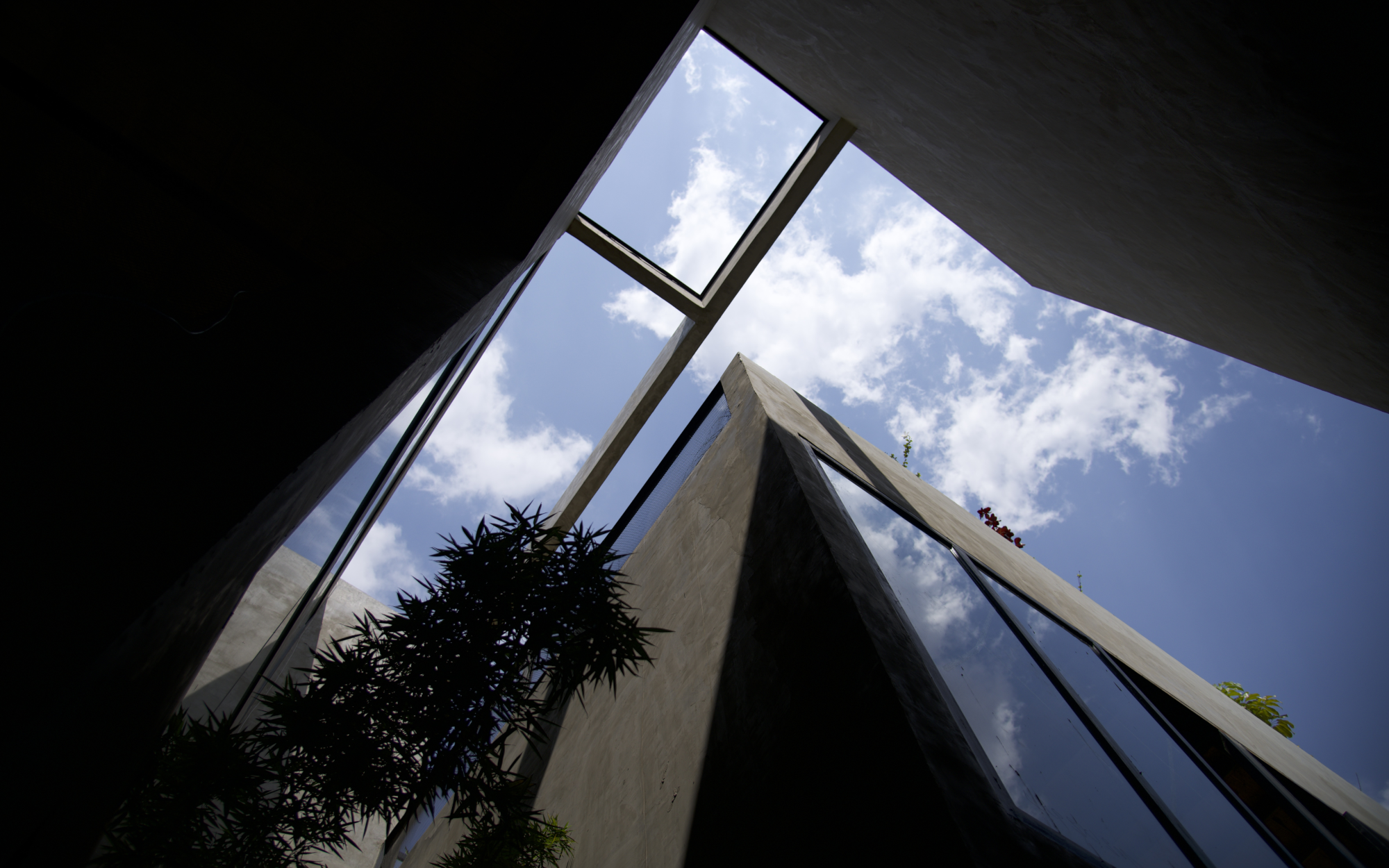
Rwanda’s cultural landscape welcomes the Gihanga Institute of Contemporary Art
When the architect Amin Gafaranga worked on his second building in Kimihurura, a hilly and desirable neighbourhood in Kigali, he initially envisaged the space as a private lodge. But during the building process, and as tourism slowed down due to the pandemic, he realised the structure was destined for greater things. Gafaranga called the London- and Kigali-based curator and art advisor Kami Gahiga. “Kami had always told me about an idea she had for an art institute and foundation in Rwanda,” he says. “I showed her the place and her vision was instant.” On 20 December, 2025, those ambitions became a reality as artists, gallerists and collectors from across the globe gathered for the opening of the Gihanga Institute of Contemporary Art (GICA).
Co-founded by Gahiga, a VIP Representative for Africa at Art Basel, and the New York-based artist Kaneza Schaal, the pair have transformed Gafaranga’s 777 square-metre building into numerous creative spaces including an exhibition area, screening room, studio, library and rooftop. GICA now serves as Rwanda’s first private, non-profit contemporary art institution. “We've had great responses from artists who are very excited about what GICA means for the country, and how culture and art are truly being elevated,” Gahiga says.

Rwanda’s capital city is defined by its modern architecture, clean streets and budding creative scene. Yet, a new UNESCO report cites that more than half of local artists note a lack of appropriate infrastructure. “Many work without adequate venues, studios, or tools,” Gahiga explains, noting that GICA contributed to the report. “We hadn't yet opened, but they could see the scale, potential and impact that the space could have.”
GICA enters this landscape with its inaugural exhibition, ‘Inuma: A Bird Shall Carry the Voice’, featuring seven artists connected to Rwanda: Cedric Mizero, Christian Nyampeta, Kaneza Schaal, Francis Offman, Sanaa Gateja, Innocent Nkurunziza and Feline Ntabangana. In Kinyarwanda, the official and most common language in the country, Inuma translates to dove while ‘a bird shall carry the voice’ references a bible verse warning on how private words can become public. “It acknowledges that no voice is ever fully confined, no matter how small the carrier,” says Gahiga of her curatorial approach, explaining that although Rwandans are known for being understated, they can still communicate significant messages of resilience and growth.
“We want to make sure that people feel they're always welcome"
For multidisciplinary artist Feline Ntabangana, who lives between Kigali and New York, her vibrant abstract pieces on show are emotionally driven. In ‘Soft collision’, 2024, lively strokes of green, yellow and orange engulf the top two thirds of the painting. “My ideas come from my inner states mixed with the environment I am in,” she says. “I feel like I have so much in me, I can't leave this earth without trying to put everything in my art.”
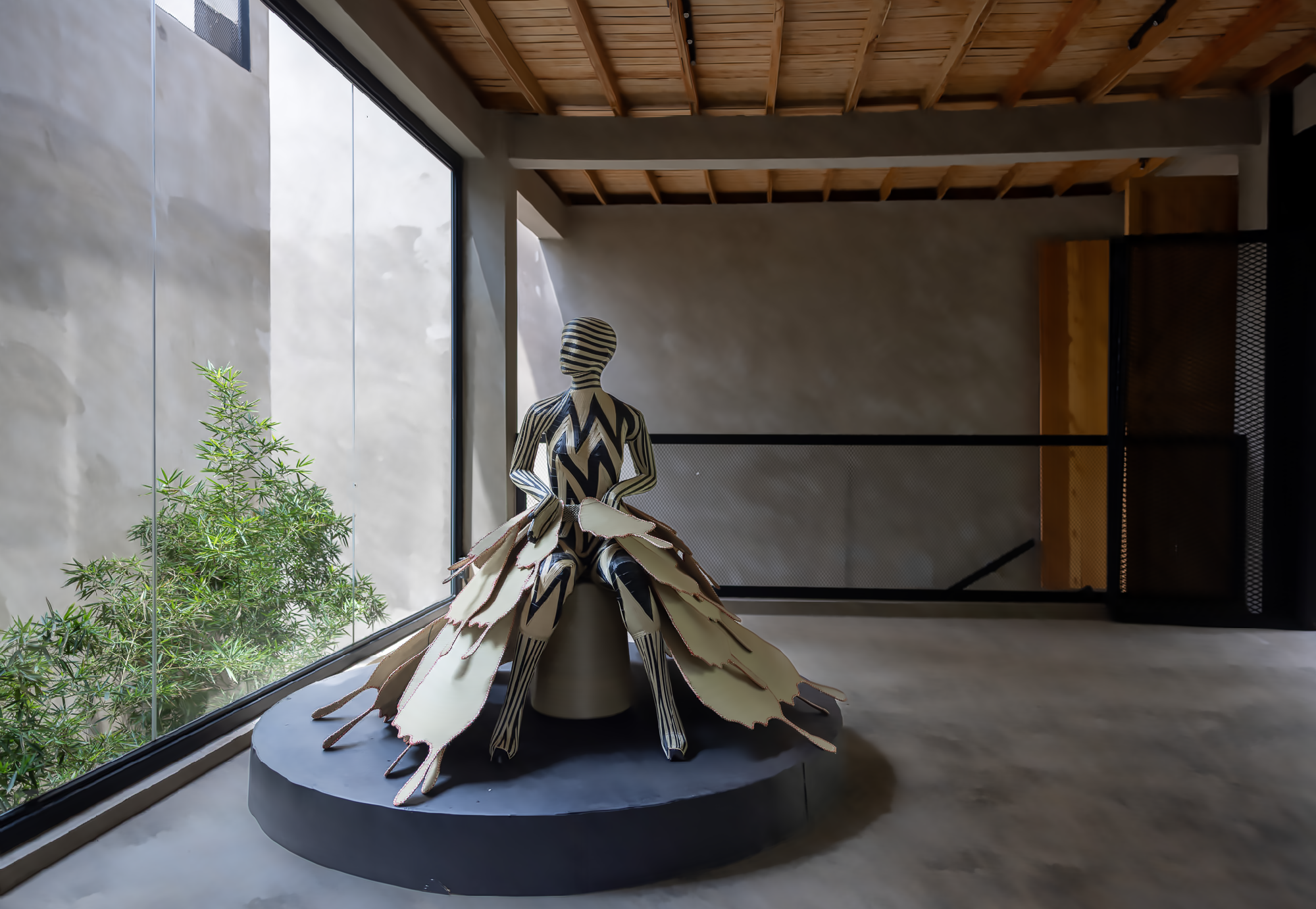
In contrast, Cedric Mizero offers an entirely woven sculpture, ‘umukobwa #07’, 2024, made in collaboration with artisan and artist Michealine and Mackson Muhawenimana. The piece, the first work you encounter as you enter the institute, depicts a seated woman in a broad skirt and showcases a style of weaving Mizero learned from Rwandan women. “They only used the technique for baskets, so I spent seven years learning it to bring it into a contemporary world, and it evolved into this artwork.”
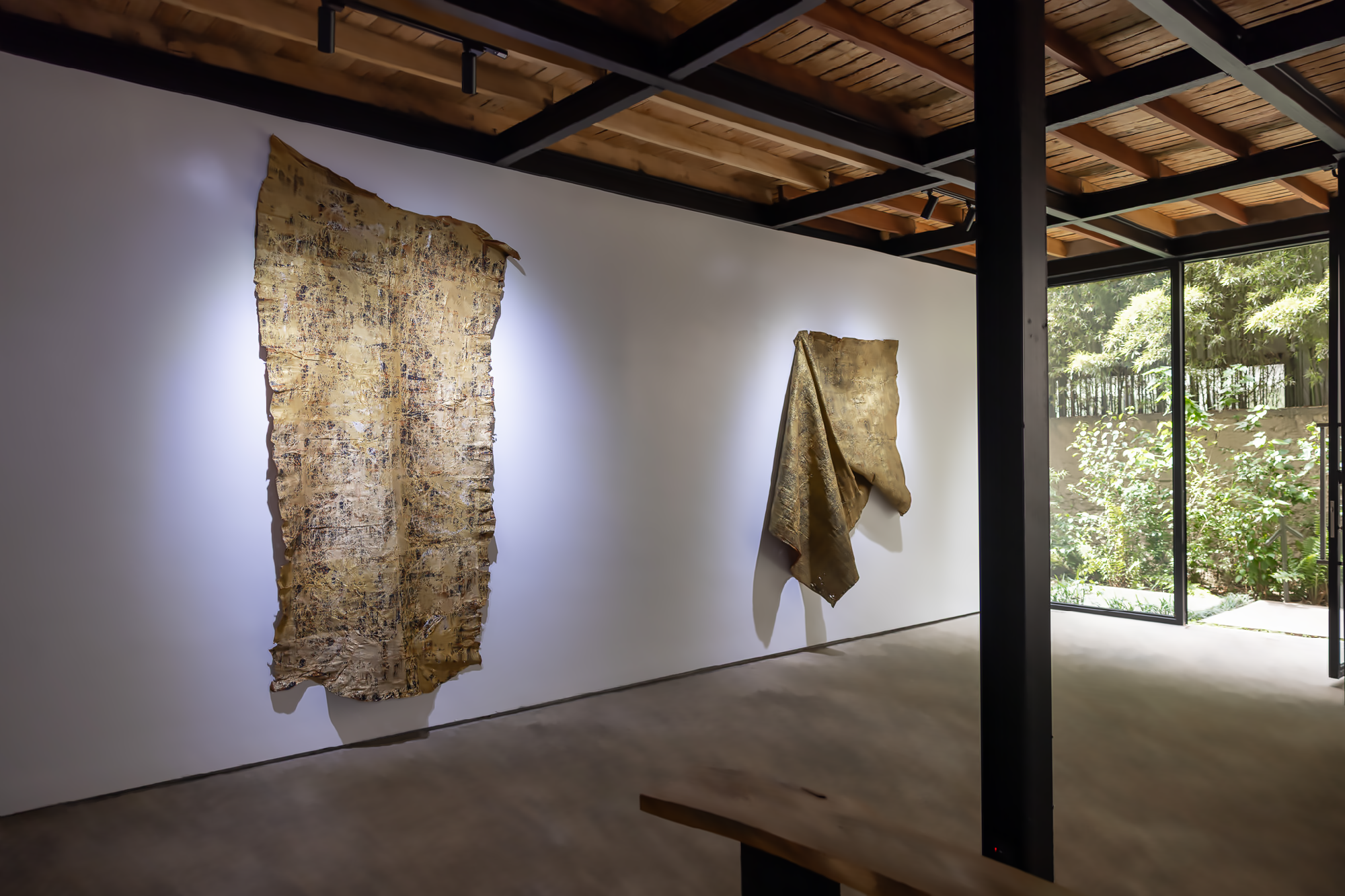

Also at GICA’s entrance is its Koyo Kouoh Library, developed by exhibiting artist Christian Nyampeta, which is named in honour of the late, great curator who was a close friend of GICA. “It's an accessible library, so [anyone] can come in and just pick a book,” Gahiga explains. “It's a way to provide some context to the art being showcased; give a broader knowledge on artistic practices and art mediums; and inspire this and the next generation of artists.”
While Rwanda grapples with a complex past and builds a stable future, many within the country are looking at how its creative community can be nurtured as the country grows. GICA is an important part of this ecosystem and the start of a much bigger story. “We want to make sure that people feel they're always welcome, and that we have programming that resonates with them,” Gahiga says. “We are thinking about how we can make sure that the taxi driver who wants to see an exhibition with his kids can come in, not just people who have the means to appreciate culture.”
A bird can carry the voice is on view at GICA until 19 March 2026.