
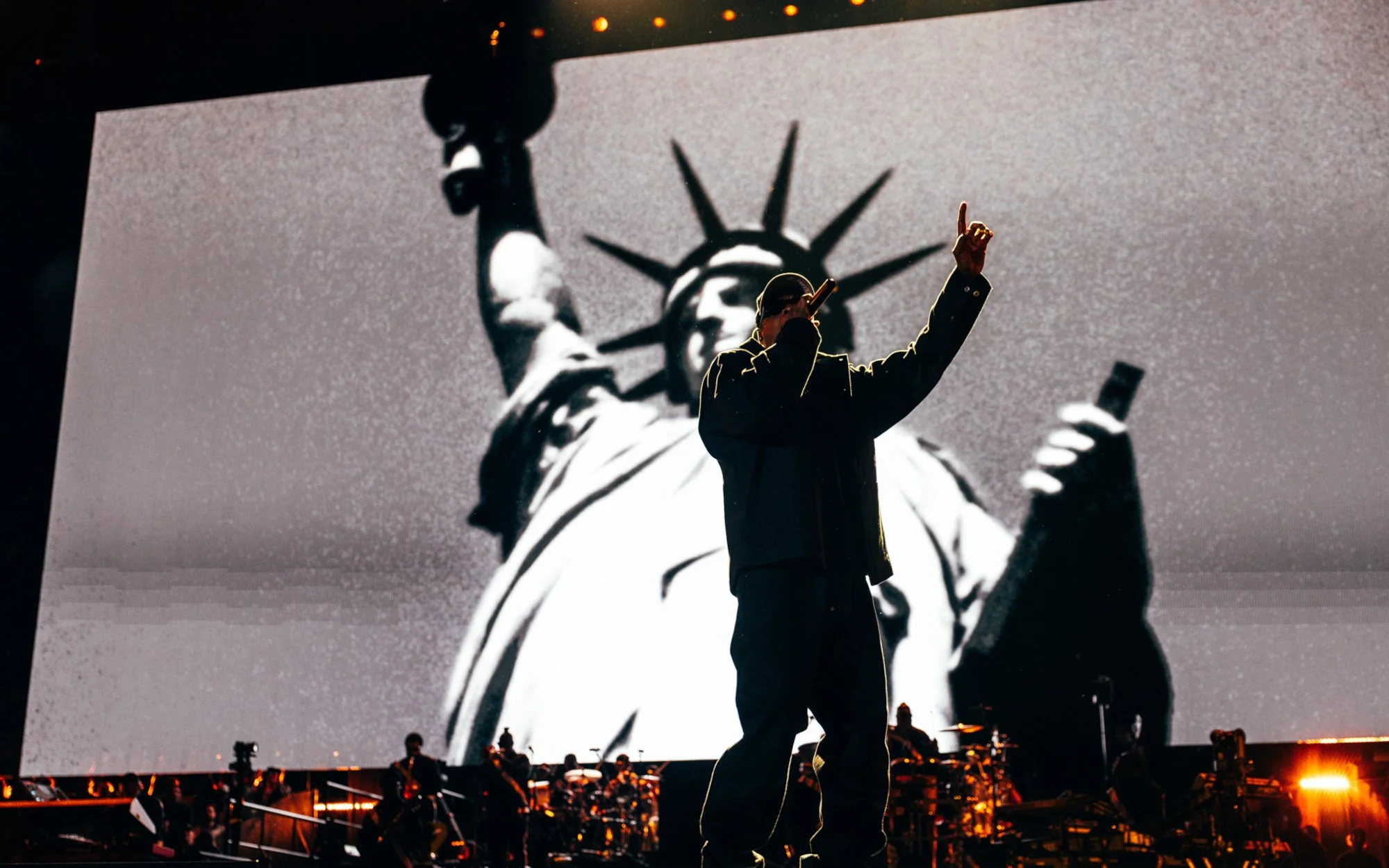
After Jay-Z’s London shows, we ask: is presence the secret of legacy?
Jay-Z’s second night at London’s Tottenham Hotspur Stadium. A 30-year celebration of his debut album 'Reasonable Doubt’. And my first time seeing him live.
He begins with ‘Bam’.
And that matters. Because ‘Bam’ is ego.
Not ego in its cheapest sense, but the kind required to survive your circumstances. The audacity of believing you are going somewhere before there is any evidence that you will.
Jay-Z once described the song as Shawn Carter reminding himself that he needed some ego to get to where he eventually arrived.
And standing there, watching him command a stadium, you understand exactly what he means.
Sometimes you need to create a version of yourself powerful enough to carry the person underneath. Shawn Carter created Jay-Z. And Jay-Z got them both here.
Somewhere between the lights, the noise and over 50,000 people reciting lyrics written decades ago, I found myself thinking less about the concert and more about the weight of a dream when it actually comes true.
What does it feel like when the child born in the projects becomes the man standing alone on a global stage?
From Marcy Projects to billionaire.
From lyrics about hunger and ambition to a body of music that became an empire.
That kind of success must carry weight.
And throughout the night, another song kept returning to my mind. ‘Pray’ (which he performed the night before).
Because behind Hova, somewhere, there is still God.
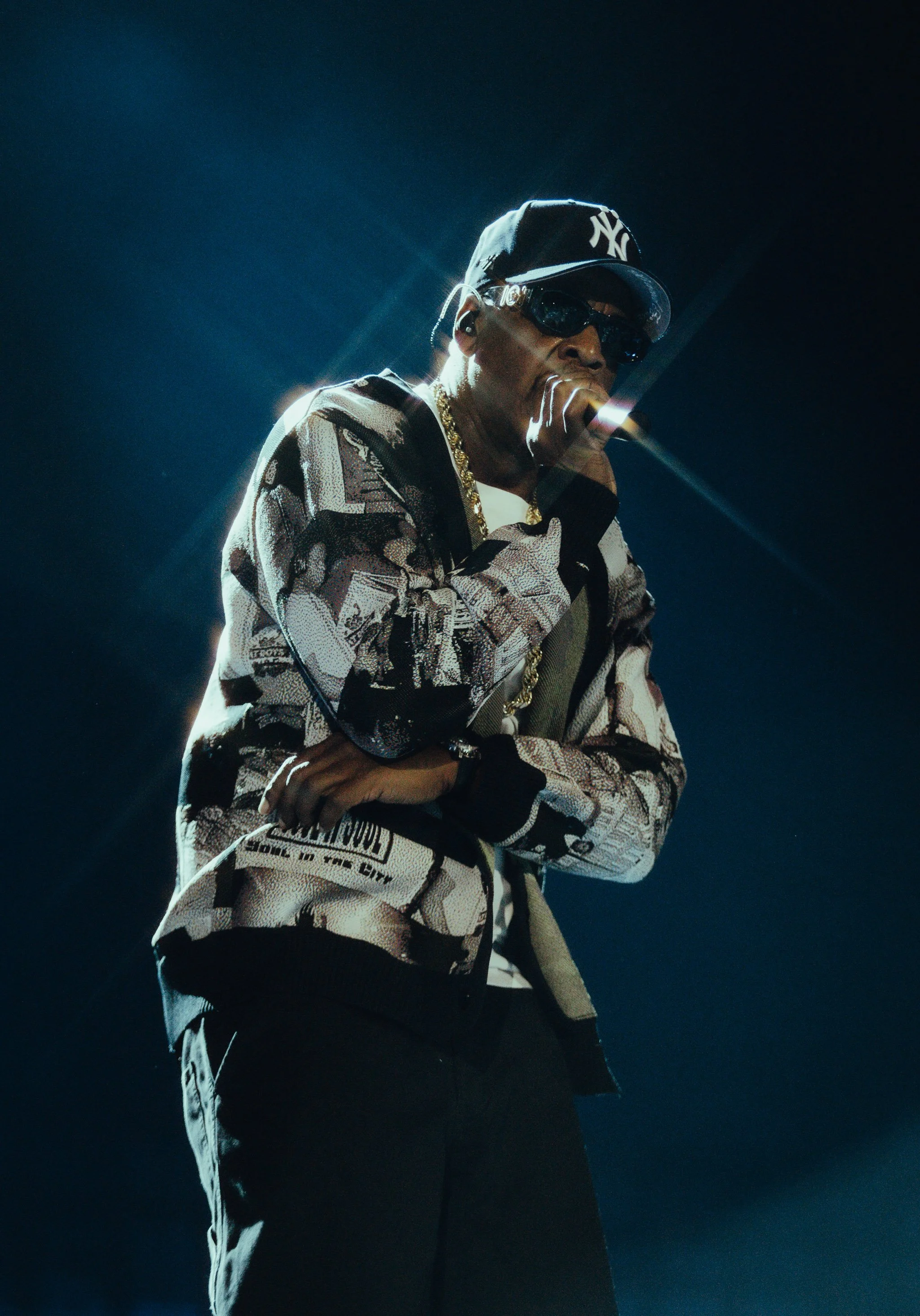
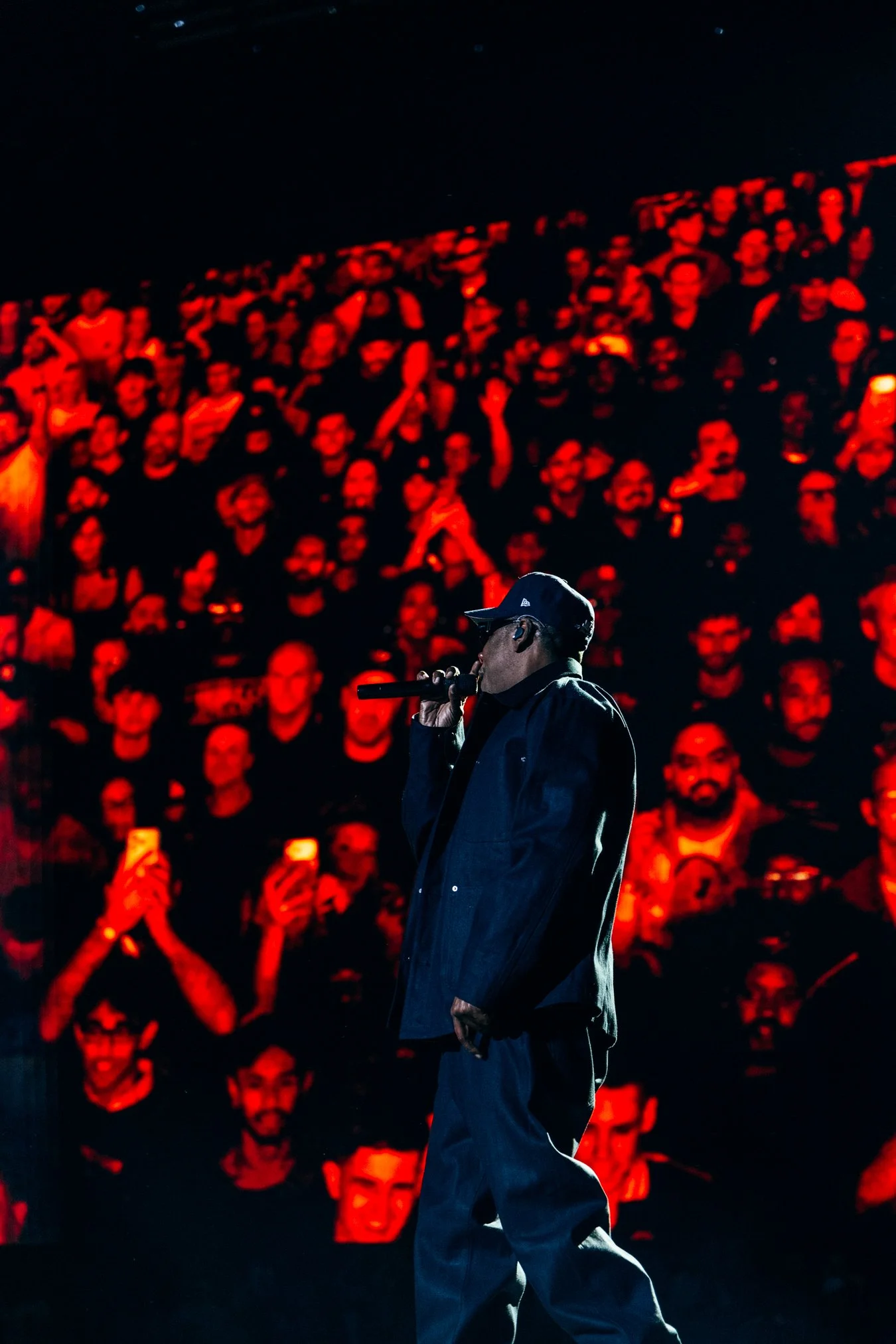
‘Pray’ begins from that place: protection, childhood, environment, danger, family, circumstance. The things that existed before the mythology.
Before the billionaire, there was the boy.
Before the empire, there was survival.
Before Hova, there was God.
Perhaps that is the strange contradiction at the centre of Jay-Z.
To create something transcendent out of yourself while remaining aware that there was something bigger than you carrying you through.
And then the night gets lighter.
The R&B and soulful records. The celebration. The familiarity of songs that have lived inside people's lives for years.
At one point he stops. “Thank you.”
He reminds us that we could have been anywhere in the world, but we chose to be there with him.
There is something strangely intimate about hearing gratitude inside a stadium.
He speaks about London, too. About what this city, its music and its audience have meant to him.
And I wondered whether, after New York, London represents something similar.
A city built on the belief that something might happen here.
That you can arrive carrying ambition, trauma, talent, sometimes nothing more than an idea of who you could become, and somehow construct another life.
Then comes ‘U Don’t Know’.
And if ‘Pray’ contains the boy and ‘Bam’ contains the armour, ‘U Don’t Know’ contains the prophecy.
The hunger in that record still feels almost unreasonable.
It is the sound of somebody measuring himself not against where he is, but against where he believes he is going. Growth. Money. Scale. Success. Possibility without apology.
Listening to it now is different because we know what happened next.
He did it. That is the extraordinary thing.
We are listening to a younger man declare the magnitude of the life he intends to create while looking at the older man standing inside it.
How often do we get to witness the distance between a declaration and its fulfilment?
And then comes ‘Hard Knock Life (Ghetto Anthem)’.
Back to the beginning. Back to hardship.
A song about circumstances that were never supposed to produce this outcome, somehow transformed into a stone cold classic.
There was something surreal about singing along to the story of working corners while looking at one of the most successful musicians of his generation.
The boy, hustler, rapper, businessman, husband, father. Ultimately The man.
All existing in the same body.
I couldn't stop thinking about that distance.
The distance between praying for protection and becoming Hova.
Between surviving your environment and building an empire from the language you once used to describe it.
And that’s why his London shows weren’t about the guests (Dave and Sampha tonight, Idris Elba, Wyclef Jean and Lauryn Hill yesterday) or whether Beyoncé would – or wouldn’t – join him. It was all about Jay-Z.
A man standing inside the evidence of his own life.
For almost two hours, he moved between past and present. ‘Fuckwithmeyouknowigotit’. ‘Empire State of Mind’. ’99 Problems’ (with the artist spotlighted by a helicopter flying overhead).
And New York moved with him, appearing through cinematic imagery, like another character in the story: his hometown, his beginning, his mythology.
Yet despite the scale of everything surrounding him, what stayed with me were the smallest moments: the smiles, the stories.
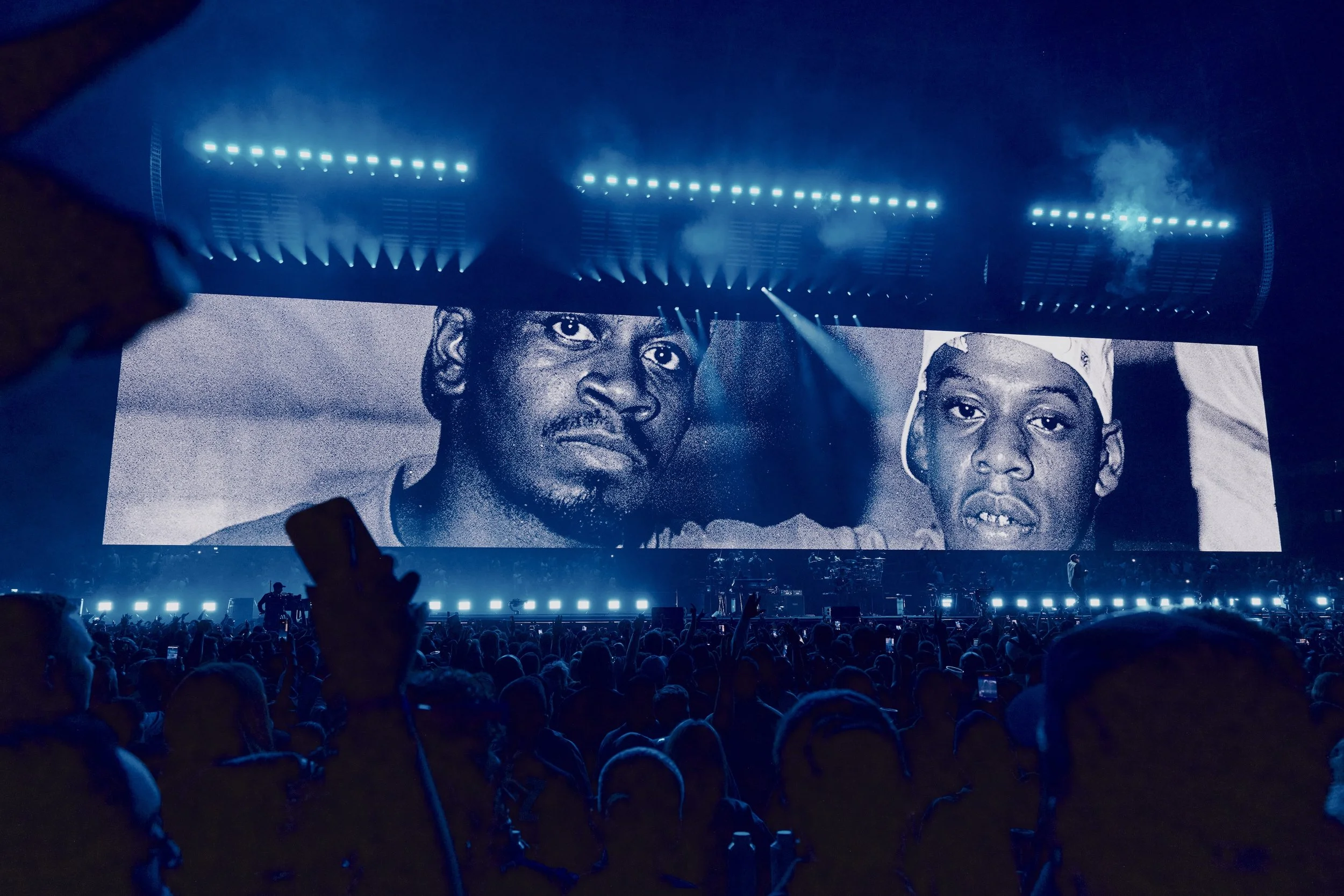
Jay-Z’s stageshow at Tottenham Hotspur Stadium
We talk endlessly about success.
We talk much less about the responsibility of surviving it.
Because what happens after the dream comes true?
What happens when you have already proved them wrong?
What happens when the hunger that built you is no longer necessary?
The challenge then is to evolve and to grow.
Maybe legacy isn't simply what you build, maybe legacy is having the resilience to remain present long enough to become the evidence of everything you once believed was possible.
And that is Jay-Z’s greatest achievement.
Thirty years later, he is still standing there. And we are still listening.
So, I left this performance with one question:
Is presence the secret of legacy?
Perhaps it is.
Because becoming successful is one thing but remaining long enough to understand what it all meant is another.
Outstanding, Jay-Z.