
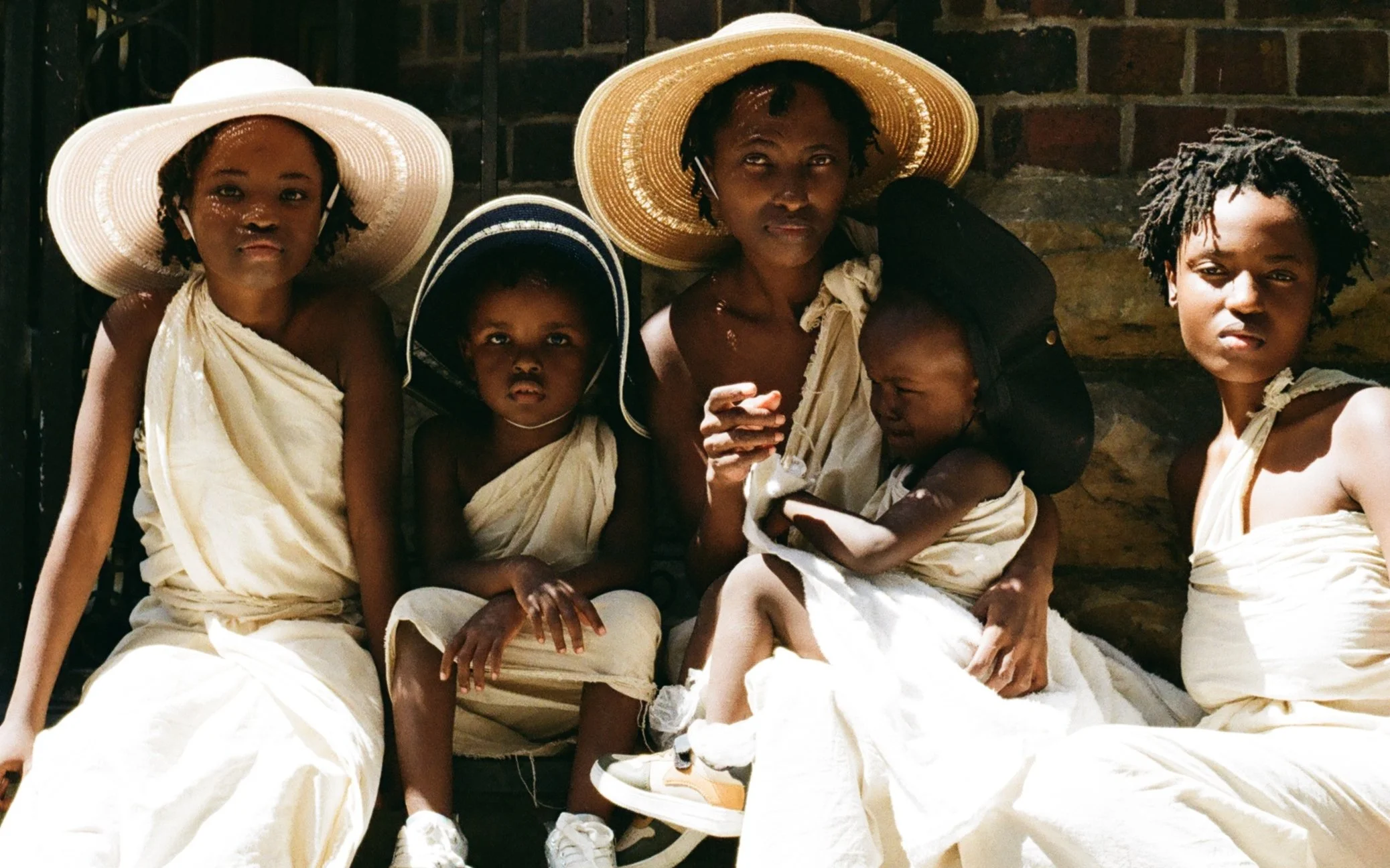
Studio 402 take on Cape Town for a group show grappling with the city’s conflicting identities
‘Mother, This Isn’t Me’. A claim, a plea, a frustration. Where Johannesburg is heralded as the ‘city of gold’, Cape Town is adorned with the title of ‘Mother City’. Centuries ago, on the eve of European arrival on the Cape, the city provided refuge for sailors and is labelled as the nation’s first ‘urban outpost’. This portrayal of history is obviously laden with colonial and paternalistic inconsistencies that disregard already existing life and civilization. However, the ‘Mother City’ has remained an enduring moniker for the city by the sea.
So, what does it mean for an exhibition title to brazenly refute the city in ‘Mother, This Isn’t Me?’ Creative studio Studio 402 brings together a collective of artists who, in varying degrees, take experimental leaps into understanding the intersections and negotiation of identity, space, memory and (in)visibilities in South African life. As we move through the exhibition held in Church House (a repurposed community centre) during Investec Cape Town Art Fair, ‘Mother, This Isn’t Me’ mulls over a triage of questions: Who am I? Where do we go from here? And what will happen when I’m gone?
A week prior to the opening of the show, six District Six families were ordered to leave their homes, after an eviction notice served by the Cape Town Magistrates’ Court. The ruling is part of an ongoing legal battle since 2014, whereby these residents have resisted the displacement of their family homes, lived in for generations. In the context of a nation that continues to feel the ramifications of the Group Areas Act, this recent disruption is another example of the economic, spiritual and moral disruptions faced by black, brown and coloured South Africans. Unsurprisingly, the price of Cape Town’s holiday status – which causes the influx of digital nomads and European/American capital – is paid by the people who are participatory in the country’s change, but not granted ownership to their homes. This is not to say that the curatorial team (Zano Nkosi, Francesco Mbele, Khumo Morojele, Jack Markovitz and Thato Nzimande) nor the featured artists are explicitly engaged in answering these questions, but there are ways in which they orbit around self and collective reflection within their locality.
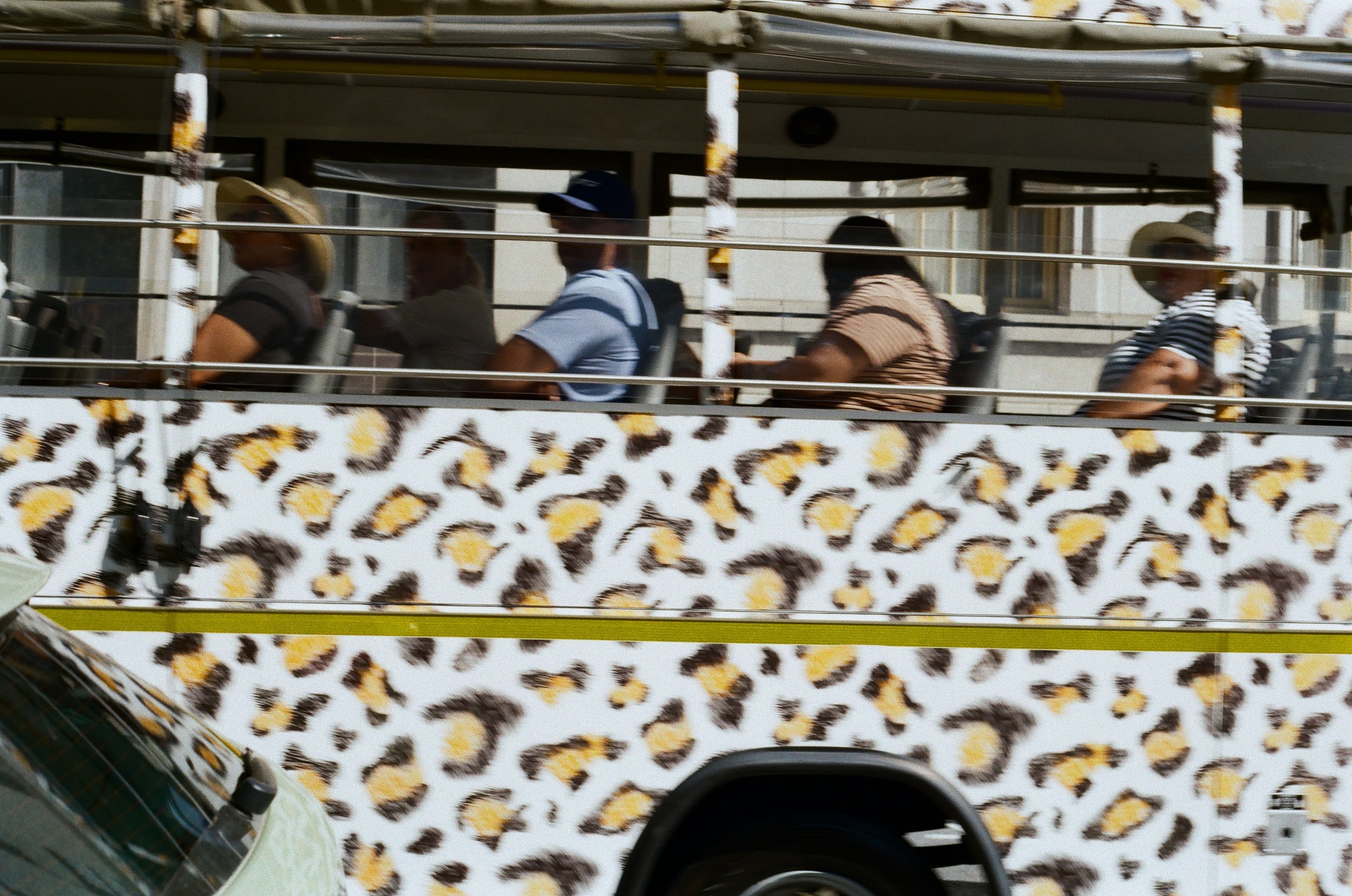
City scene of Cape Town
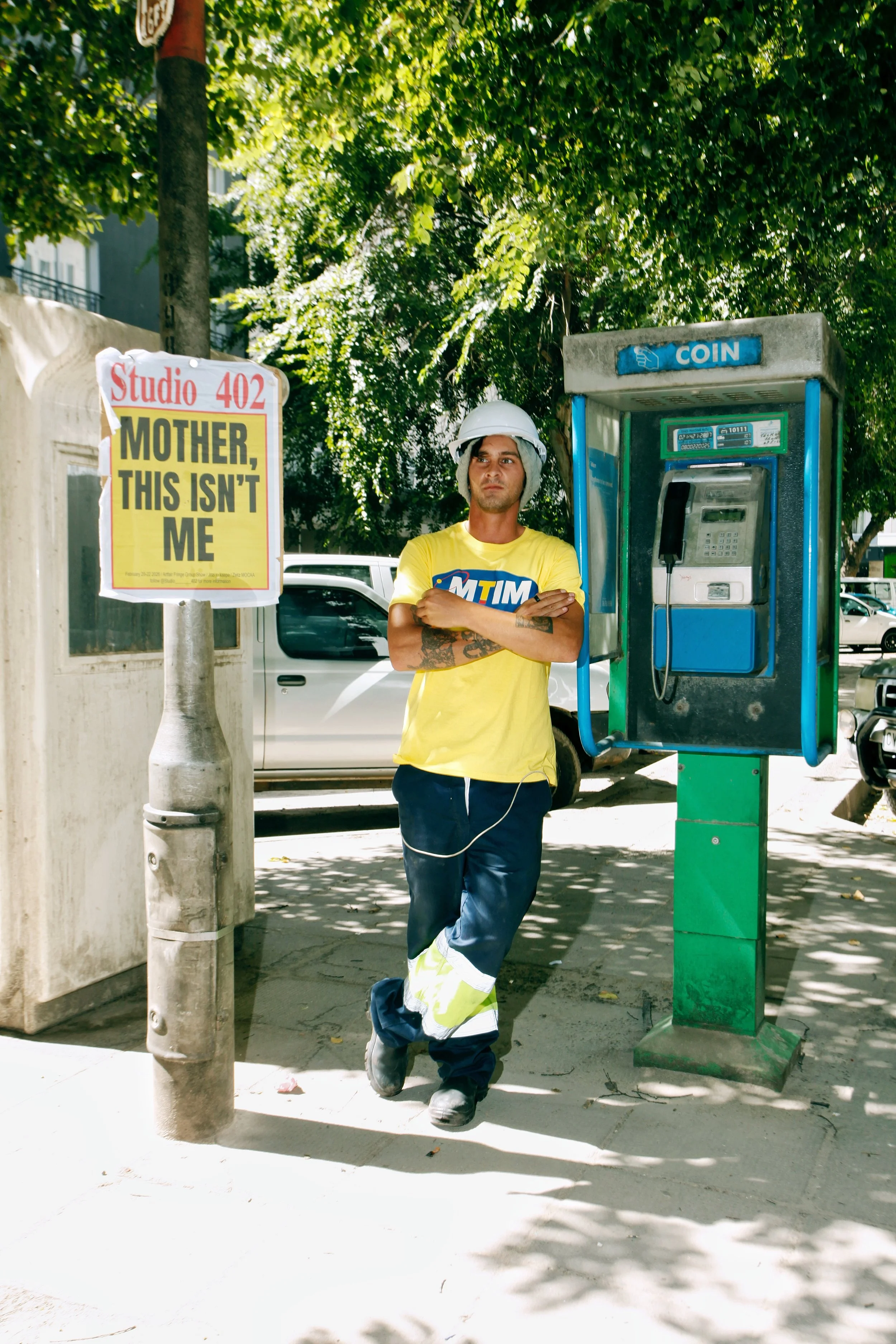
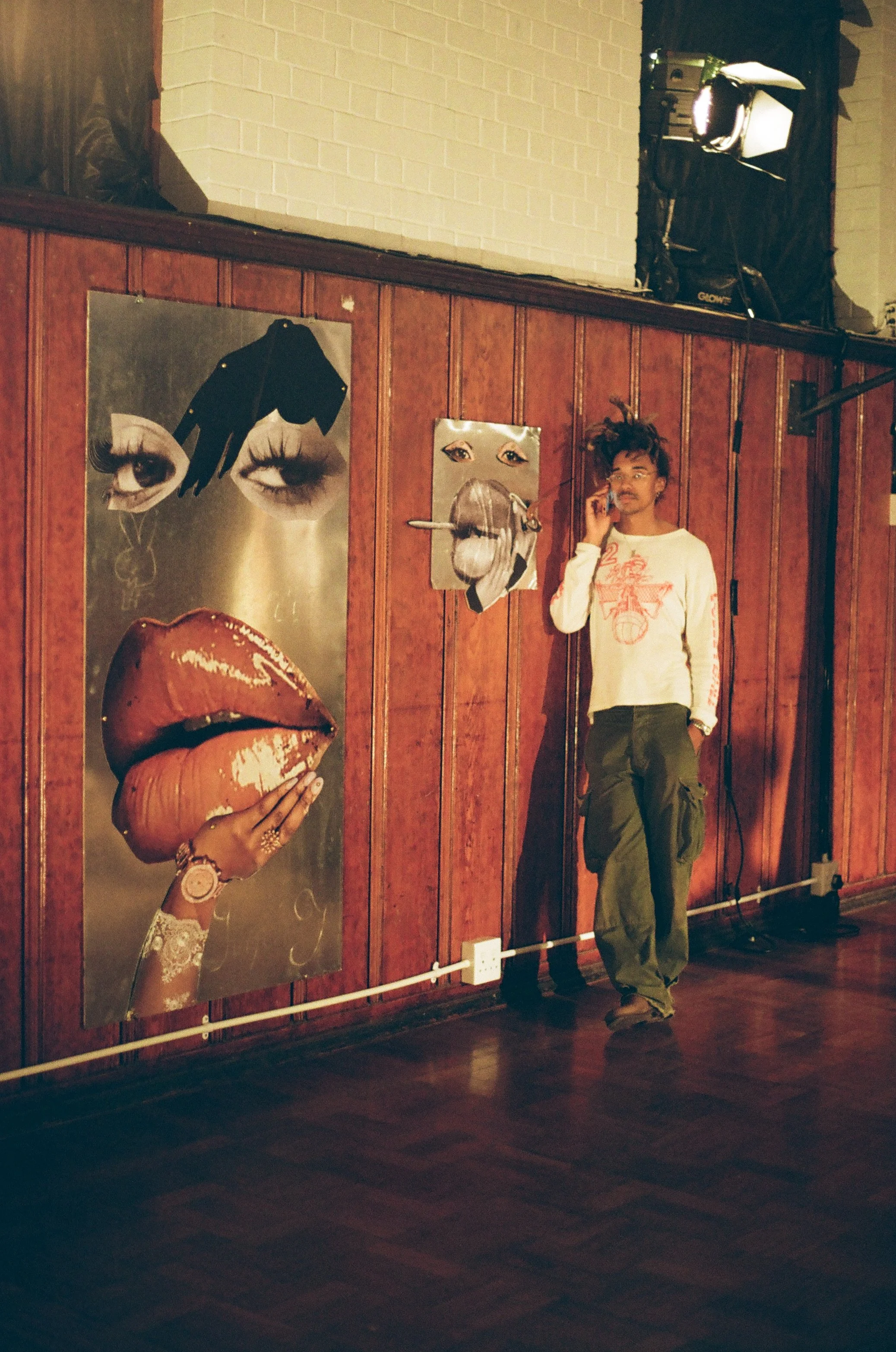
Fransceso Mbele
Thato Nzimande ‘Before We Dry’
Initially, I was wary of Studio 402’s foray into Cape Town, as their initial 2025 exhibition, ‘Price of Gold’ demonstrated a sharp understanding and affinity for Johannesburg. Admittedly, South African memory and references are never contained to only one city and are instead intertwined in our communal mess of ideas. But I remained curious as to whether there would be a dimming in their approach to Cape Town. In contrast to Johannesburg, a city relevantly easy to claim (barring the cyclical xenophobic barrage directed at black folks), Cape Town occupies this unique space of white longing, desire and capital that collides with non-white existence and persistence. The site of the exhibition, Church House, is itself a repurposed heritage site in the city’s CBD. Whether intentional or not, the venue therefore reflects on the exhibition’s interrogation of Cape Town’s spaces and occupation in daily life and memory.
My personal apprehension towards a show about Cape Town is then rooted in an understanding that historically, the city has tried to make itself an exceptional and unapproachable outlier. How does one claim ownership in a city intent on keeping you out? My own positionality as black woman from Johannesburg is an important caveat that affects my experience. Would this resonate with the way these artists (some also not Cape Town ‘natives’) try to find themselves in the city?
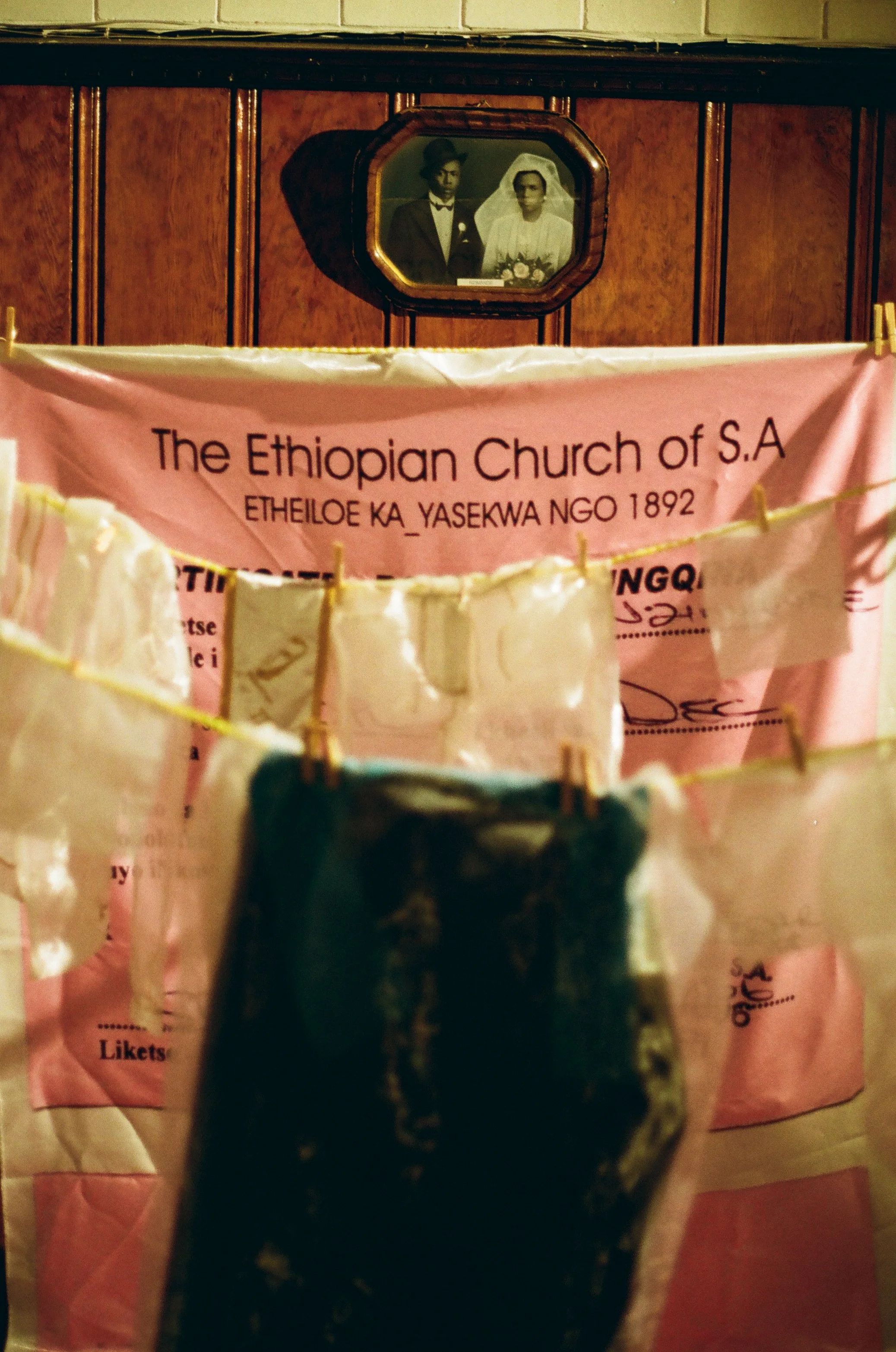
Upon entering the exhibition, Thato Nzimande’s installation ‘Before We Dry’, is an immediate confrontation about home. Clothes, shoes, photographs and other family items are strung up on a clothing line and sealed in plastic. The scene is a picture of domesticity and an invitation to their grandmother’s memorabilia but at the same time, it leaves me with a degree of melancholia. What is the use of a clothing line when your home is being repossessed? For many of us (the District Six families fighting for their homes included), the clothing line is a brief stamp into visibility and temporality. It says, ‘I am here and will be here again, for the simple fact that I exist and need to dry my clothes.’
“I don’t want to be buried in the sand, they’re going to build house on top of me. I’ll be by sea"
Brenda Fassie
The simplicity of Nzimande’s display is a sharp contrast to Gus Robins’ tongue-and-cheek technological assemblage at the other end of the exhibition. Whereas Nzimande epitomises a tender personal (and relatable) nostalgia, Robins holds up an uncanny mirror to surveillance and self within the theatre of the ‘Mother City’. It is described as a ‘reactive digital interface coded in Python (programming language) and tethered to a live camera.’ For the work to come into being, the viewer must step into the camera’s visual field, where their face is captured and reduced into a series of characters that theoretically construct a ‘mechanical portrait.’ Standing in front of the work, I struggle to find my face in the coded marks. It unsettles me, and it’s meant to – a lifetime of nuance riddled into a moment of surveillance. But in truth, this work could be placed into any metropolitan city and maintain its conceptual messaging. Whereas Nzimande gives us a portrait in absence, Robins delivers a digital urban mugshot.
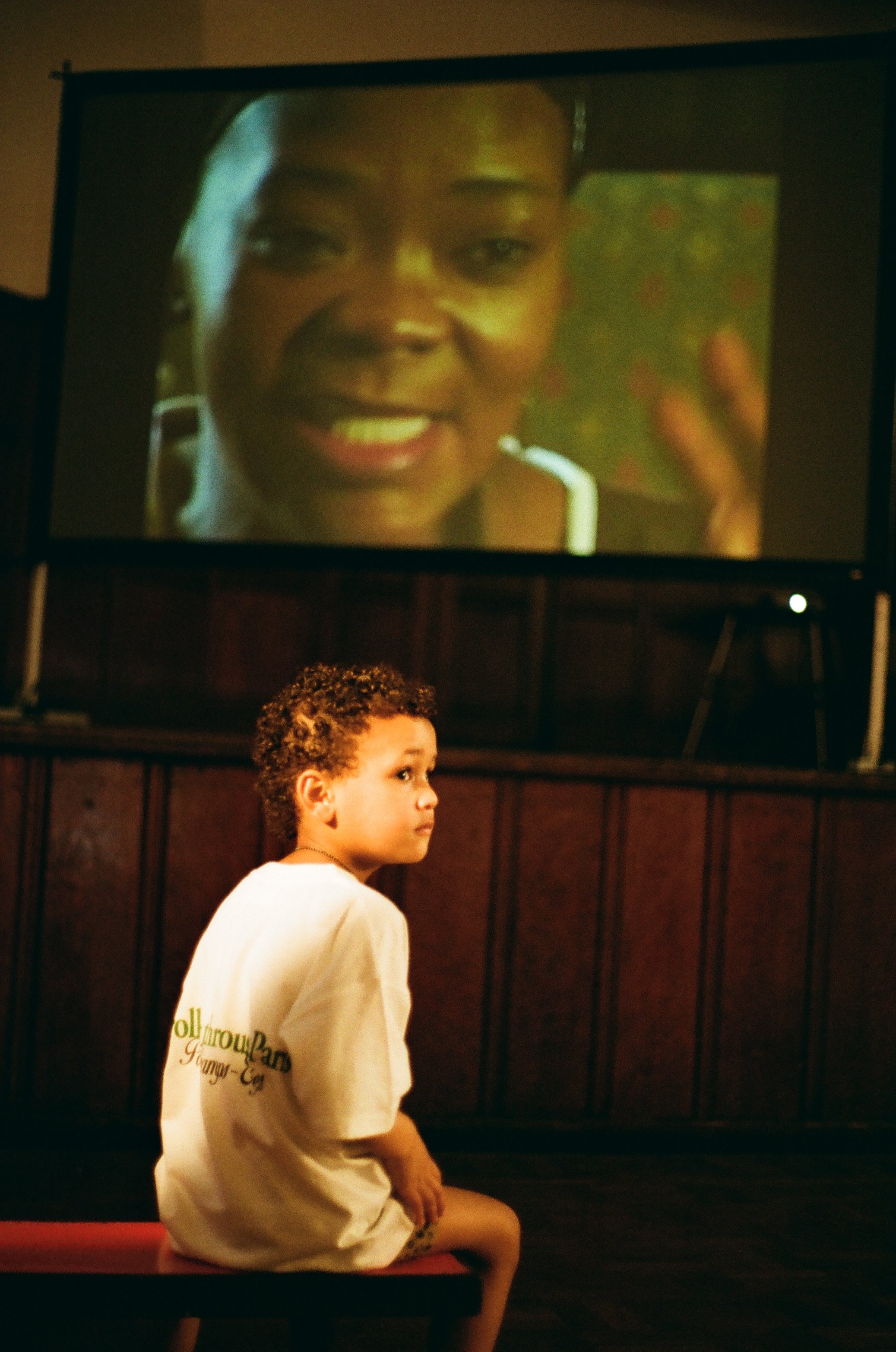
Amidst the filmic collage of ‘Cape Dependence’, filmmaker Jack Markovitz juxtaposes family video archive with found cut scenes ranging from political speeches to dance videos and even Takalani Sesame. The work begins with footage of Leon Markovitz, the artist’s grandfather and former DA mayor of Cape Town, intertwined with archival moments of white South African life. These shots are sliced with South African newsreels and archival footage across personal and political lines. And at the end of the film is a striking interview with Brenda Fassie, where she says, “I don’t want to be buried in the sand, they’re going to build house on top of me... I’ll be by the sea.” This moment brings into worldview the spiritual weight that surrounds the spaces we occupy. It is the understanding that in life and in death, you are still at risk for being displaced, and at least the ocean provides a dignified end.
The quilted poetry in Khumo Morojele’s ‘O Mo Kae?’ (Where are you from?), placed in the centre of the exhibition, seems to yell back at Markovitz’s filmic inquiries. Two hanging quilts are stitched with excerpts from playwright S. Machabe Mofokeng’s book of essays and stories, ‘Pelong ya Ka’ (In my heart). Mofokeng was the first scholar to receive a PhD in Sesotho from the University of Witwatersrand, who contextualises Morojele’s own cosmopolitan angst, existing across Basotho and South African cultures. I am moved by the proximity pairing of the Morojele and Markovitz works as they employ nostalgic elements that make us feel as if these stories could almost be our own.
Jack Markovitz ‘Cape Dependence’
Johno Mellish
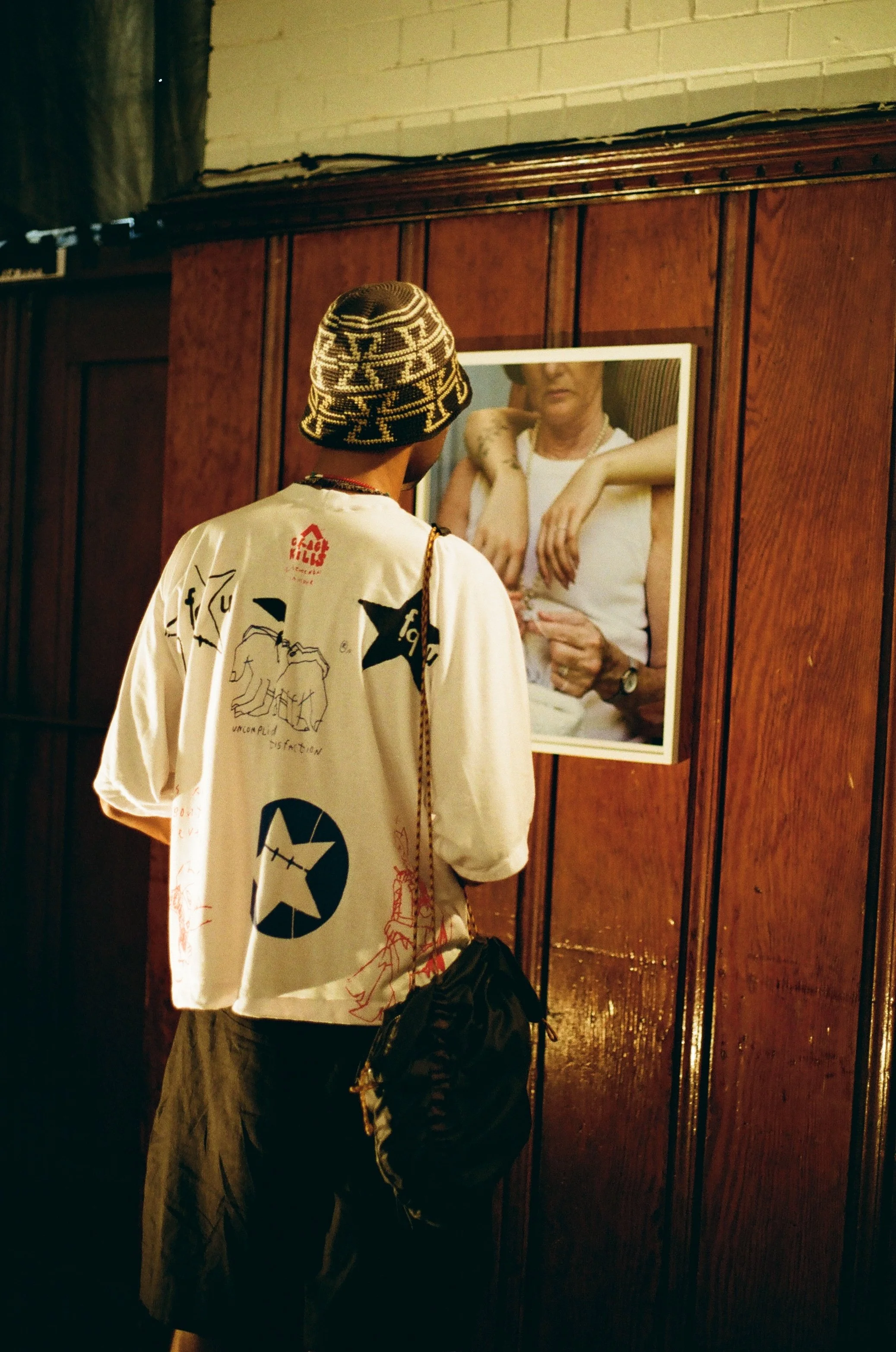
Fransceso Mbele’s work is a picture of glamour on two shiny deconstructed billboards. The artist references Johannesburg’s spectacle of advertising and image, cutting from found images of celebrities with markers of beauty and wealth. While turning us away from Cape Town, the piece engages with the work of Robins and Nzimande where the question of ownership (of the image, object and self) comes into view. Meanwhile Johno Mellish’s portrait of two generations colliding, which sits next to Mbele, is a precious image of an older woman knitting with a young woman’s hands draping over her shoulders. Within this busy setting, Mellish’s tender image gets slightly lost in the foray of installations, but it is an image I come back to – almost like a quiet meditation.
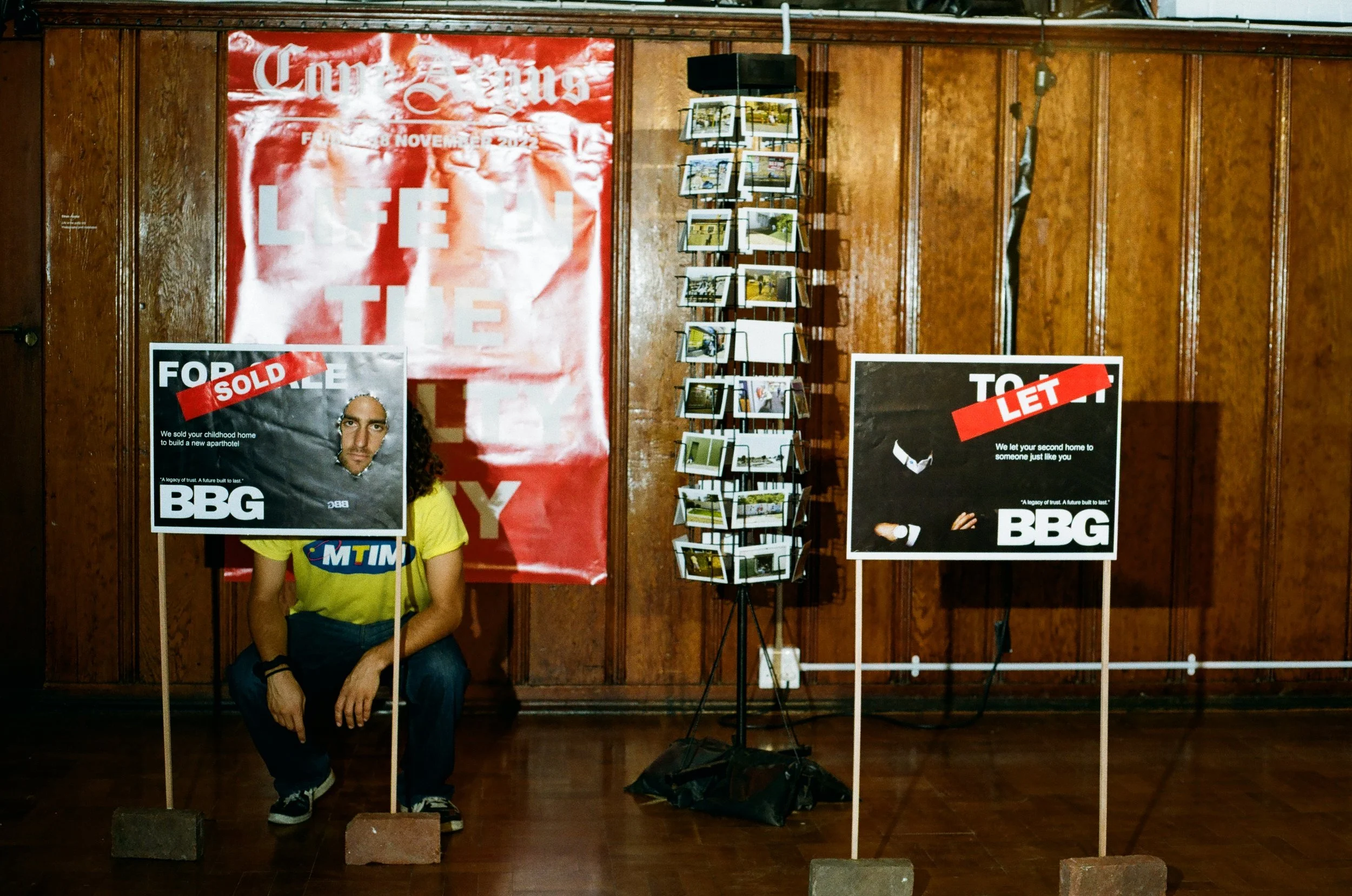
Ethan Jacobs’ manipulation of the photograph begets a pointed commentary towards Cape Town’s increasing housing insecurity by taking the format of property insignia ‘just sold, for let’ and turns it back on the viewer. One sign reads ‘We sold your childhood home to bring a new aparthotel’ and stands alongside a display of simple postcards that depict the city’s displaced communities. Jacobs’ work drills home in the absurdity of how people’s lives (or their displacement) can be contained in the image – anguish within four corners of a photograph.
“‘Mother, This Isn’t Me’ mulls over a triage of questions: Who am I? Where do we go from here? And what will happen when I’m gone?"
Ethan Jacobs
Klein Muis’ play with the garment engages with a re-imagined aesthetic of assumed class by invoking Johannesburg Street performers, military aesthetics and even Brenda Fassie. Next, Mira Jamal’s presentation transports us to a bedroom floor. This space of personal refuge is situated by a plush carpet, cassettes and shoes strewn about. Mirroring this call-back to home is an installation by Jozi-based Shanti Cullis. Sitting upon a purple Muslim prayer mat, we see religious texts (the Quran) and Muslim prayer beads on a table alongside a suicide awareness pamphlet, which introduces tension to this otherwise serene scene. For communities of colour, suicide is often a conversation shrouded in shame and secrecy. The pamphlet’s inclusion breaks an assumed spiritual intimacy but realistically reflects how these realities co-exist and intersect.
The softness from both of these artists is in contrast to the work of Mosa, who constructs a domineering abstracted flag that cuts across the space. In 2022, the Cape Town parliamentary buildings were damaged in a fire and have since been in a rebuilding process set to finish in December 2026. Mosa uses this structural breakdown (and rebuild) as an entryway into mutating and exposing the fragility of national symbols and structures. Beneath the large flag, the artist installs a smaller model of the flag with the tweet ‘Who killed Chris Hani?’ (published by Jacob Zuma’s son on the day of his arrest) printed across the front. The flag is planted with bricks stolen from the parliament rebuilding site and creates a soup of local references that are wrapped up in status, context and an ever-changing idea of nation building.
Finally, Kutlwano Makwela’s metal sculptures are a welcome anomaly in the world of contemporary artmaking that has been taken by the scourge of sticks, stones and sand installations. The artist turns to metalwork as a reconnection to traditional manipulation of this material and sees welding as a “reflection of the systems of production that sustain cities like Johannesburg and Cape Town.” ‘Mother, This Isn’t Me’ presents a strong case for a material engagement of histories and identity and I find their approach to installation exciting. However, in moments I wonder where the tipping scale of choosing a work for its vibrant aesthetic disruption overshadows the intellectual communication of an idea. At different points, the exhibition conceptually wrestles with itself but ultimately, the curation presents an earnest mind-mapping to my burning question of what will happen when I’m gone? The exhibition is a divination of ongoing conversations, a room of voices that are all calling out – sometimes heard, sometimes not, but always calling.