
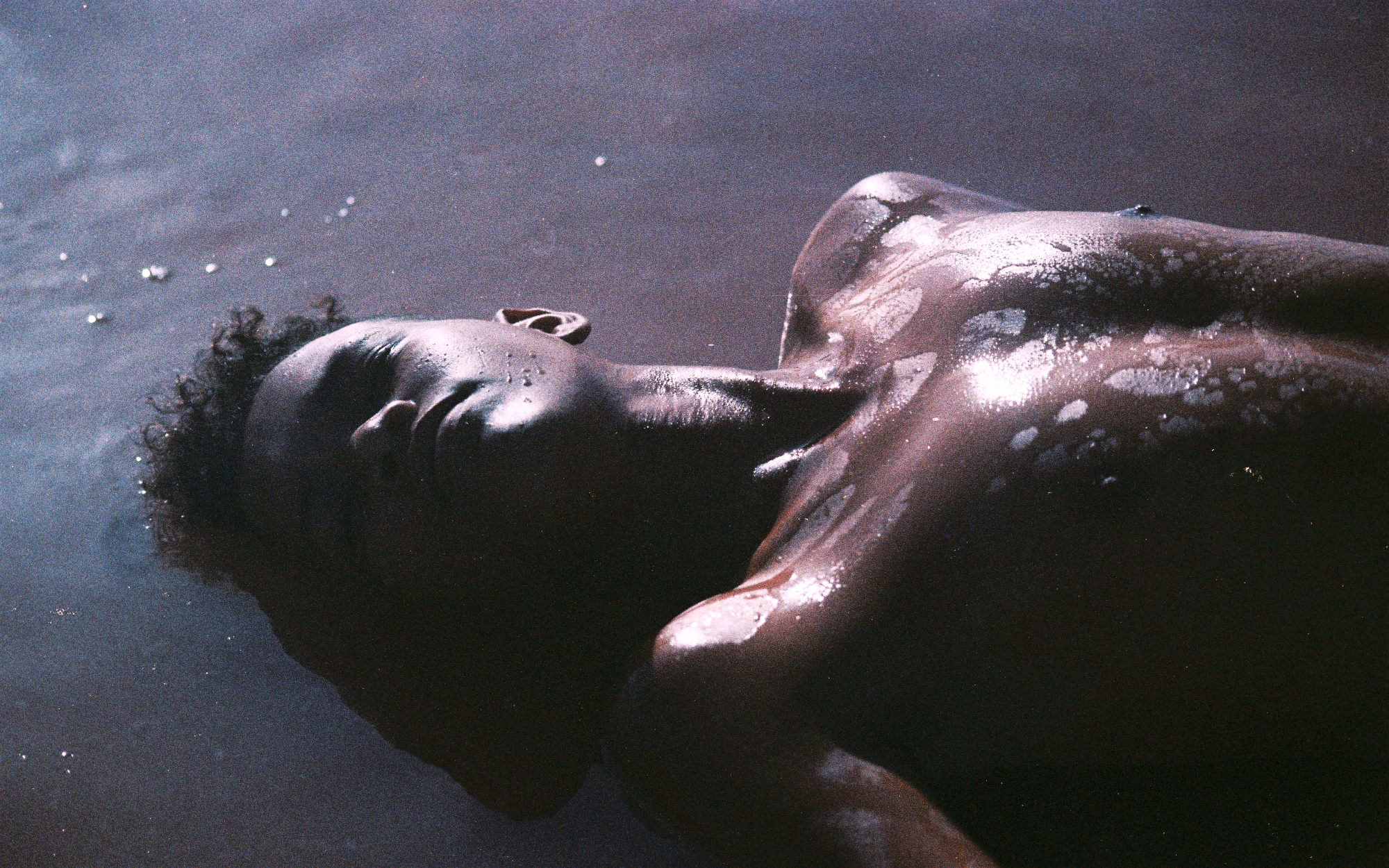
In conversation with Gabriel Pinto on his contemplative series from the salt plains of Venezuela
We live in unending sound: cities that never sleep, cars that never stop, feet on concrete that hit the ground – always late, always en route, never arriving. This ceaseless noise has turned us deaf to our surroundings and to each other. So, this week, amid the hum and thrum of Cape Town’s city centre, Investec Cape Town Art Fair (ICTAF) slows to a low, rhythmic pulse, urging a moment of pause. Already a meeting point for cultural exchange, the fair has always offered an opportunity for reflection and introspection, but this year’s curatorial theme ‘Listen’ insists on a form of active engagement: attention that is not passive, but embodied, ethical and political.
Among the 126 exhibitors is BETA Contemporary (Barcelona) presenting Afro-Venezuelan artist and visual researcher Gabriel Pinto and his series ‘Pueblo de Sal’ (The Salt Town). These photographs detail life on the salt plains of Pampatar, Venezuela and the ways in which identity is shaped and inherited. Pinto is one of 12 emerging artists from around the globe who are featured in the Tomorrows/Today section of the fair curated by Dr Mariella Franzoni. The section, titled ‘If You Listen Carefully, The Air Is Full of Laughter’ reflects on Ben Okri’s novel ‘The Famished Road’, which follows spirit-child Azaro as he navigates the earthly and spiritual worlds. Here, Franzoni invites viewers to listen to the duality of our existence and dwell in the in between; both the beautiful and the violent.
Within this framework, Pinto (who is the recipient of the Photo London 2025 x Nike Emerging Photographer Award and a Prince Claus Fund awardee) asks us to see the quiet insistence of polarity, where labour and memory are explored through immersive ecosystems of sweat, stories and landscapes. We sit down with the Caracas-born artist to find out what viewers can expect from ‘Pueblo de Sal’ and the method in which he works to highlight an overlooked narrative.
“My projects start with presence, silence and observation"
Please frame ‘Pueblo de Sal’ and how visitors will encounter it at the ICTAF booth?
‘Pueblo de Sal’ emerges from memory, fragility and Venezuelan identity. It explores how our identities and landscapes transform under pressure, leaving traces that are crystalline and rough. The Salt Mountain is central, a tribute to the labour of salt flats. Visitors enter not just a display, but an experience of the landscape and its people. The photographs function as both anthropological and poetic records, capturing the rhythm, scale and care embedded in daily life on the flats. It is immersive, tactile and meant to be felt, not just looked at.
What originally drew you to the salt flats and the people there?
The landscape is otherworldly, yet sustained by exhausting labour. I was captivated by the contrast between the fragility of salt crystals and the strength of those who work them. I was drawn to their relationship with time, a rhythm set by evaporation and wind rather than a clock. Living alongside them, my camera stopped seeking the postcard image and began noticing detail – the texture of hands, traces of salt, the mountain growing shovel by shovel. The experience taught me that my role was to translate, not just to document.
“The Venezuelan youth are the salt that preserves the identity of a people"
You spent a long time on the flats. Tell us about your process.
My projects start with presence, silence and observation. Before taking out the camera, I inhabit the place. I ask permission from the landscape and the community. Working slowly allows me to honour the scale of effort. Speed often leads to superficiality. Salt takes time to crystallise, and the work in the flats is constant and exhausting. By integrating myself into the community, the work becomes with them rather than about them, reflecting their life with honesty and patience.
Young people appear in the series as those continuing these practices in a time of crisis. How do you see their role in keeping these traditions alive, and what did it mean for you to witness that?
The young people embody heroic resistance. They are not simply repeating tradition; they are saving it. In a country marked by migration, those who choose to stay and continue these practices are the bridge between past and future. The youth are the salt that preserves the identity of a people. Their energy and persistence shaped the photographic series, so the work is not melancholic but alive, reflecting strength, vitality and hope.
Salt is both material and symbol. What does it mean to you now?
Salt is a metaphor for resilience. It preserves memory and identity, yet also corrodes and wears down the bodies of those who work it. After documenting the salt flats, salt has become the luminous residue that remains when everything else has evaporated. Crystallised hope. It is both fragile and enduring, and it carries the stories, labour and persistence of communities who remain rooted in their landscape.
This story was created in collaboration with Letterhead.
Visit Gabriel Pinto
Visit Investec Cape Town Art Fair
Visit Beta Contemorary
Visit Letterhead
Words Milla Peerutin
Published on 19/02/2026