
Randy Gowon and Turkan unite East Africa’s then and now at Amu Gallery
“Growing up between worlds and being deeply shaped by the richness of East African culture, I developed a strong appreciation for the stories, traditions and forms of knowledge carried through art and material heritage,” says Kenyan creative Randy Gowon of his life’s journey and motivations for opening Amu Gallery in Paris. “The gallery is my way of honouring that legacy while creating space for new voices and expressions to exist alongside it.”
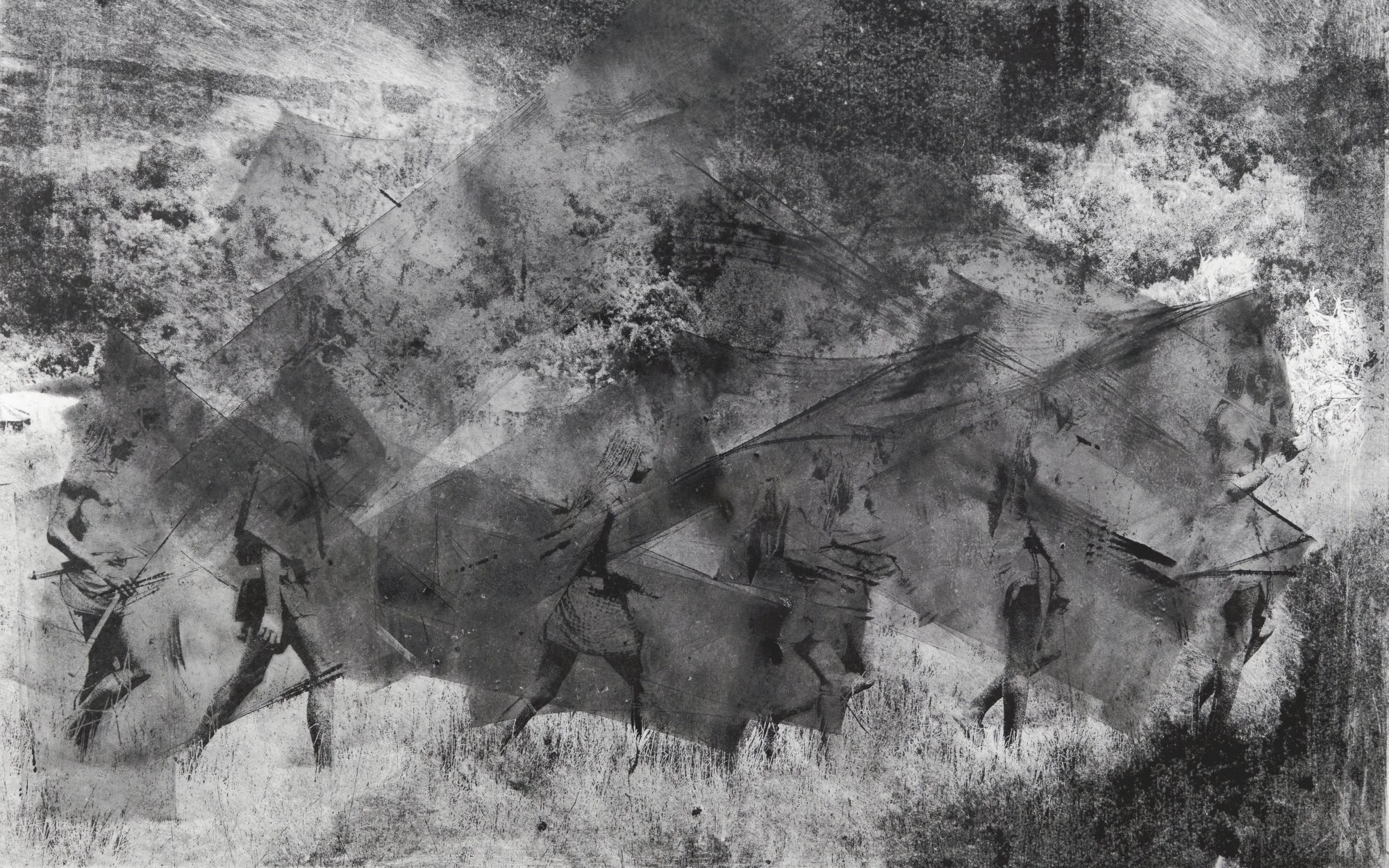
His curatorial proposition for this just-launched space is simple yet alluring: to present antique objects alongside contemporary pieces that together “speak to living traditions, shared identities and the continuity between past and present.” And for the first exhibition, he has invited Turkan to present ‘Sacred Ground’ (2026) – a project exploring Eunoto, the Maasai rite of passage marking the transition from warriorhood (Moranism) into elderhood. The London-based Kenyan artist spent time in the Rotian Emanyatta settlement in southwestern Kenya to witness this once-in-a-decade custom unfold and subsequently create this series of eight works on paper.
“There is a clear alignment between Turkan’s practice and the artifacts I carry, many of which originate from communities with close ties to the Maasai or exist within overlapping cultural and spiritual frameworks,” Gowon adds. “So, by bringing these works into dialogue, I aim to highlight how art can act as a bridge between communities, revealing not separation, but continuity. This collaboration also allows audiences to engage with culture not as something distant, but as something living, connected and present.”
“This collaboration allows audiences to engage with culture as something living, connected and present"
Randy Gowon
The Maasai of Kenya and Tanzania have been much documented, though all too often through an ethnographic or touristic lens. Conversely, Turkan rejects any attempt at a literal presentation of the people or their ceremonies. Instead, he ritualises his own processes as a way to experience the intangible thresholds the warriors pass across during Eunoto. Through layered pigment and gestural mark-making, his experimental works neither fully reveal nor conceal his subjects as they receive the blessings of wisdom and leadership. Rather, the viewer is invited to inhabit their sacred hinterland.
“As I developed the series, I became increasingly concerned with the function of the image – not simply as representation, but as a vessel through which cultural memory might persist,” Turkan explains. “The works began to operate less as aesthetic objects and more as prompts: sites where traces of the past, spirituality and collective memory could continue to resonate in the present.”
“The works act as sites where traces of the past, spirituality and collective memory could continue to resonate in the present"
Turkan
At Amu, these finely-wrought fragments of faces, processions and landscapes sit in conversation with Dinka dolls from South Sudan, Kifwebe masks from Democratic Republic of Congo, Samburu adornments from Kenya and many more legacy objects. And the result offers up a meditative space dedicated to the custodianship of African knowledge. It’s this intention that truly sets the collaboration apart.