
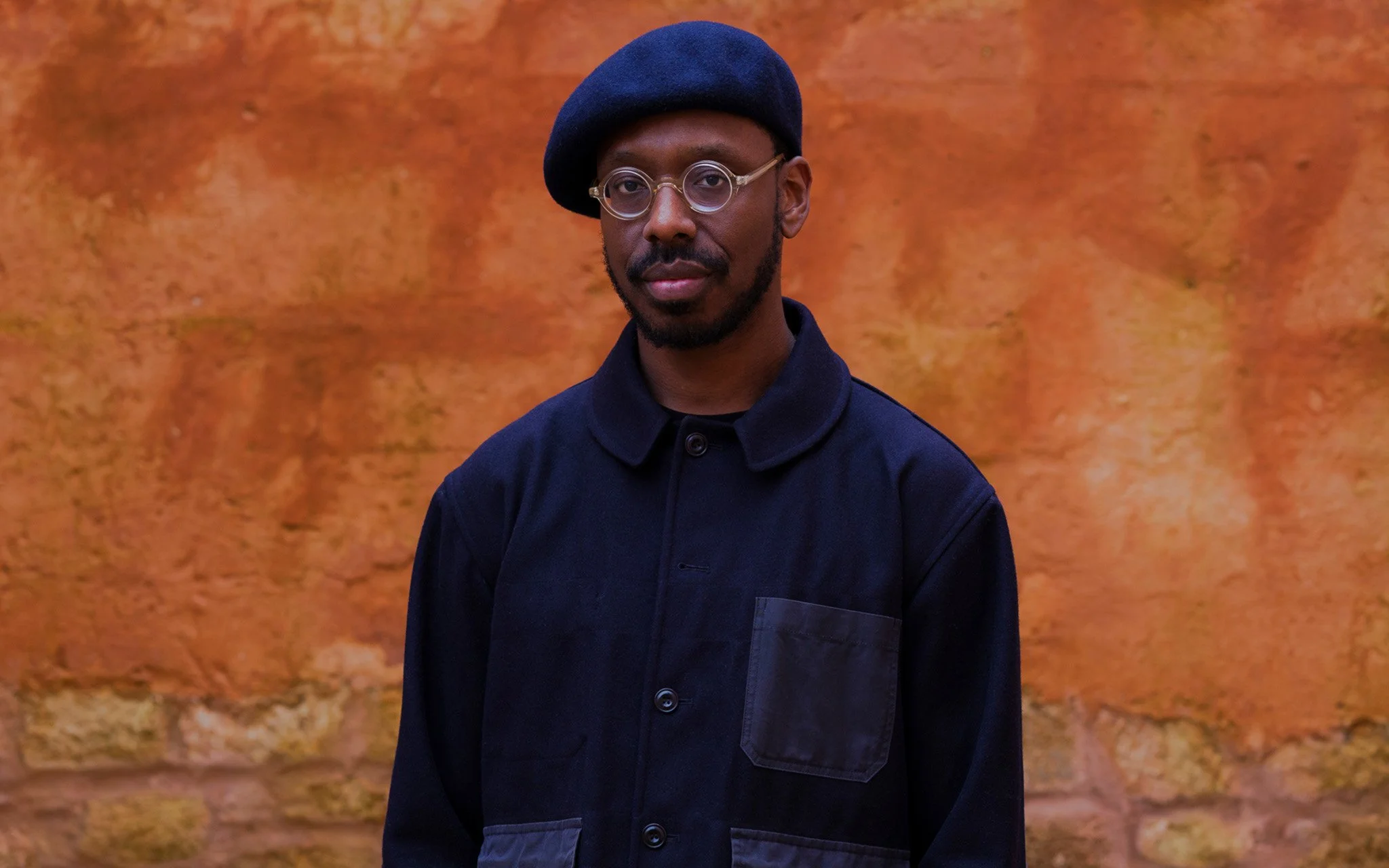
The artist on the divine spirits and innate histories that have guided his solo record
There is a perceptible quality of slowness that animates the works of Shabaka Hutchings, one that doesn’t wait for fleeting sparks of inspiration but rests in perseverance as the spark itself. The creation of his latest album ‘Of The Earth’ – written, produced, mixed and mastered on his own and released via Shabaka Records – followed a quieter course of fortitude. He tells me: “That's what you want the divine spirit to give you, the endurance to just keep going even when you don’t feel like it.”
‘Of The Earth’ represents a synthesis of lessons gathered through years of deliberate collaboration. From the futuristic thrust of The Comet Is Coming to the invocations of ancestral memory in Sons of Kemet and Shabaka and The Ancestors, each ensemble centres a distinct inquiry into the transmission of knowledge through sound. Here, Hutchings draws those inquiries together as a singular voice contemplating the “primordial state of creativity and the fundamentals of where we go to get that drive to create”. This departure from the collaborative space dissolved the time constraints that come with releasing a record and created an environment for deeper self-exploration. As he puts it, “In doing this project, I’ve really found and come to terms with what I’m about musically and what my particular taste is. The process takes time and it can’t really be rushed.”
“I’m interested in the primordial state of creativity and the fundamentals of where we go to get that drive to create"
Hutchings speaks candidly of the challenges he encountered in moments where he would usually turn to his peers for feedback. Yet this chosen solitude granted the latitude to explore his own multidimensionality, “in terms of having to be of different head spaces,” he explains. “To be able to be of the ethereal realm, within the creative clouds and be outside of time.” Yet running his record label independently does require keeping one foot on the Earth to honour those finite deadlines. “It’s deep because it’s a constant question of how much time do I have?”
That negotiation with time extended into his musicianship. Prior to ‘Of The Earth’, Hutchings took an extended pause from the saxophone, an instrument he has long spoken through with conviction and force. He turned to the flute instead, drawn to its softer tones and what it asked of him differently. It was a path that readjusted the way his body carries tension when playing and sharpened his awareness to the origin of sound: the breath and the body in relation to the instrument. He tells me, “before, I was in a zone where my body was driving how I play.” He spent a year and a half guided by the teachings of the flute before returning to the saxophone with a refined perspective. “The first element that I’ve recognised coming back to the horn is that it doesn't have this grandiose persona, it doesn’t have this weight and magnitude as ‘my horn’ – the thing that I speak on. It just feels like an instrument amongst other instruments that can and should be employed when it’s necessary.”
The album marks an artist in full expansion which is clear in the appearance of a voice that hasn’t yet been heard. For the first time, Hutchings takes to the mic and raps. The process was driven by experimenting in finding his voice and cadence. He explains, “I found myself having to think: what is the tone, voice, the attitude and the atmosphere that represents where I’m at and the message that I want to really put forward.” What emerged is the low-rumbling, prophetic flow on tracks like ‘Go Astray’ and ‘Eyes Lowered’. In the latter, he builds a soundscape of smoky, metallic beats, his voice cutting through the haze to offer direction through the systems of violence we navigate daily.
That spirit of resourcefulness runs through the makings of the album too. Hutchings has never owned a drum kit. “I’ve always wanted to” he says, but his living situation means he’s hemmed in by neighbours on all sides. So electronic drum pads became his solution and, ultimately, another site of exploration. “Having these electronic percussion instruments, or the ability to sample and trigger drums, means that I can actually explore drum textures and rhythms and what I want from the percussion base. It’s been a revelation.” ‘Light The Way’ carries the rhythmic precision of UK grime, with a hypnotic hi-hat-snare combination forming intricate pockets for the flute to take flight. Across the album, these production choices speak to a deliberate symbiosis between the ethereal and the earthly and his ways of moving fluidly between the two.
The album began taking shape two years ago, while Hutchings spent a lot of his time in transit through the US and Brazil. He recalls the long road trips where landscapes bled into each other as the motion fed the music unfolding within him. The feeling of being not quite here nor there are transcribed into the foggy atmosphere of the production. For Hutchings, movement is paramount to the maturation of his ideas. “When you reflect outside of the environment that you’ve made something, it really gives you a different set of ears and a different way of understanding what you’ve made.”
It's the same way he engages with the act of composing as a form of knowledge production. In his creative process he does not inhabit the role of the inquirer, rather what has been before may funnel through him. In other words, sound “[is] a place where the history emerges because we are the history. I like the idea that there are things in motion that are outside of my conscious desire to claim them. So just because I'm not thinking of history, it doesn't mean that those elements that make up a particular historical structure are not there informing what comes out. I like the idea that I might shut my eyes, allow this download of information onto the page and then go back to research what was happening.” Hutchings acknowledges the value in researching and composing in tandem but finds it’s a process better suited within the structure of a residency that can facilitate deep immersion into a single body of work.
Since releasing ‘Of The Earth’ Hutchings is considering how the music might transform in a live setting. He describes taking an eight second loop of one track and asking himself how far it can be pulled apart. “How is it that I can manipulate that? How does it segue into another section?” he asks. To do so, Hutchings speaks of stepping outside of his role as the instrumentalist and embodying that of a producer, one who utilises someone else’s music to construct a sonic experience. He credits the prolific bandleaders Sun Ra and Duke Ellington who he sees as figures “driving the orientation of the processes as opposed to being the solo player.” Those bandleaders understood that the music takes on a separate lifeforce when it is met with a live audience and it’s an idea that sits within the broader context of how we engage with sound collectively.
Hutchings is thoughtful about what that engagement actually looks like in practice beyond its outward performance. “There’s something really special about sitting down and just waving your hands in the air as a way of actually letting go with the music. If that could happen as a shift in the culture of how people let go while seated, that would be great.”
“Sound is a place where the history emerges because we are the history"
He draws a distinction between movement as performance and movement that arises as a form of uninhibited body language, reflecting closely on which spaces allow for which. In audiences where Black people are the majority, there is an unspoken understanding of how to witness and move through the sound together. “There’s actually this relaxation that means you’re not doing it because you've been told to, but because it feels natural and there’s no eyes on you going ‘oh that's a novel thing you’re doing’.”
It’s a sentiment he finds articulated by American poet and writer Henry Dumas in his short story ‘Will The Circle Be Unbroken?’. Published in 1966, the tale follows a legendary soprano saxophonist who returns from exile with a mystical Afro horn that projects a “new sound” reserved exclusively for an all-Black crowd at the Sound Barrier Club. The story resonates in its understanding of Black collectivity in the presence of sound, bridging toward the mystical dimensions of Black memory and possibility. “So, it's this sacred space that is not trying to question the meaning of segregation or integration. It’s just what is. The horn is played within this situation and I thought it was a really interesting tenet of looking at what it is to hold something and go, ‘actually this is for a particular community’.”
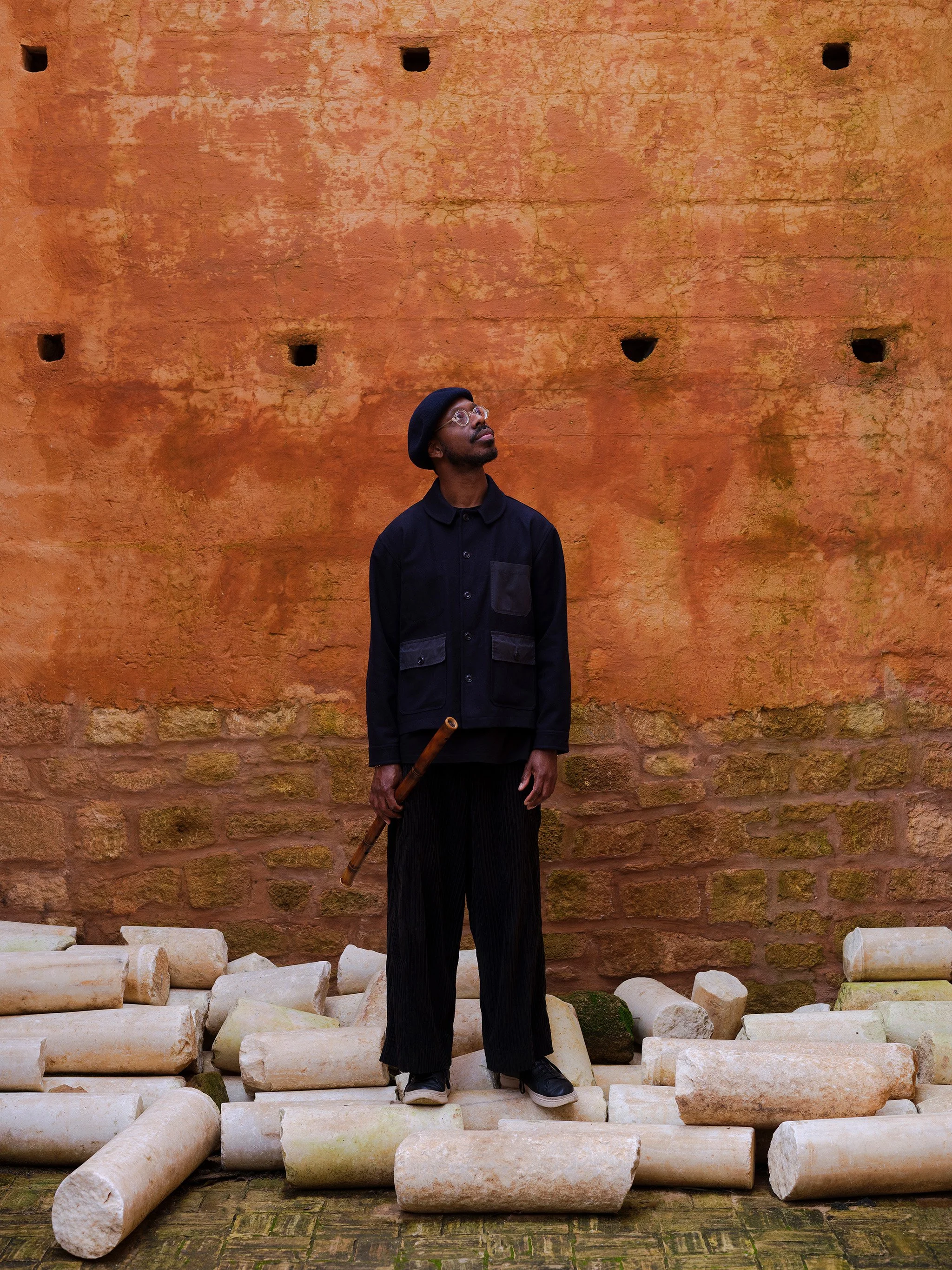
It’s a vision he holds carefully, aware of its contradictions. “Obviously its shady waters because if everyone does that, that’s how you get the worst parts of segregation.” Yet he allows himself to sit with the utopian possibility it contains and “dream about how that would be if there was a sacred musical object that was expressed in a situation where Black culture or African culture is free to just do its thing without the gaze of anyone that doesn’t understand it or sees it as entertainment.”
As he goes out on the road again, Hutchings is being more selective with his tour schedule this time around, with fewer dates that allows him more time at home. Resting easy? No. Almost as an aside, he shares that he has six new projects, including solo and collaborative albums, that he hopes to release this year provided the balance holds. “Making sure I'm on Earth and in the world enough for those to actually come to fruition.”
‘Of The Earth’ is out now. Shabaka Hutchings’ tour includes a show at the North Sea Jazz Festival in Rotterdam in July. More information here. www.northseajazz.com