
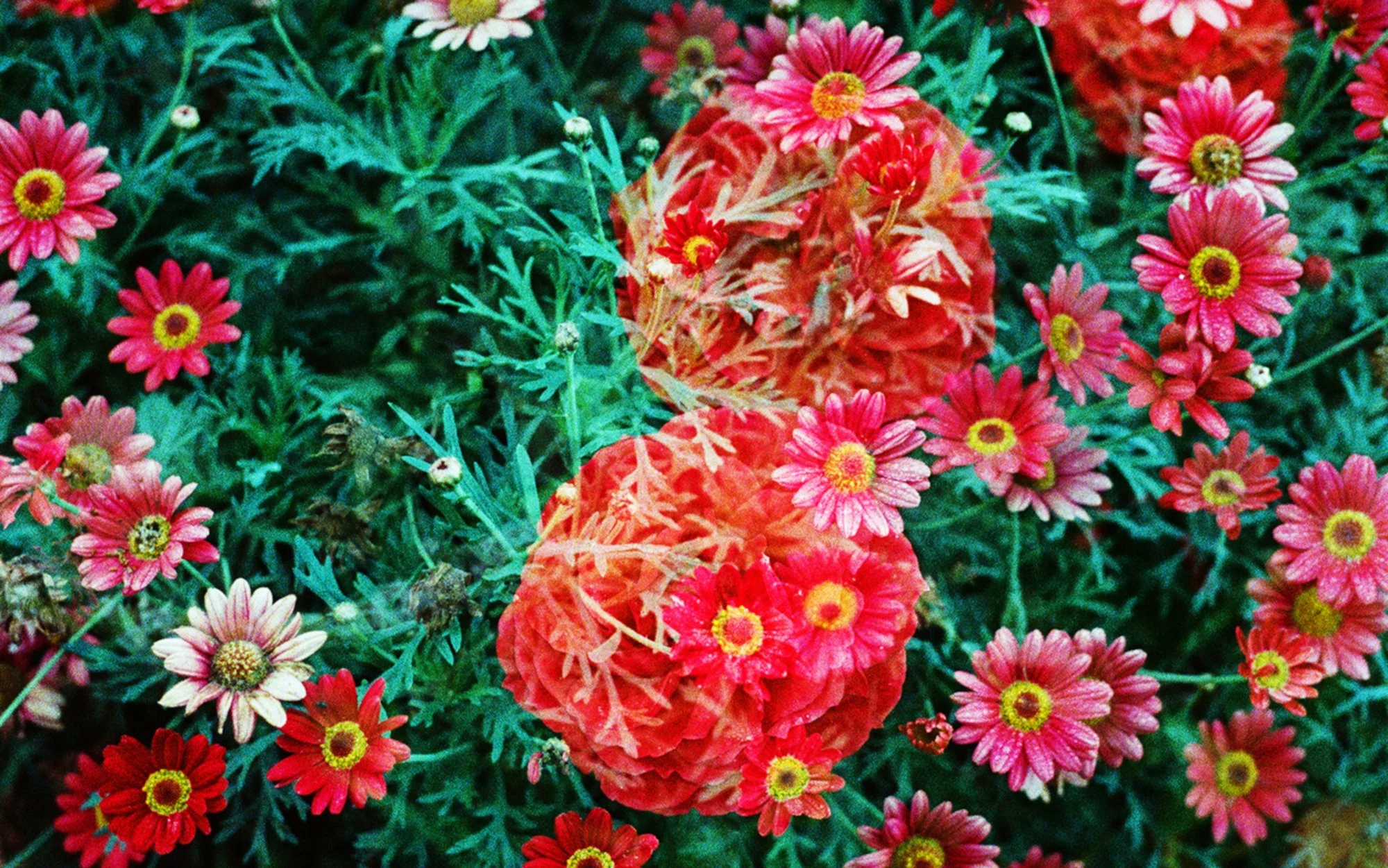
The artist invites us to feel the feels as we walk through her debut London solo show
For her first UK solo exhibition, Shaniqwa Jarvis dives into the mutable beauty that can be found in loss. ‘Only Love Can Break Your Heart’ blesses London’s Public Gallery with a body of work that mines her personal experiences of grief to unearth the fragility of memory and the healing powers of nature.
The NY-born, LA-based artist is globally celebrated for her tender photographic portraiture and interdisciplinary practice spanning collage, sculpture, film, textiles, scent and other interventions that ask us to consider our own passage ways to endurance and renewal. Here, Jarvis continues her ongoing exploration of flower motifs – blurred, obscured, gloriously in bloom – layered with multiple materials to create reflections and perspectives that simultaneously question the fixed nature of photography and assert its ability to hold and mould lived emotion. While moving image – and her upcoming second book ‘Guts’ – draw on archives to honour the matriarchal wisdoms of her lineage that now flow through her work.
The title of the show had NATAAL humming the St Etienne classic that inspired it, but the work also made us think of the famous lines from Octavia E. Butler’s ‘Parable of the Sower’: ‘All that you touch, You Change. All that you Change, Changes you’. Only through embracing transformation can we be a vessel for it. So, we sit down with Jarvis to let the love in.
NATAAL: Your first UK solo opens this week. How are you feeling?
SHANIQWA JARVIS: I lived in London between 2009 and 2011 and I believe it’s where I found myself. The people I met there really pushed me to do everything in my power to make my dreams come true. And now they’re all well regarded in their fields and we’re still pushing each other. So, every time I come to London, I feel very at home. I must have had a past life there.
N: What are your London haunts?
SJ: There are solo behaviours and group behaviours. When I arrive, I love to go to Rita's on my own for a quiet dinner and drinks. And then for a group dinner It’s Lahore because it's so loud and crazy and 10 of us can eat and laugh and do our thing. I also make sure I stay at The Standard, which is a short walk from my pilates studio, and that sets me up for whatever I need to do each day.
“Everyone talks about what it means to process grief but for me it's about remembering love"
N: Can you tell us about the intentions behind ‘Only Love Can Break Your Heart’?
SJ: I'm coming up on a year since my mother's death. Everyone talks about what it means to process grief, but for me, it's about remembering love. Because I love so deeply and I’ve had such an interesting year. And the year before that I was caretaking my mom before she passed away. But the show is not sad. It’s actually really beautiful and vibrant. It’s expressing a feeling of coming back to myself.
N: How are these very personal feelings expressed through the works?
SJ: There’s different materiality in the show – for example I’ve printed on aluminium and on silk – which creates this pull between soft and hard. And that’s thing with love. It can quickly turn to hate or anger, so I’m trying to find a space that has a happy medium.
In my last show, I took an heirloom piece [titled ‘Don’t Forget Us’], a vanity passed down to me from my grandmother and mother, and covered the mirror part in silk. It was almost like during a shiva when you cover mirrors so souls passing over don’t get confused. In this show, there’s another grounding work like this, which brings in a nostalgia that’s super personal, but also feels modern and forward. There's also a collage piece made up of three wicker mirrors and silk that’s a reference from my childhood bedroom. While cleaning out my mom's house, I found these still life photos that I had taken as kid, and I’d forgotten that I was obsessed with this mirror.
So, it’s not a huge departure from what I've done before but the materials have shifted. I'm always asking viewers to see photography in a different way by juxtaposing materials and how it’s hung. I want you to see it the same way that I do, which is so hard within photography because as a medium it is so honest, but it's also a big lie at the same time.
“A lot of us are holding our breath so I hope this show can be a moment for a deep release"
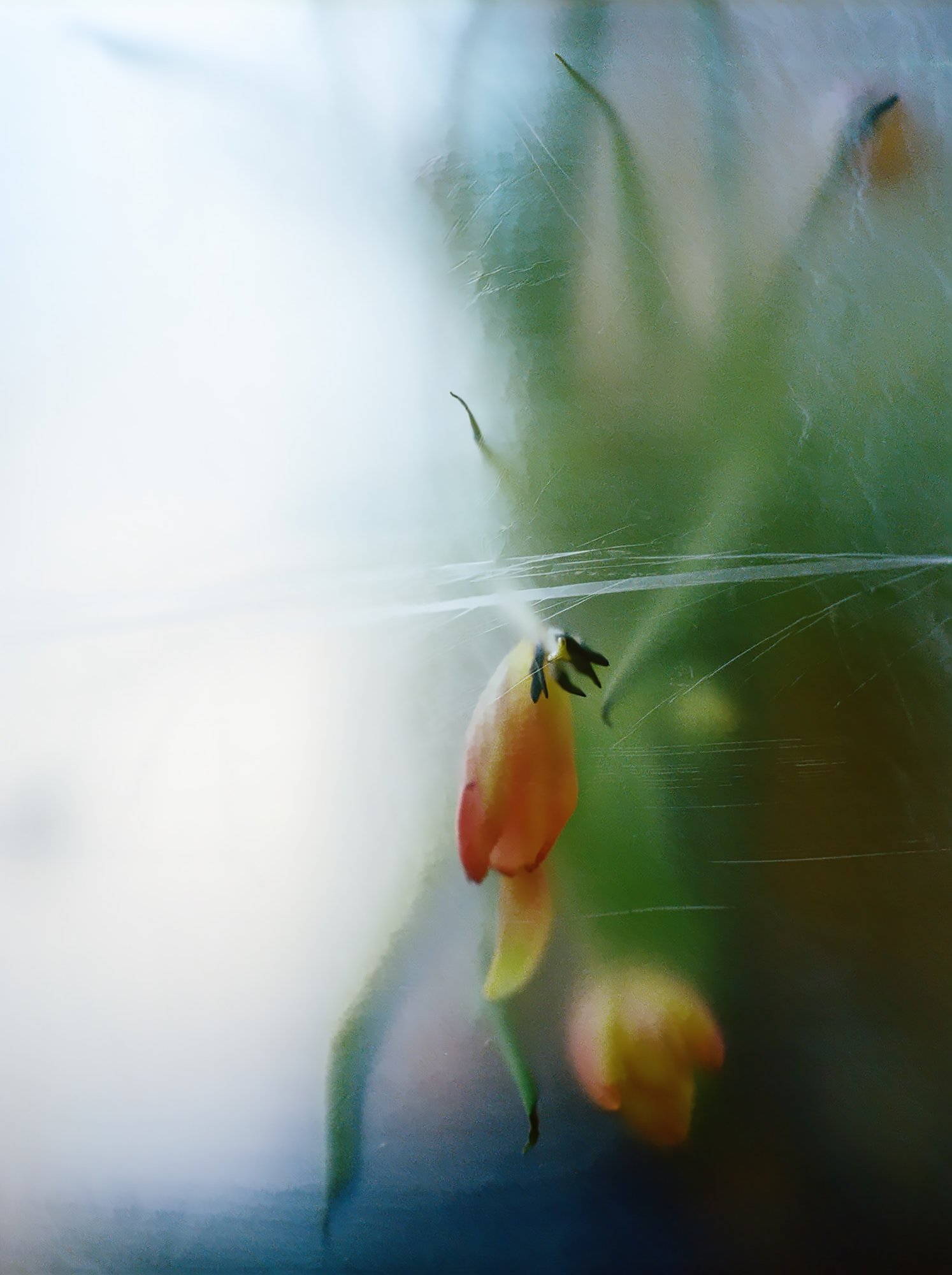
Let your love shine on me, © Shaniqwa Jarvis
N: Did you find that making these works was a healing experience?
SJ: Definitely. And simultaneously, I was working on my new book ‘Guts’, and within both, I was able to look at patterns that I've been doing since I was a kid. When I was cleaning my mom's house, I found these photographs that she had taken, and things I’d sent to her, and all my clippings. Looking at them, I understood there were ghosts there, these same approaches to light, reflection and shadows. So, working through all of that was cathartic, and it allowed me to admit that I am now living close to source energy, that I am in it. I’m digging deeper than I have before and I’ve hit a space where my mom's last lessons to me have really guided my work this past year. It's been incredible.
N: What are some of those lessons that are landing with you now?
SJ: The biggest thing for me is really to listen to yourself and not just go along with things. It’s about trusting that you know what’s right for you in that moment. And knowing that listening to yourself is your ancestors whispering to you. I think it's truly important. There's been so many artists who've come before me who have shown me the way. And that’s something I’m working on in the different work I’m progressing this year.
N: How might all of this be experienced by visitors to the show?
SJ: I hope that everyone has a chance to breathe. A lot of us are holding our breath so this can be a moment for a deep release. What my viewers find in that space is for them, but I just hope it offers a moment of respite to come back to themselves.
N: You’ve put your experiences into writing, too – for a personal essay for an upcoming issue of Womanly.
SJ: Before I would have thought it’d be too exposing to do something like that. But given how my mom’s healthcare was managed, and the fact that our medical system here in the U.S. – specifically for Black women – is fucked, I don’t want another person to go through it. I felt that if I wrote this story, then other children of single mothers will be able to manage it in a better way. So, I’ve been oversharing and maybe people think, ‘She’s pumping up her grief’. But for me, exploring everything I’m thinking through my artwork and through how I communicate, is about showing up for others as well.
N: That’s the hardest and bravest thing to do – rather than hiding from your feelings, you’re putting them front and centre.
SJ: So many people go through different struggles every day, and they go through them silently. So, I hope that the beauty and whimsy that I’ve put in the show is something that will help alleviate that pain. That’s important because while I’ve had personal loss over the past year, I’ve also been watching the world go through incredible loss as well. We all share a collective grief as the world flips to this other place. So, life it’s intense for everyone.
N: But we still have flowers.
SJ: We do. I’ve always been enamoured by flowers, even though I’m so allergic that I shouldn’t even touch them. And I know that when I photograph them, they don’t exist in the same way again. That’s what nature teaches us – what's lost can return, but in a different way. It reminds us to have perseverance, to be strong, because the end isn't the end. And understanding that is calming and healing.
N: The first photograph you ever took was of flowers. Is that right?
SJ: Yes. I still have that image, of flowers in a raggedy vase, and that was taken something like 43 years ago. It’s insane to see that my perspective then is how I still photograph now. Maybe my taste has gotten better, but whether it’s in the fine art or for the editorial and portrait world, how I approach it is the same. And that makes me laugh.
N: You’ve shot so many icons, from Erykah Badu to David Byrne via Barack Obama. Who’s left for the bucket list?
SJ: With almost everyone I’ve shot, it feels like our souls are mixing at the right time. Especially in the past year, work has been resonating with me in a big way. So really, in terms of celebrity, it’s anyone who truly loves what they're doing and carving out their specific lane. That’s the type of person I’m obsessed with because when we come together, it's always magic.
N: Do you have any rituals in the studio – a way you address the space before shooting?
SJ: Whether I’m walking into my studio on my own, or I'm on set with a lot of people, I always burn incense first and say a thank you to every spirit in the room, and then I start working. It grounds me.
N: You know scent. For your show in Chicago last year, you co-created the WhiffWorld air freshers inspired by your artistic practice and connection to nature. One rugged, one fresh. So, what will the London show smell like?
SJ: The room will smell like love and money.
N: Love and money! Thank you.
Shaniqwa Jarvis’s show ‘Only Love Can Break Your Heart’ is on view at Public Gallery, London, from 30 April to 7 June, 2026.
Her book GUTS is published by Super Labo and on 6 May.