
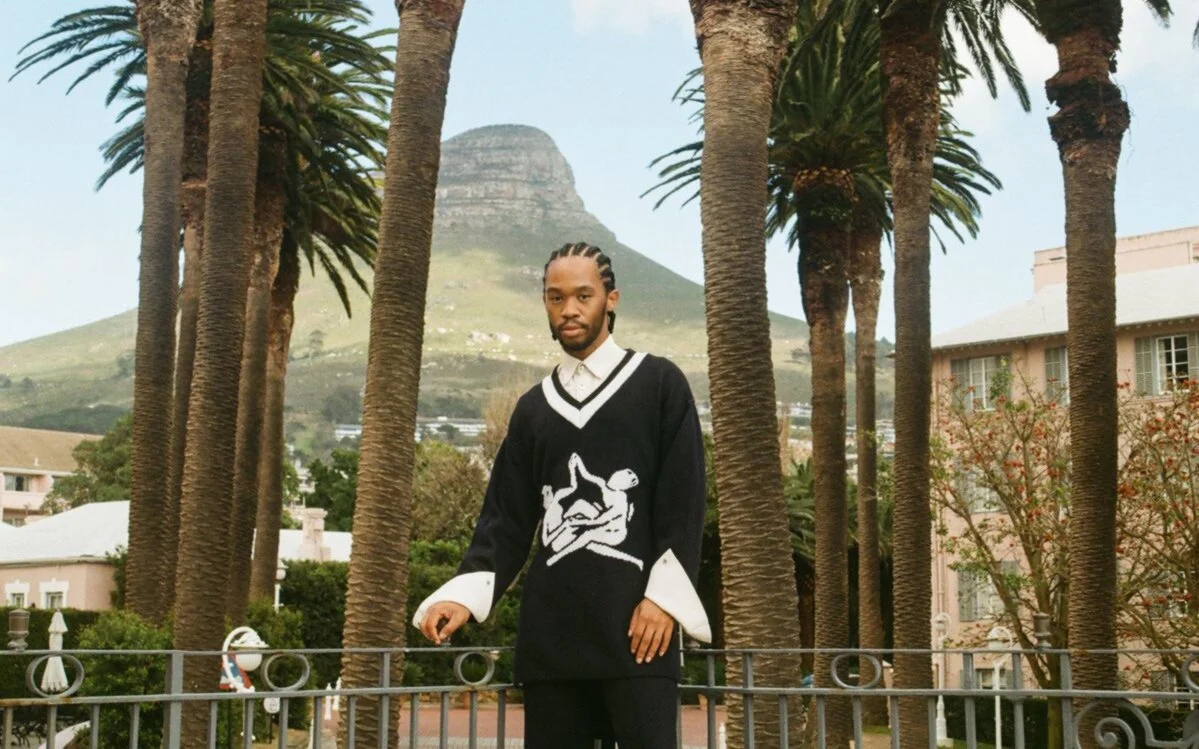
The leading designer welcomes us into an Afro-modernist world at Mount Nelson, A Belmond Hotel
Since winning the LVMH Prize in 2019, Thebe Magugu has built a globally recognised brand rooted in what he calls “Afro-encyclopaedic fashion”, merging African cultural heritage with contemporary luxury innovations. Now, a decade into building his journey, the South African designer is stepping into hospitality, working with Mount Nelson, A Belmond Hotel, to create the Thebe Magugu Suite and adjacent Magugu House – the latter is an extension of the concept space he first launched in Johannesburg two years ago.
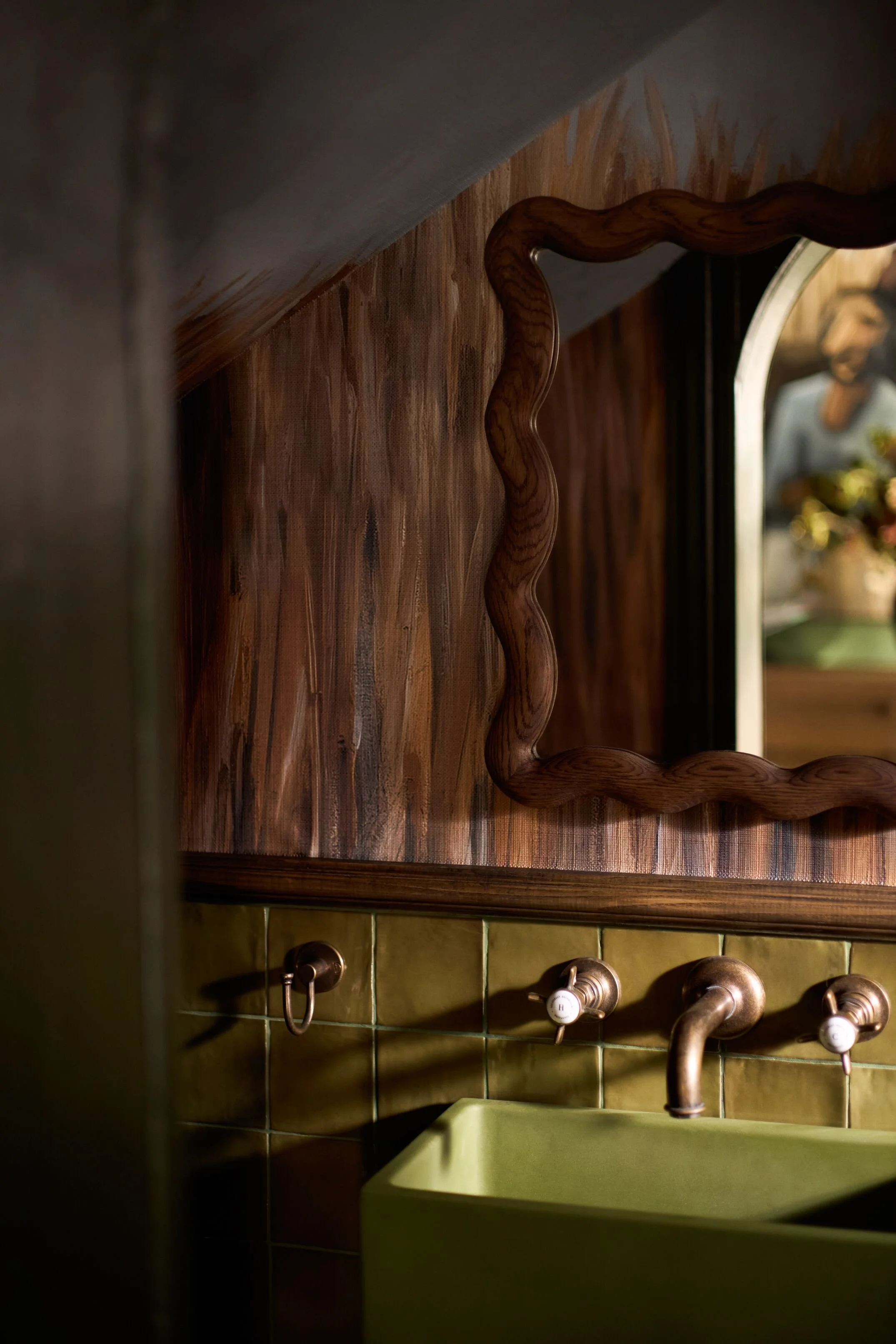
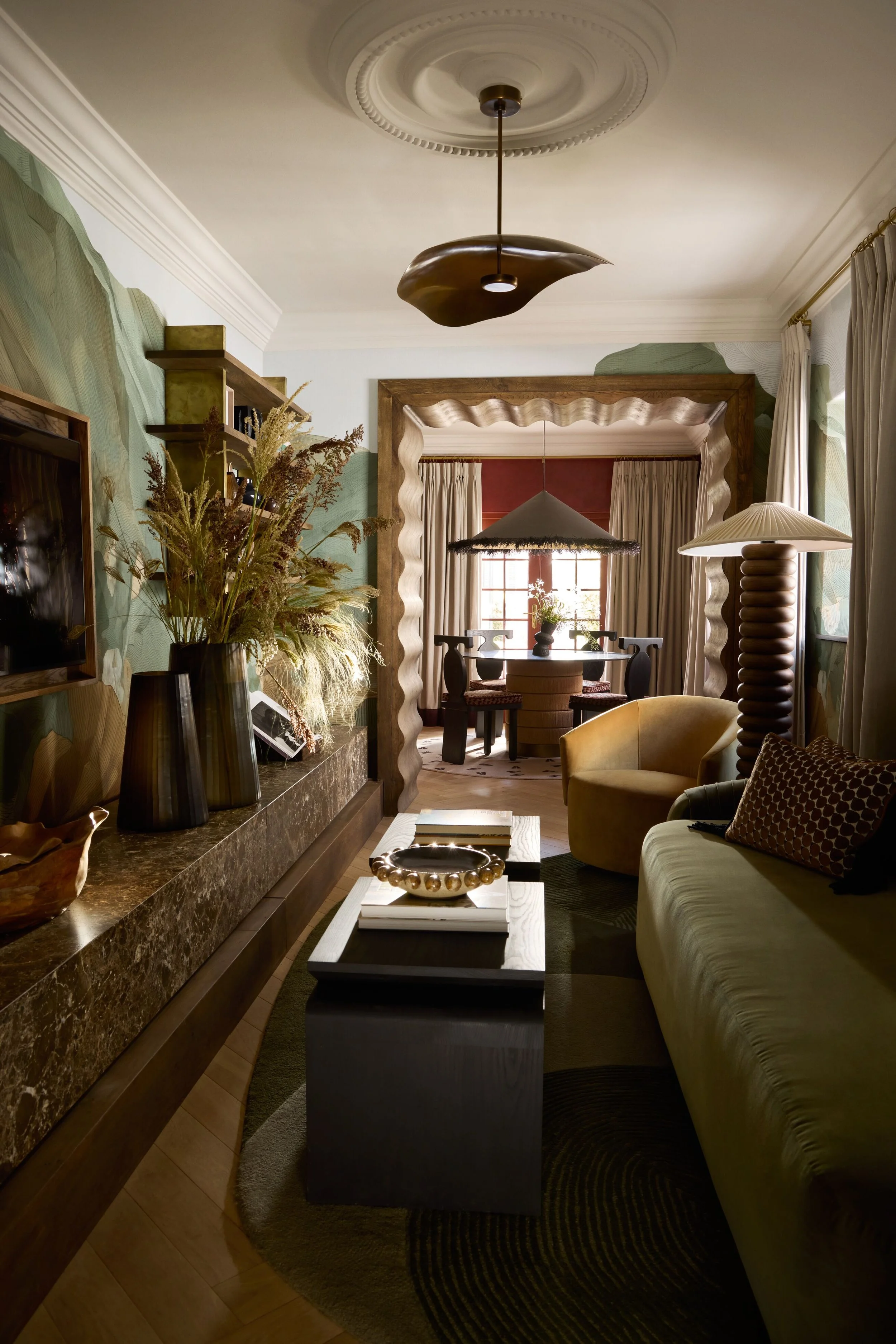
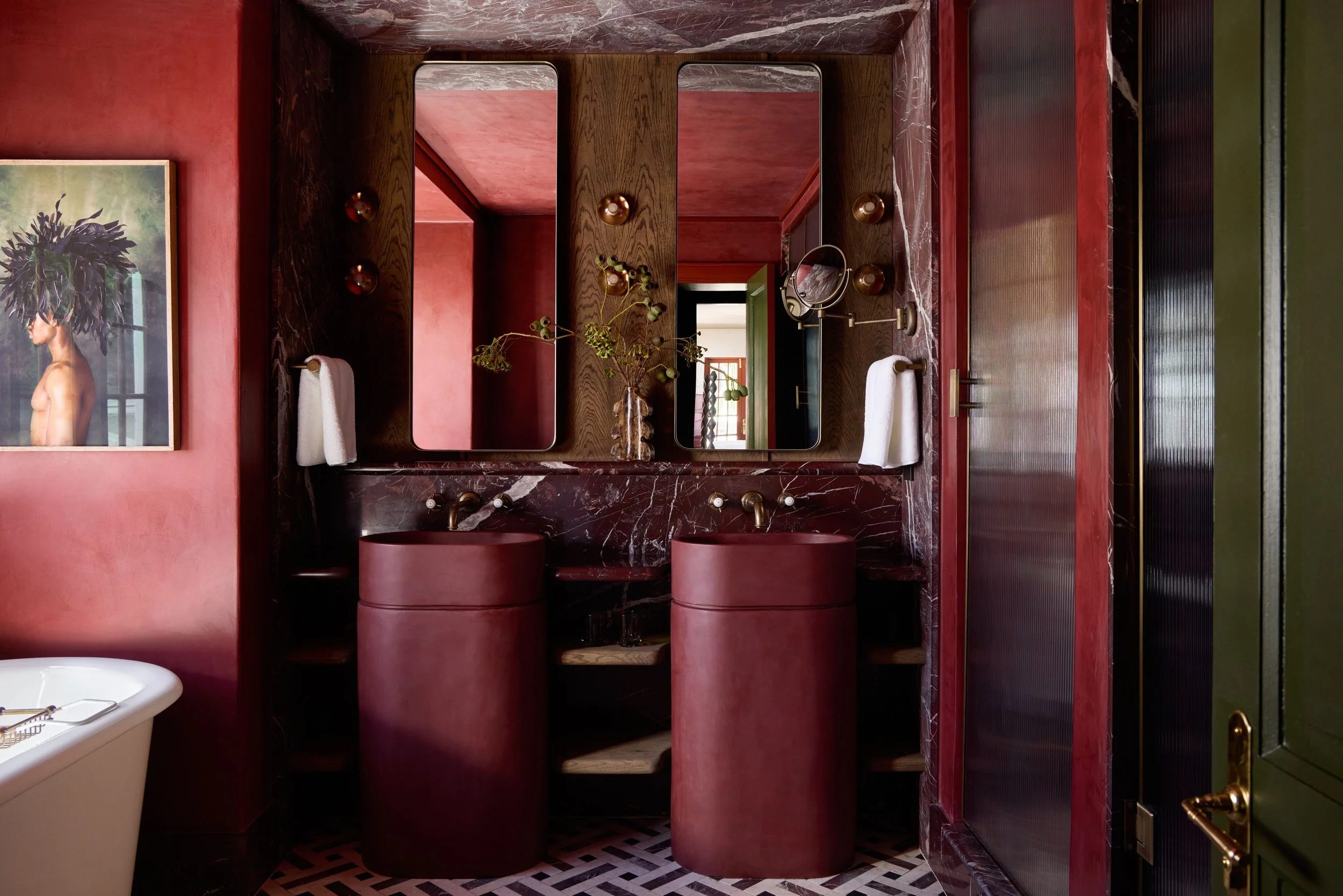
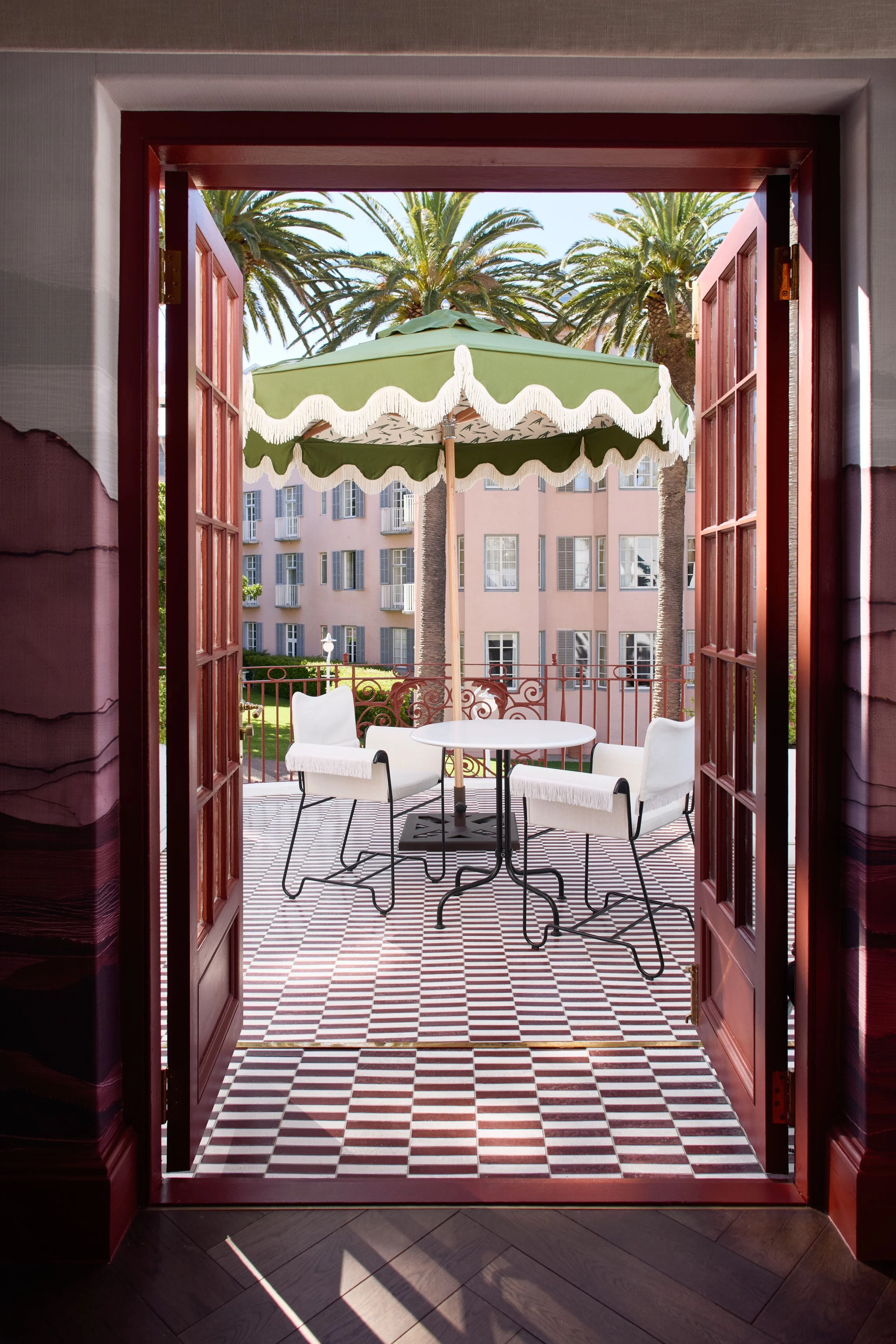
The conversation began three years ago, when this Cape Town landmark invited Magugu to showcase as part of its Confections & Collections slow fashion event. Today, walking into the whitewashed villas, the shift is palpable. The two-story Afro-modernist suite moves away from the hotel’s traditional English sensibilities into something more playful and bold. Stucco walls in shades of olive, oxblood and eggplant set the tone as you wander the rooms, anchored by natural textures of stone, straw, wood, wool and cotton.
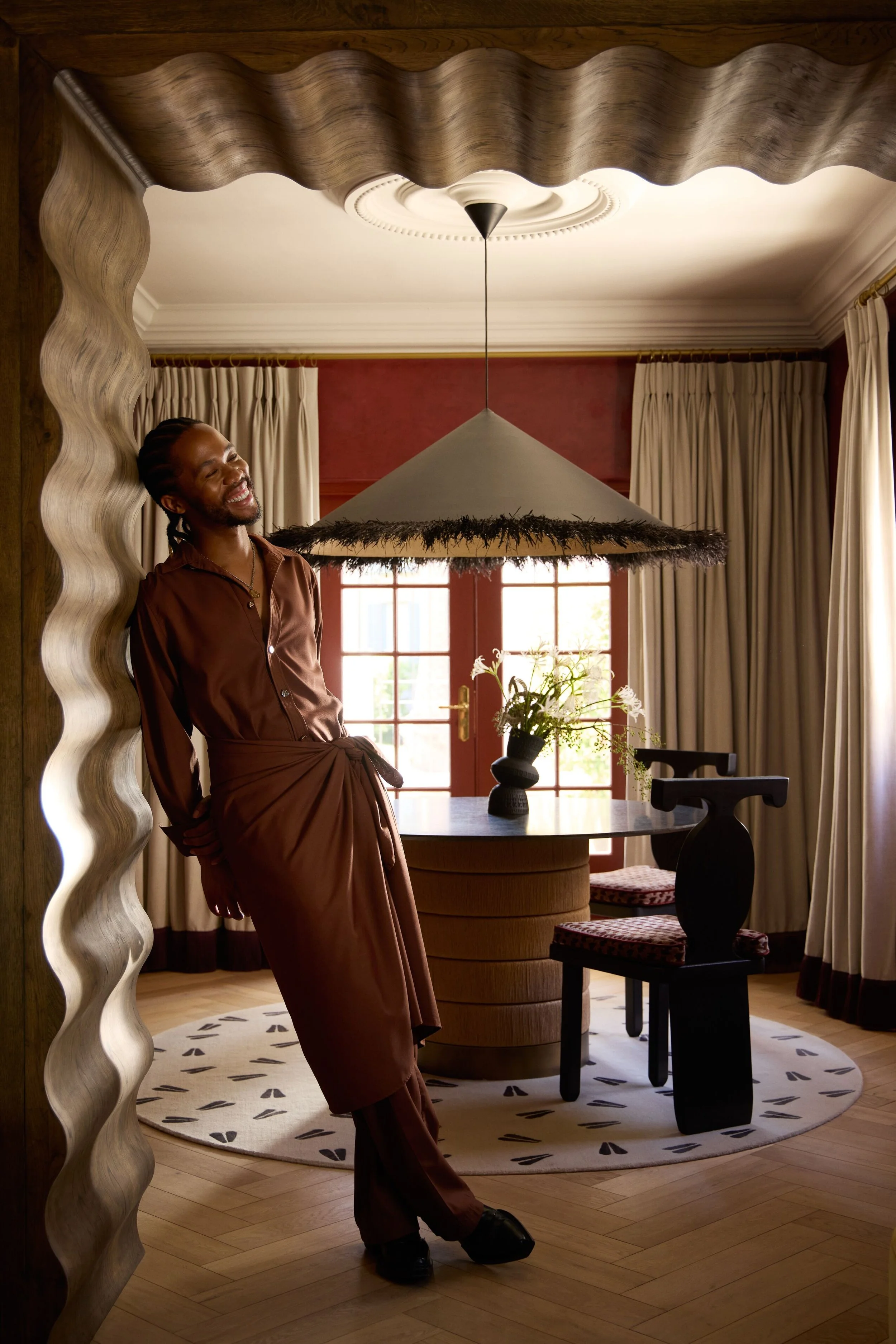
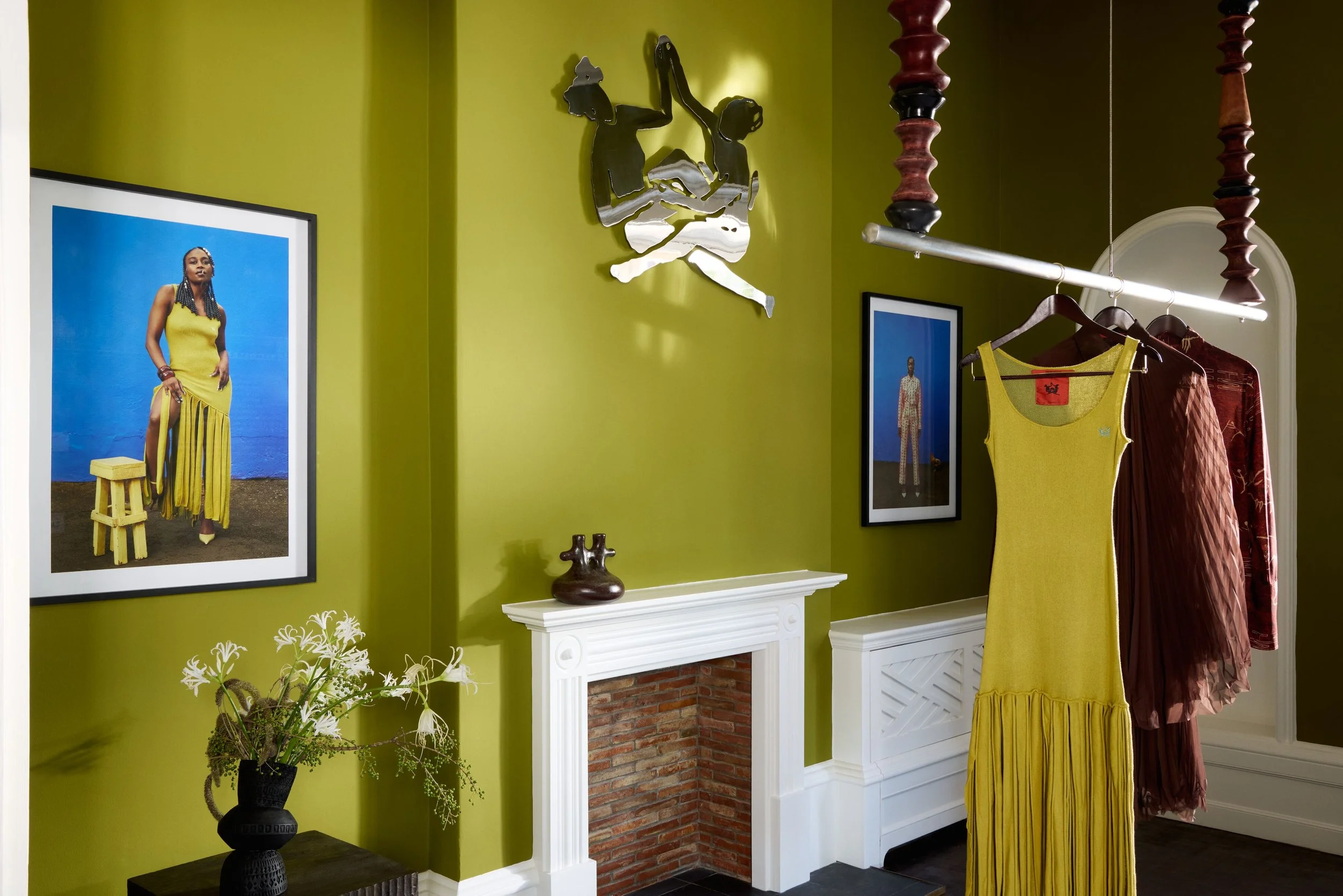
There’s a sense of detail in the space that reveals itself slowly. One wallpaper mimics the rolling mountains of Mafeteng where Magugu’s family is from, the light fixture above the dining room is shaped after a Basotho hat while the handwoven rug underneath is marked by rhebok (a type of antelope) footprints rendered in silk against wool. Art also sets the tone throughout, with Magugu working with local artists including Lorenzo Plaatjies, Trevor Stuurman, Banele Khoza, Mmangaliso Nzuza and Zandile Tshabalala, alongside design pieces by Cara Saven, Crayon Artel, Rugalia, and Ken Leiman. Each intentional touch echoes Magugu's mission to reinterpret heritage through a contemporary lens.
“The brief I gave myself was to merge English grandeur with African sensuality. And in a lot of ways, it feels like a quiet revolution"
We spent a few days with Magugu in Cape Town during the official launch, which drew friends, family and collaborators, including his mother, who he often credits as his earliest influence. Moving between the suite and the city, he spoke about his upbringing in Kimberley, the foundations of his practice, and how fashion, and now space, can be used as an avenue for cultural preservation.
Tell us about your collaboration with Mount Nelson and why it makes sense for you now.
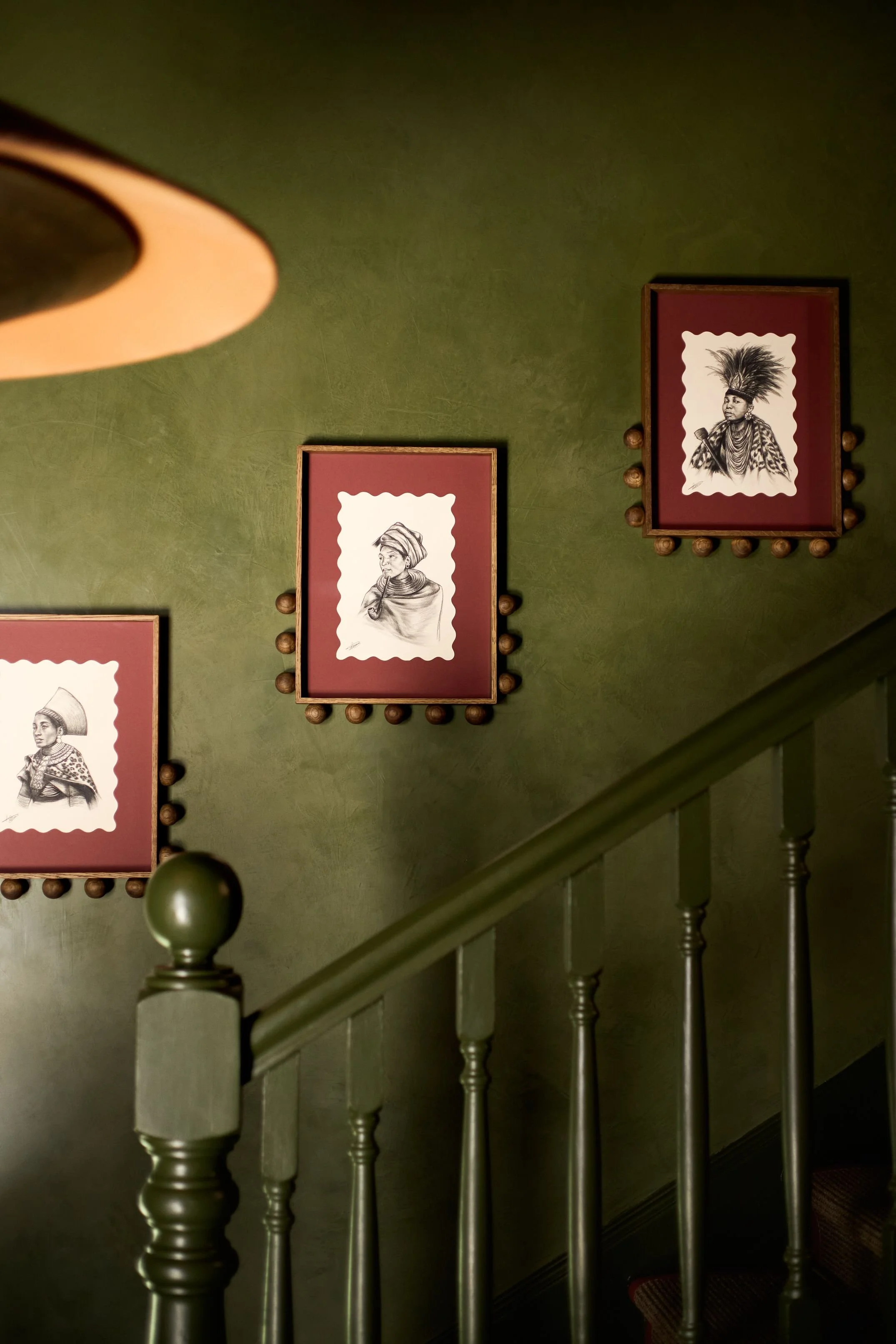
I love collaboration. I think it’s incredible when two worlds find an intersection where both can shine. The brief I gave myself was this idea of merging English grandeur with African sensuality. And in a lot of ways, it feels like a quiet revolution. The artists and collaborators involved in the suite haven’t really been given a spotlight in that kind of setting before. I wanted the suite to feel like a capsule that preserves the people who were here before even Mount Nelson. When I look at the images on the wall, of African queens, that history matters to me. So even if you never leave the suite, it should feel like a complete world. A kind of family. Where we come from, where we are now, and where we’re going. It’s a powerful space. And it’s not only about me, it’s about housing a creative community and being a custodian of that heritage in a very contemporary way.
“The suite feels like a complete world. A kind of family – where we come from, where we are now, and where we’re going. It’s a powerful space"
Can you walk us through some of the elements in the suite and the personal references behind them?
From the moment you enter, the walls are Venetian plaster. That comes from memories of Lesotho, where homes are lined with mud on the inside. I wanted that sense of texture, of the hand, in the space. The wallpaper is based on Mafeteng, where my family is from. It’s these rolling mountains, and when you look around the room, it feels like the landscape is rising and falling around you, almost like you’ve been dropped into it. There are also women coming down the mountain, which ties back to my heritage work and to my grandmother. I remember how she would carry things on her head and her back. There’s a strength to that, almost like a totem, and I wanted to capture it. The triangular light fixture references the mokorotlo hat. And then in the dining area, the carpet is inspired by the rhebok. It’s almost like the animals have walked through the space. But what was important to me was pushing those references into a luxury context. So, the footprints are done in silk, and the base is New Zealand wool. It’s about taking who we are and presenting it with a certain level of sophistication. That’s always existed, but now it’s made visible.
You’ve worked with a number of South African creatives on this project. Who stands out to you right now?
One of my favourite artists is Nandipha Mntambo. She takes her Xhosa heritage and reinterprets it through modern sculpture. The pieces in the suite are from her lobola collection. I also have my own lobola collection, but what she’s doing is really special. That intersection of culture and modernity is something I’m always interested in. She’s taking knowledge that could exist in archives and translating it into something that needs to be decoded in a different way. Artists like that really inspire me because they’re showing what new cultural treasures can look like today.
“Fashion allows culture to live and move. When it only exists in books, it can feel static. But when it’s worn, it becomes alive again"
What continues to shape your work since launching your brand in 2016?
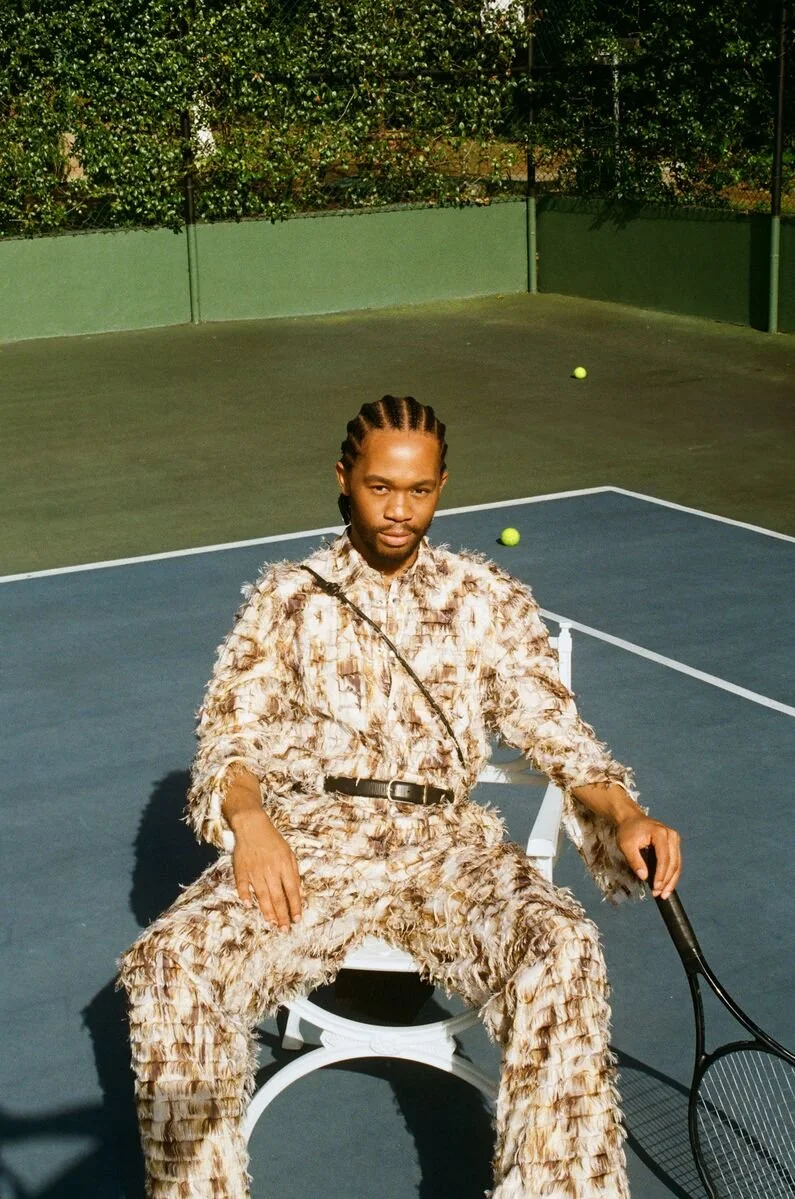
I’m fascinated by our realities in South Africa and on the continent. Every collection connects to the larger intention of the brand, which I call Afro-encyclopaedic fashion. When people used to talk about African fashion, it was very one-dimensional. I want to showcase our culture and history with nuance. The garments must be able to sit anywhere in the world stylistically, but their story is deeply rooted in Africa. My customer becomes a custodian of African history and culture simply by wearing the piece.
Your Heritage collection has been one of your most referenced bodies of work. What was its initial spark?
It started from a very personal place. I’ve always wanted to represent where I’m from, but in my culture we wear blankets, and that’s not always practical for everyday life. So, I started thinking, what if I take the motifs from the blanket and translate them into something like a silk garment? Something you can wear from work through the rest of your day, but still feel connected to your culture. And then I began thinking beyond my own culture. What about others? That’s really how the Heritage collection expanded.
What are your considerations when you look to reinvent a cultural reference?
I think it’s important to stretch culture slightly. Of course it’s sacred, and it should be protected, but if it isn’t explored or reinterpreted, it risks stagnating and not being embraced by younger generations. Someone might want to reference something like the blanket, but not necessarily wear it in its traditional form. And that’s okay. Culture has to evolve in order to exist in the present. That’s what’s powerful about fashion. It allows culture to live and move. When it only exists in books or texts, it can feel static. But when it’s worn, it becomes alive again. It stays relevant, and it stays part of everyday life.
As one of the most visible African designers today, do you feel pressure to represent history and identity?
There’s a fine line between stretching culture and distorting it. Stretching culture allows it to move into the future. Distorting it can erase or mislead. I balance artistic license with responsibility. When you alter stories to fit an aesthetic, that version can become what history remembers. The pressure is to protect, not mislead. But I’m also interested in speculative questions. What if this had happened? There’s room for imagination. As long as we’re not erasing histories…that’s what matters.
Thebe Magugu’s favourite Cape Town destinations
Southern Guild
A leading gallery co-founded by husband-and-wife duo Trevyn and Julian McGowan, and showcasing contemporary artists from across Africa.
Pichulik
Handcrafted jewellery rooted in African symbolism, known for bold rope work and sculptural pieces.
Zeitz Museum of Contemporary Art Africa
The continent’s largest museum dedicated to contemporary African art, housed inside a reimagined grain silo on the V&A Waterfront.
AKJP Studio
A multi-disciplinary concept space on Kloof Street bringing together over 40 South African artists across fashion, art ceramics and design.
Crystal Birch
An internationally celebrated milliner whose atelier produces sculptural, handcrafted hats that blur the line between fashion and art.
Words Wendy Watta
Photography Inge Prins
Visit Mount Nelson, A Belmond Hotel
Visit Thebe Magugu
Published on 23/04/2026