
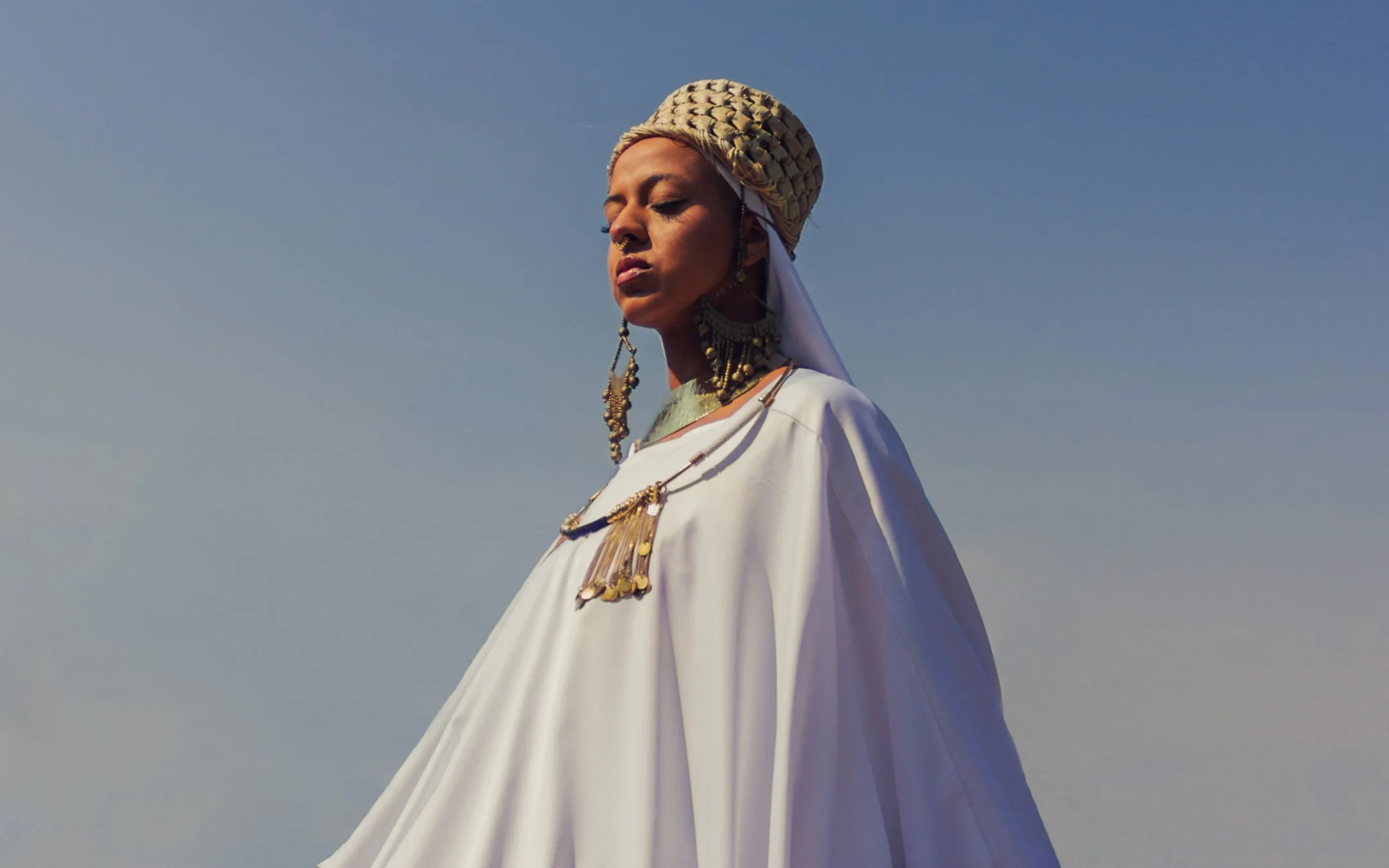
Ivorian artist Azia Seyden welcomes young Africans into the spiritual sounds of bété jazz
Azia Seyden, known as wordsofAzia, is a truth-seeker who carries her soul-stirring rhythms across the Africa continent, one hymn at a time. Still in her ascent, she’s become something of a sonic griot, bearing witness to the power of music as a conduit for healing. “It feels pretentious to say my music is healing. I can’t say that for sure. But I know my music healed me,” she shares.
The French-Ivorian artist’s rebirth as wordsofAzia began just over a year ago. Azia was in Abidjan, taking time to write and reflect. Videos of her singing with her mother soon gained traction online, travelling effortlessly and transcending the long-held divide between Anglophone and Francophone Africa, propelled by young Africans in search of introspection and collective kinship. They found what they yearned for in her distinctive approach, which blends traditional Ivorian folk with contemporary influences in a world-building genre she has coined bété jazz.
“It feels pretentious to say my music is healing but I know my music healed me"
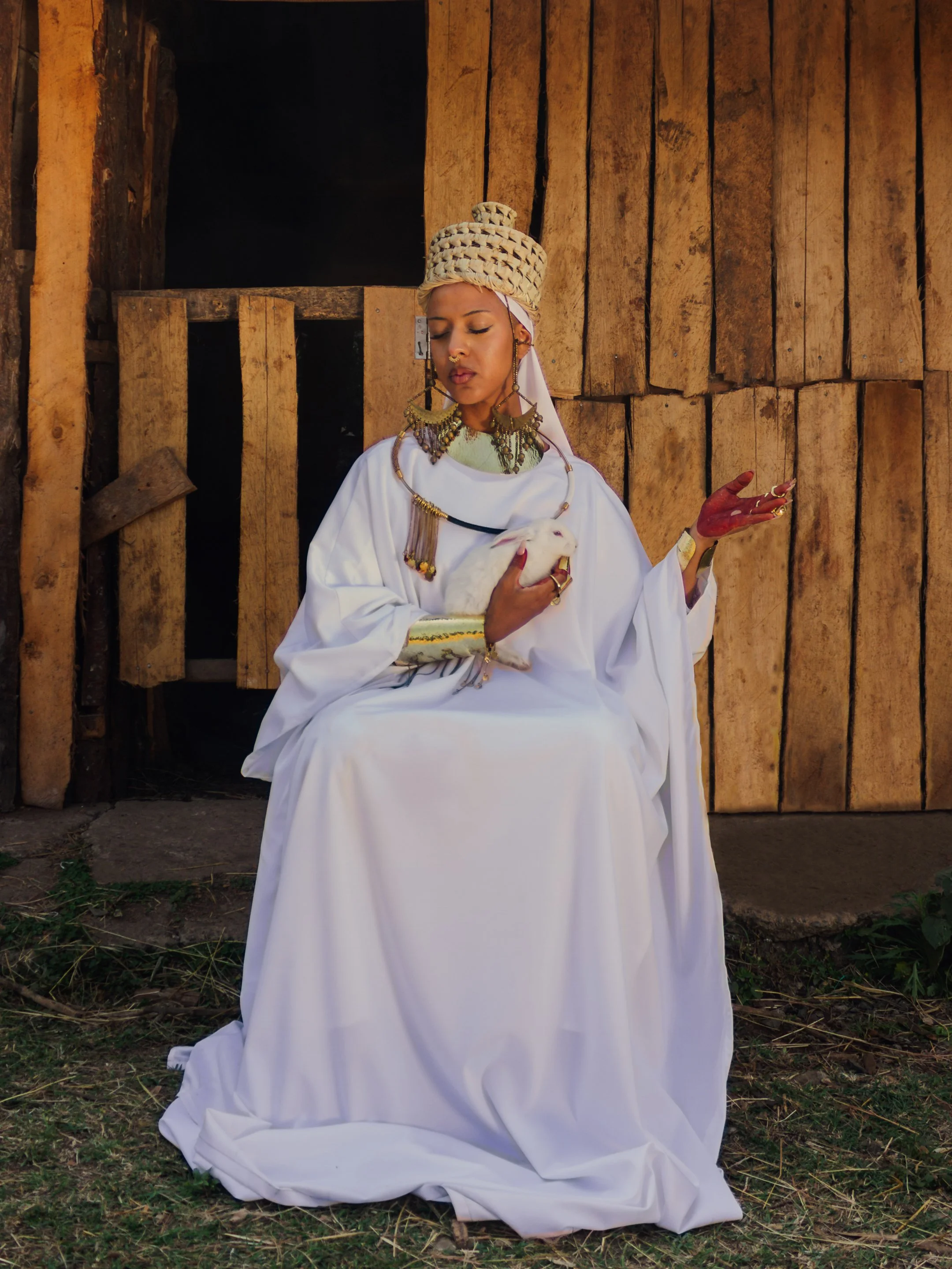
Nataal meets Azia a few days after her intimate yet electric debut show in Nairobi. Azia delivered a one-woman performance. No gimmicks, no elaborate production. Just Azia and her guitar, towering in front of a backdrop of sheets draped like an altar, and a room of eager listeners hanging on her every word. In our conversation, Azia reflects on the journey that brought her here, and the one still unfolding.
When did you discover your love for music?
I feel like my love for music has always been there. My mum is a singer, and I grew up around her singing all the time. I could probably feel her singing even when I was in her belly. It was a family affair with my uncles playing percussion and my aunties singing alongside my mum. Before they knew it, I started singing as soon as I could speak.
“The way I approach music reflects my love of African history. It’s more than just music to me"
How did you start making music professionally?
Around ten years ago, I made my debut performance in Paris as an opening act. The show was incredible, and I immediately knew that I didn’t want to do anything else with my life. However, during university I started losing faith in singing as a “proper job”. This reality was depressing, but I fell in love with my major in African studies, learning about indigenous traditions and searching for archives. Now, the way I approach music reflects my love of African history. Hence, why it’s more than just music to me.
Your music is often described as spiritual or healing. Do you think that’s an accurate description?
Oh, definitely. Music helps you get in touch with your emotions and feelings. My mum and I haven’t always been close, and I have a mother wound. We’ve had our ups and downs, just like any other mother-daughter relationship. But since we’ve been on this music journey together, we’ve connected on a deeper level as we get to spend more time with each other. I also get to see her in a different light, as a fellow musician and collaborator. I want the world for her. I want her to stop working and travel the world with me.
“There’s more that unites the African youth than divides us, and I’m interested in connecting those dots through my music"
You visited Kenya recently. How did it feel performing there?
It’s been crazy. I knew nothing about Nairobi before I dropped my song ‘Lago’. I was pleasantly surprised to see the stats, because people from Nairobi listened to it the most, so I had to visit and perform here. During the show, I had a “pinch-me” moment when it dawned on me how far I’ve come with this music, from writing lyrics in my bedroom, to touring different African cities. I tried to keep my composure but it was very emotional hearing people singing my songs back at me.
You shot the video for your song ‘Liwouho’ in Lamu. Tell us about your experience.
Lamu is truly a special place because it feels like it’s frozen in time and rooted in culture. I got to immerse myself in Swahili culture and interact with locals, and it opened me up to a side of Kenyan culture I didn’t know. A lot of Ivorians, myself included, don’t know much about Kenyan culture. So, I’m grateful that I get to show my listeners a different side of Africa they may not be familiar with.
Would you describe yourself as a Pan-African?
Yes, of course. This is why I’m traveling so much, from Kenya, to Senegal, Ivory Coast and Nigeria. I think African youth are so alike on so many levels. There’s more that unites us than divides us, and I’m interested in connecting those dots through my music. When I have discussions with industry people and labels, I always remind them that I’m not making music for the West. I’m making music for young Africans and the diaspora. If others love it, I’m super grateful, but I’m making music for us.
Visit wordsofAzia
Words Naila Aroni
Direction Kaza Kaza
Creative direction Sukuma Wiki
Photography Matthew Matete
Styling Kennedy Mirema
Art direction Mary Muko
Henna art Leila Khan
Productionn & location scouting Jumah Jatteh
Accessories Adele Dejak
Published on 04/05/2026