
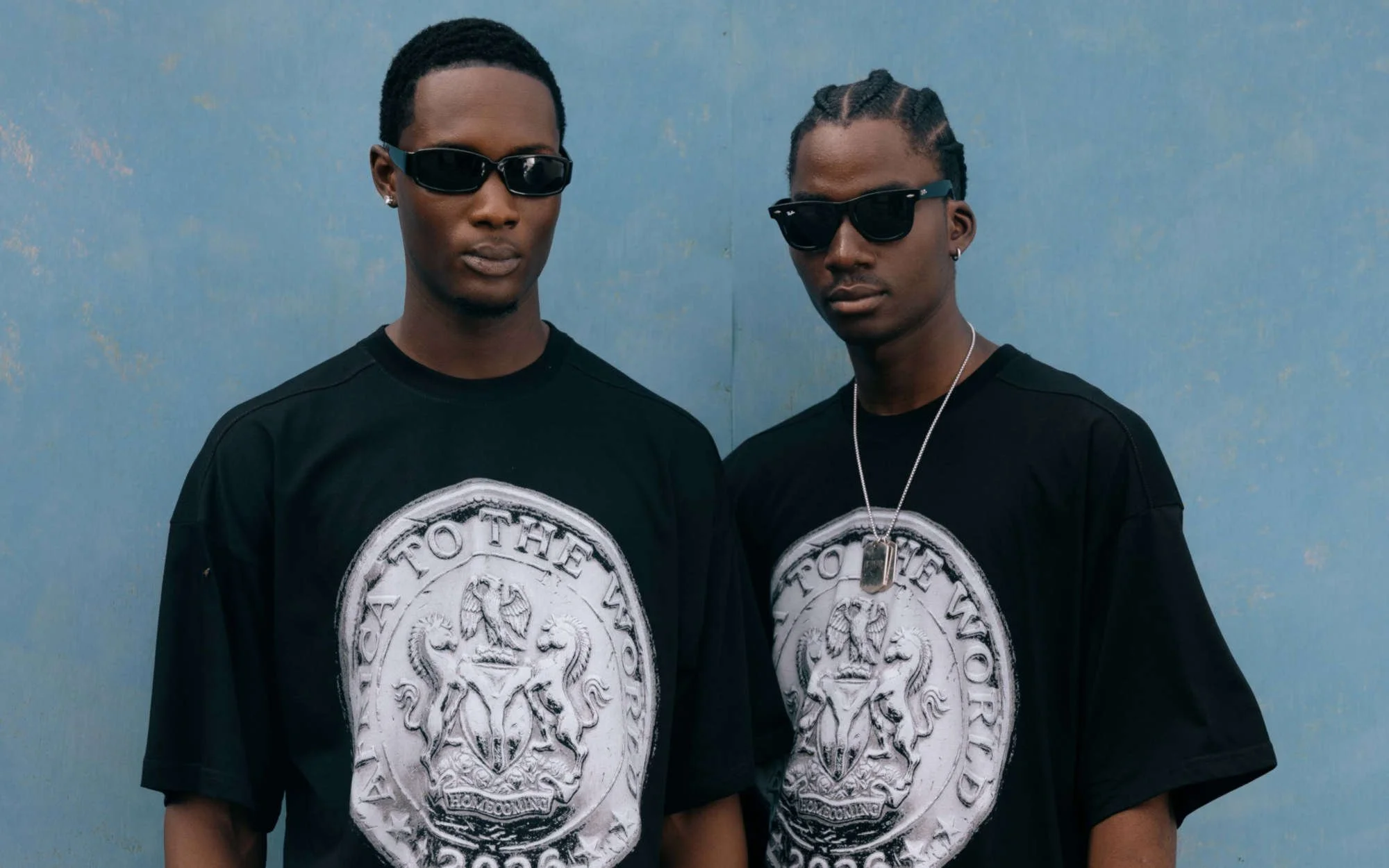
Grace Ladoja on the latest edition of Homecoming, her Nike Air Max TN collab and Nigeria’s creative future
Since its 2018 debut, Homecoming has become Lagos’ premier cultural happening fostering creative exchange between Nigeria and the world. What began as a three-day festival has since ballooned into a colossal ecosystem consisting of global club nights, transnational conference sessions and elite clothing collaborations as Homecoming’s power continues to grow. Having recently taken over Lagos for its ninth edition, the city-wide curation remains as collaborative as ever. Inclusive events ranged from an art tour and a women DJ workshop through to a football tournament on a pitch reimagined by Slawn. The education summit brought together icons such as Lemi Ghariokwu with fresh collectives like A Third Space. Their music mandate also expanded to include genres like jùjú and highlife with the Je Ka Jo concert, while their Hi-Fi electronic music event offered up sets from South African powerhouses Thakzin and Lelowhatsgood.
Most notably, Homecoming’s recently-opened concept store, which already stocks a wealth of coveted brands (Pith, DyeLab, Free the Youth, Mowalola, Patta, Stüssy, Waf. et al), exclusively launched the Homecoming x Nike Air Max TN shoe designed by founder and CEO Grace Ladoja MBE. As the first Nigerian woman to collaborate on a signature Nike shoe, her two styles – the ‘Pan African’ and ‘African Sunshine’ – speak volumes through colourways and design details nodding to the pride of shared heritage. With its Lagos launch – since followed by Accra and Abidjan pop-ups – the collaboration exemplifies the festival’s mandate to not only connect leading creative organisations with African markets, but also to re-position voices across Africa and the Black diaspora within global power dynamics.
Here, Nataal speaks to Ladoja about how Homecoming is building a sustainable creative future for Nigerian youths.
With the Homecoming concept store opening last year, it’s a new era of the festival in Lagos. Was the vision always to create a permanent presence in Nigeria?
Yeah, it’s been on the map since 2020. Last year was more like a testing phase, we were activating. Now I know what we need to do for our space. It's a good time for it to open as well – people feel a bit flat, so this is something you can keep energising them with. Every day, I get requests from great people to use the space and that's exactly what I wanted. Then what we offer is a bit of expertise on curation, storytelling and delivering to an excellent standard.
The concept store has hosted the global launch of the Homecoming x Nike Air Max TN. Tell us everything about this groundbreaking collaboration.
The shoe is a very “me” product. My favourite shoe is the TN. I remember walking to school so I could save up to buy that shoe as London Grace. So, it's got this story around the fact that you can be from two places and that home is what you make of it.
I wanted it to feel like a familiar object. The inspiration for the mesh is the ‘African sponge’. Whenever I go to someone's house and I see an African sponge in their bathroom, it makes me feel happy. Like yes, you know about scrubbing your body when you were young. I just wanted an everyday thing that felt quite connective. And the shoe actually slips on, even though it’s got three sets of laces. Because living in Nigeria, you want to wear sandals, you don't want to be fussing around. So, the laces are just decorative. While on the London side, it’s about doing cool laces. How you did your laces was about where you were from.
Then we made six different charms – from the cowrie to the black planet to the eagle, they all have symbolism. I remember, whenever I would make a friendship bracelet, I'd want cooler charms. So, I’m making something that feel really fun, quite playful. It's not a serious shoe. But it is a really nice shoe. And with the black shoe, people call it the Pan-African colourway. Outside of Somalia, every other African flag has a colour on that shoe [black, red, green, white] so everyone can feel part of the story. It’s a familiar one but that story, at the foundation, is – where is home for me? Home is where you can feel everyday inspiration.
Homecoming’s musical identity has expanded over the years. Can you discuss this evolution in relation to the global rise of African electronic music?
My introduction to electronic music came more from Detroit. Electronic music is Black-owned – we can't afford to have this narrative taken away from us. So, the first Hi-Fi was a collaboration with SweatItOut, Element House and Group Therapy, because we need to consistently challenge who's claiming the culture and make sure we put people to the forefront.
Homecoming has always been a discovery platform – if we book someone, others globally start to book them. And in the electronic space, we are celebrating what’s happening here in Nigeria. Especially because there's a lot of female DJs. That is the place in music where African women can get paid equally and travel. I'm always thinking about job creation.
Funnily, I learnt to DJ at 15 through the Heartless Crew, one of the biggest DJ crews in an after-school club. And that’s the reason I went to work with Skepta. So, I want to make sure people see that as an opportunity as well. If you're 14, 15, and you're into music, you can actually DJ, you can make a career.
“We’re giving young people access to our knowledge so that they can get there faster than us. I need to see 20 Graces, 20 Virgils"
In the local market, there has been widespread conversation around stagnation in Nigerian music. How does Homecoming respond to that, specifically with the closing Playlist Show?
The show was more underground this year with artists like Strafitti, Zaylevelten, NO11 who have built a really good community. When I look at Homecoming in 2017, we had Rema, Sho Madjozi, DRB, Santi – all amazing people who created a world. They cared about the music and the product they were making. We need to bring that back to Gen Z. At last year's show, I saw that in plain sight. We have to put emphasis on allowing young musicians some time and space to develop their craft. Because otherwise, we see the rise and fall. Who did they say was popping in 2022-23, and where are they now? Let’s avoid that.
This year’s Homecoming showcased a continued commitment to knowledge-sharing through programmes including the art tour and the summit. Tell us more.
The only thing that will save this country is education. It’s the pillar that changes the future for young people. But I also feel like there's so much in my career that I couldn't have learned through school. I'm a music executive, I'm a founder, I'm an entrepreneur. Me and Virgil [Abloh] spoke about it a lot, so now that he’s gone, I’m making more effort on it. We have to give young people access to our knowledge so that they can get there faster than us. Especially in a market that's emerging [like Nigeria]. I need to see 20 Graces, 20 Virgils.
We’ve seen that with the artist Slawn. We found him at the first Homecoming in 2018 – he did the stickers. He'd ask a lot of questions, he was intentional. He used the free game of people around him to continually refine his work. And now he's a millionaire by his own rules. That’s what we need more of. Our entertainment and creative economies are so powerful but no one is really nurturing. They're just doing deals.
As the economic situation in Nigeria worsens, how do conversations around access in the creative industries influence the curation of Homecoming as an organisation straddling both local and diasporic experiences?
I always ask myself two questions. Number one, if I was born in Nigeria, could I still be me? If I can't answer that with the work that I'm doing, I failed myself. So that's a big challenge, but it's possible. And two, how do we economically empower people through ownership? Ownership in music, in fashion, in sports. We're not perfect, let me tell you that. But every year, I try to get closer. People don't realise that sometimes, we don't even raise enough money to make Homecoming happen. I just like to work in excellence.
“It’s significant to have a Nike launch in Africa. We’re being intentional about what we do and don’t forget the why"
My mum had nothing. I've grown up on the fringes of it, so I have that point of view. I saved up to buy my first pair of Nike shoes. I know what it's like to want to be fly and not have the money. So how do we make our price point accessible to young people? Homecoming would arguably be a loss on all levels if it was just based on ticket sales. And this year with the summit, we reached out to all the universities and 400 or 500 people signed up before we even went live. This is exactly what we need – real people here to learn about how to create an ecosystem, how to do budgets, make decks, work with other people in the industry. All those insights that people told me at a young age have helped to shape my life.
What are your plans for continuing to expand Homecoming’s reach across the continent?
Homecoming always had that feeling that it could be a franchise one day. I would love it to be something that people can just pick up and do themselves because what’s special about the festival is that even though it unifies a specific country, it's not exclusively Nigerian.
Then with Nike, it’s significant to have a launch in Africa. Most global brands don’t care. So, we’re showing up in Lagos, Accra and Abidjan. We’re making sure we’re intentional about what we do and don't forget the why. I think working internationally is easier on some levels, but staying in the continent is actually harder. So how do we start looking within ourselves? That's going to be my focus between this Homecoming and the next.
Visit Homecoming
Visit Grace Ladoja
Words Blossom Maduafokwa
Photography Jude Lartey, Odey Ikpa, courtesy of Homecoming
Published on 14/04/2026