
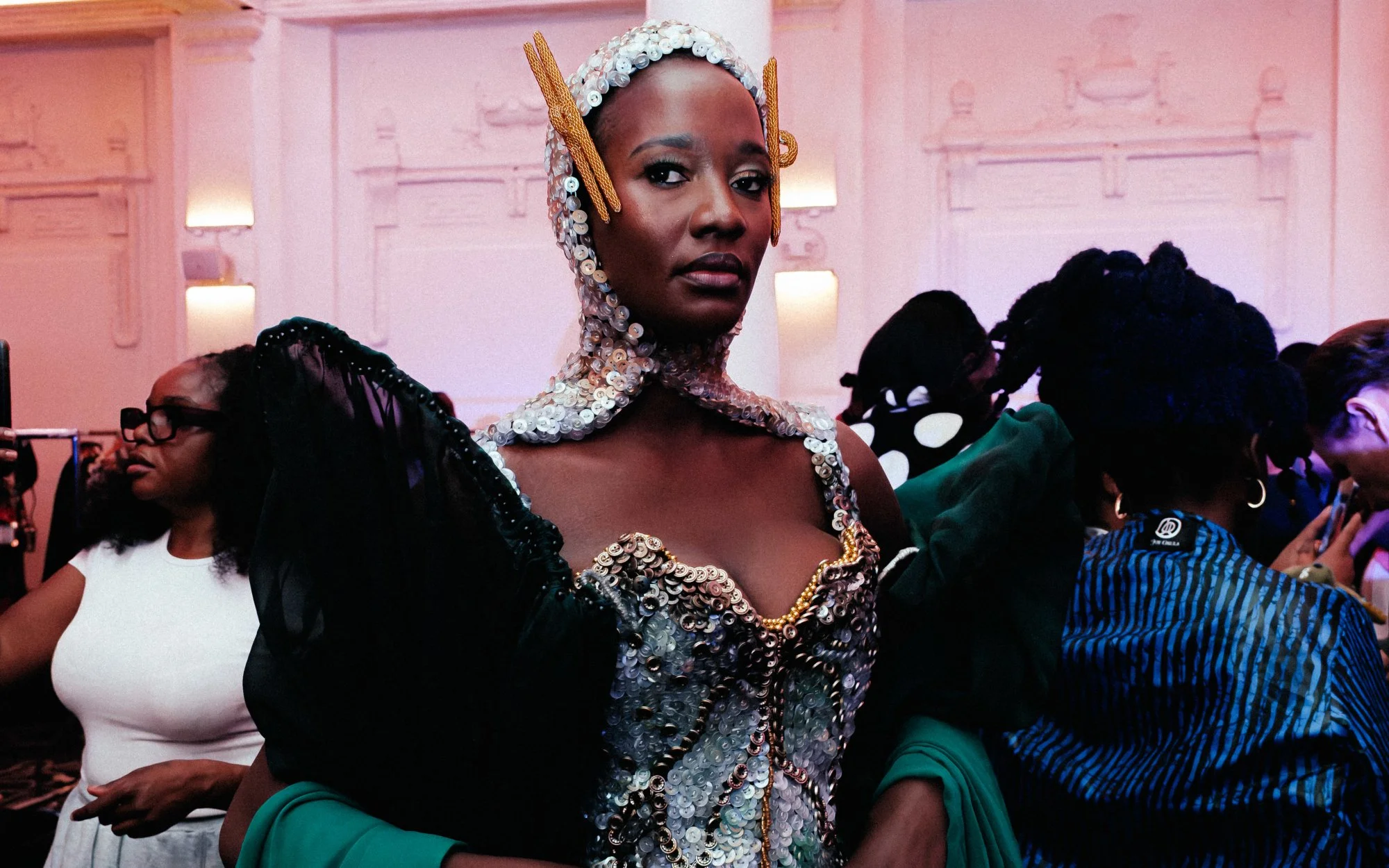
Ten designers, seven countries, and a world of answers to the question of what African fashion looks like
In a gallery in Addis Ababa this April, the musician and ceramicist Abi Tsigie taught a room of designers an old Ethiopian way of reading the world: Sem-enna werq, it is called, or ‘wax and gold’. The wax is the surface and the superficial, what you acknowledge on first sight, while the gold is the harder truth underneath, revealing itself only once the wax has been melted away. A garment, Tsigie suggests, carries meaning in that same doubled way; it is a spoken word worked into cloth. Four months on, at 8 Northumberland Avenue, it was time for the wax. Africa Fashion Week London (AFWL) has handed its Saturday afternoon runway to Creative DNA, the British Council’s well-established fashion incubator for designers across Sub-Saharan Africa. The 2026 edition, which began with an Ethiopia residency, has now moved London, part of which sees 10 designers from Nigeria, Ghana, Rwanda, Ethiopia, Zimbabwe, Kenya and Uganda, showing together under the banner Design Beyond Borders.
Farai Ncube, the British Council’s Regional Director, Creative Economy and Arts and Culture, for Sub-Saharan Africa, is rightly proud of the way Creative DNA has scaled across the continent and the UK since its inception in Kenya in 2020. But what she’s most excited about is something no spreadsheet can tally: “It’s the relationships that have developed among African designers, leading to peer learning, collaboration, shared market intelligence and new commercial opportunities,” she says. Seen together on one catwalk, this year’s coterie presents a truly varied offering, and therein lies the pleasure. Colourful swimsuits from Nairobi share the limelight with hand-woven hessian bags from Harare and conceptual suiting from Kigali. What binds them sits a layer down, in Tsigie’s gold: the craft and the labour behind the cloth, the stories the clothes carry, and an unabashed ambition about where they will end up.
Craft and Labour
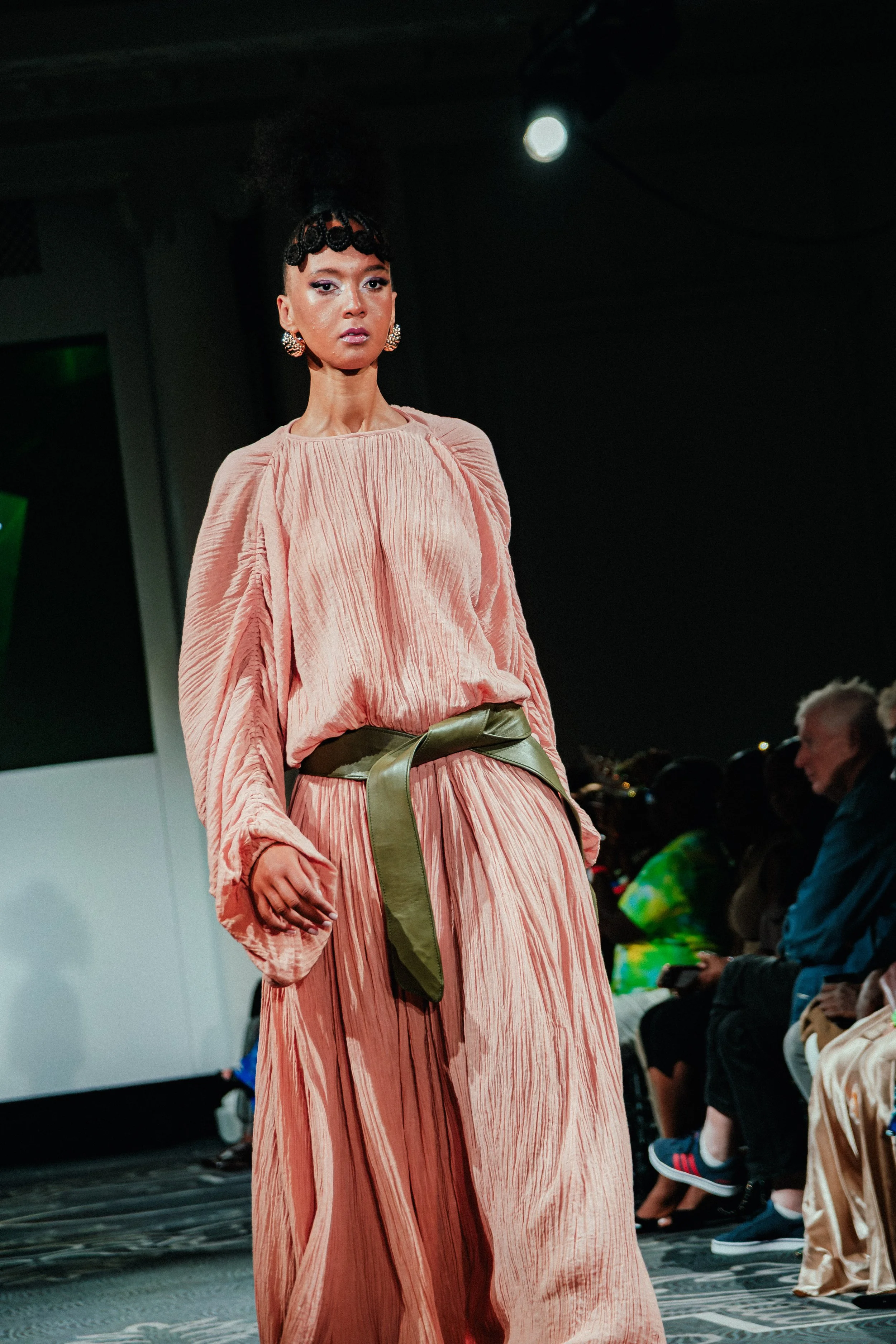
Mastewell Alemu
Mastewal Alemu designs to the width of a loom. Her Addis label, founded in 2021, works in cotton handwoven by local weavers and cut into spare, geometric shapes. The width of the weave settles the silhouette before she has drawn a line, so that waste is engineered out at the very start. She has lectured at the Ethiopian Institute of Textile and Fashion Technology, been named a brand to watch by Vogue Italia, and shown in Milan and Moscow, but she always returns to the loom.
“In a world that keeps asking fashion to move faster, there is power in something that should not be rushed"
Mastewal Alemu
“When I work with handwoven fabric, I respect the width, the structure and the possibilities of the cloth from the very beginning,” Alemu says. “I let it influence the silhouette and the construction, so the piece becomes a dialogue between my vision and the material, and that limitation actually allows for more creativity. Handweaving doesn’t move at the speed of industrial production, but that time is part of what gives the cloth its value. In a world that keeps asking fashion to move faster, there is power in something that should not be rushed.”
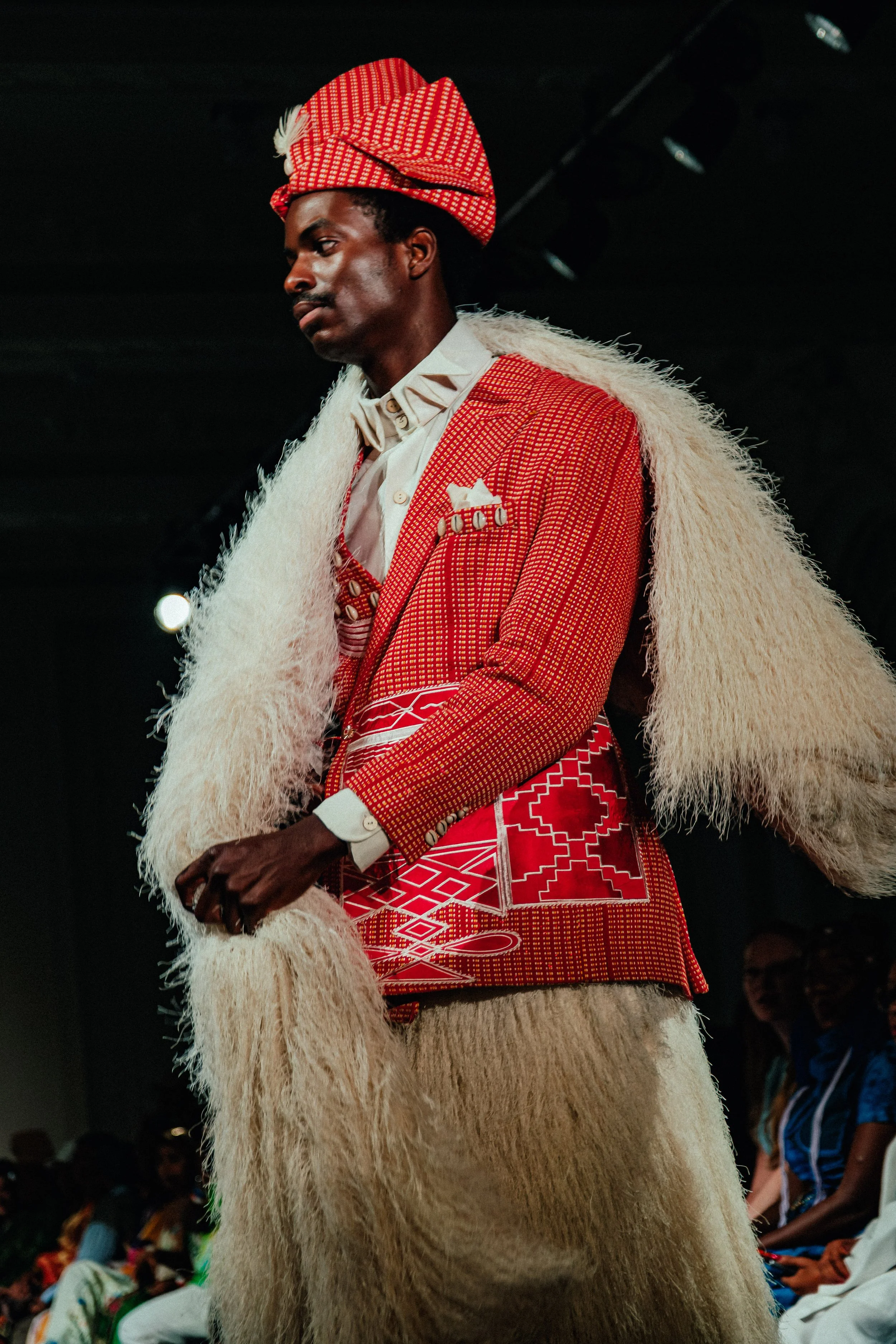
Dimeji Ilori
Nigerian talent Dimeji Ilori works with aso-oke handwoven in Kwara State and with upcycled deadstock – old garments hauled back from a flea market in Ilorin six hours from Lagos and remade under an ethos he calls ‘Afrowaste’. Aso-oke arrives already loaded with protocol: the occasions it belongs to, the people entitled to wear it, the meanings held in the weave. Cutting into it is a reading as much as a technique, the finished piece carrying a charge that no printed fabric could.
“Aso-oke is my heritage,” Ilori asserts. “My grandmother practised it, usually for special occasions, usually flamboyant, and we have been reworking it, weaving a version from bamboo-fibre rayon that comes out soft, silky and biodegradable, and making it up into polo shirts and skirts. Physics taught me to look for the fundamental laws that guide the universe, and I bring that to every piece: the meaning behind it, and the process that brings a garment to life in our 3D world.”
Bettydora Odhiambo turns Kenyan crochet into bold, feminine fashion under the name Atieno Studio, its motifs and palette drawn from the coast and its pieces made by a collective of women artisans in Nairobi. Crochet is domestic work, often taken for granted, but she treats it as craft, as heritage and as a livelihood.
“The women I work with in Nairobi are really proud to see the work shown in London,” Odhiambo enthuses. “Crochet is a skill they have carried for years, so watching something they made travel and appear in a new context means a lot, and it has not stopped while I am here. They are still crocheting back home, so Atieno Studio is growing in two places at once. I am learning and building connections in London, while the women who make the brand keep on creating.”
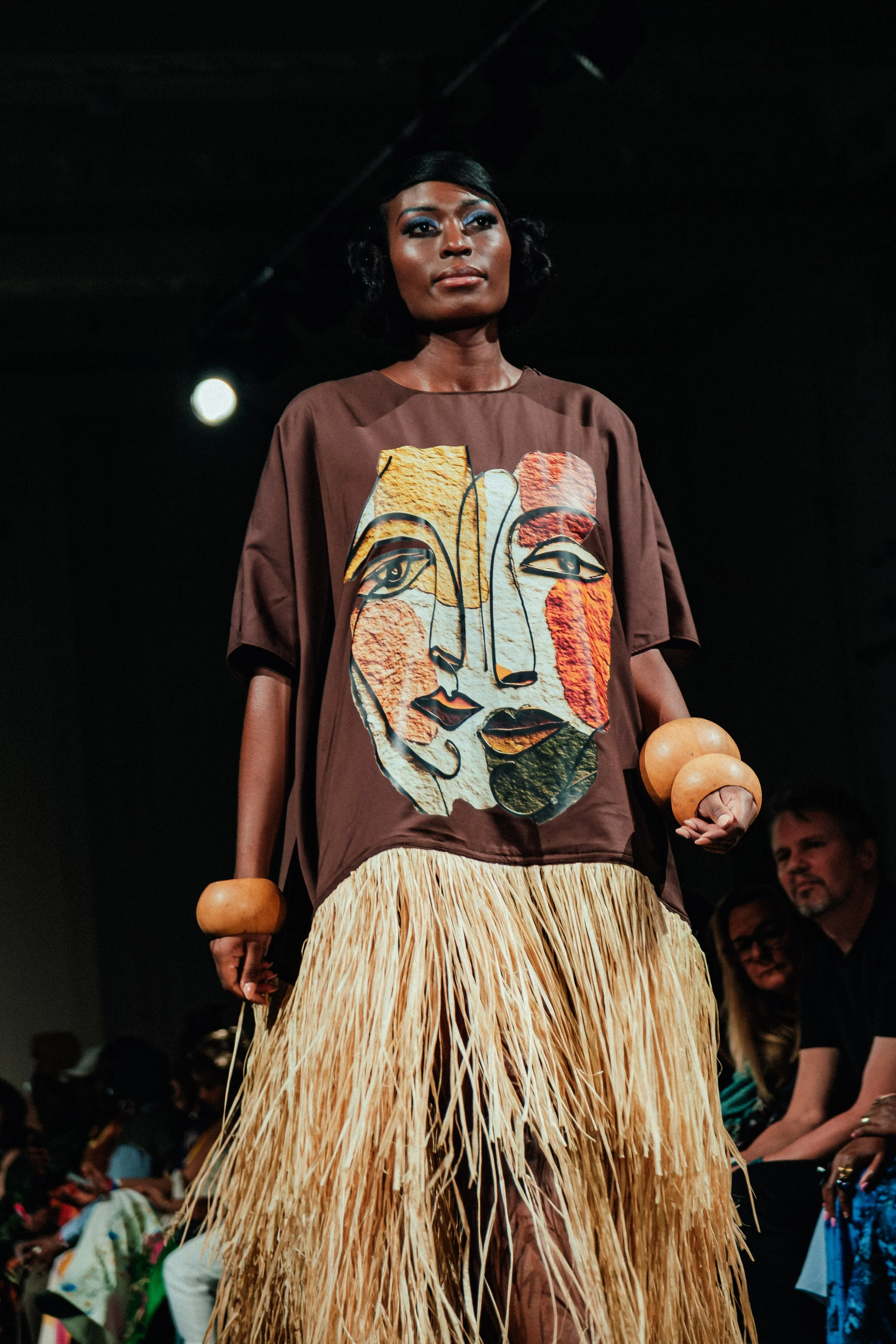
Joan Jade
Harare-based Chido Kaseke, who designs as PatCh, builds bags and accessories out of hessian. This coarse jute sacking has a humble status in Zimbabwe – a position that she uses as her starting point.
“Hessian carries an agricultural association but for me it carries much more,” Kaseke shares. “I am interested in taking a material that is often overlooked and placing it inside fashion as an object of beauty, craftsmanship and desire, showing that luxury can come from unexpected places. There is something powerful about bringing an unfamiliar material into a space where so many products start to look and feel the same. I want to see whether a London buyer keeps the agricultural reading, or whether the hessian takes on an entirely new meaning through fashion.”
“Craftsmanship has been passed down from our ancestors, which is why skills businesses in Africa thrive more as a community than as sole enterprises"
Joan Nantege
Joan Nantege works in raffia and coiled natural fibre. Her Kampala label, Joan Jade, fringes and knots it into kaftans, statement dresses and sculptural jewellery, the woven discs and tasselled collars all made by hand with local artisans. That work has travelled well past Uganda, to the Abryanz awards at home and a runway in Dubai. She trains younger designers too, and has written a dressmaking manual; for her, the making, the artisans and the teaching are one continuous process.
She shares: "Craftsmanship in the African setting has been passed down through one-on-one mentorship from our ancestors, which is why skills businesses in Africa thrive more as a community than as sole enterprises. We succeed more by working with the artisans in our communities and by training the upcoming generations to carry the skills on."
Narrative and Identity
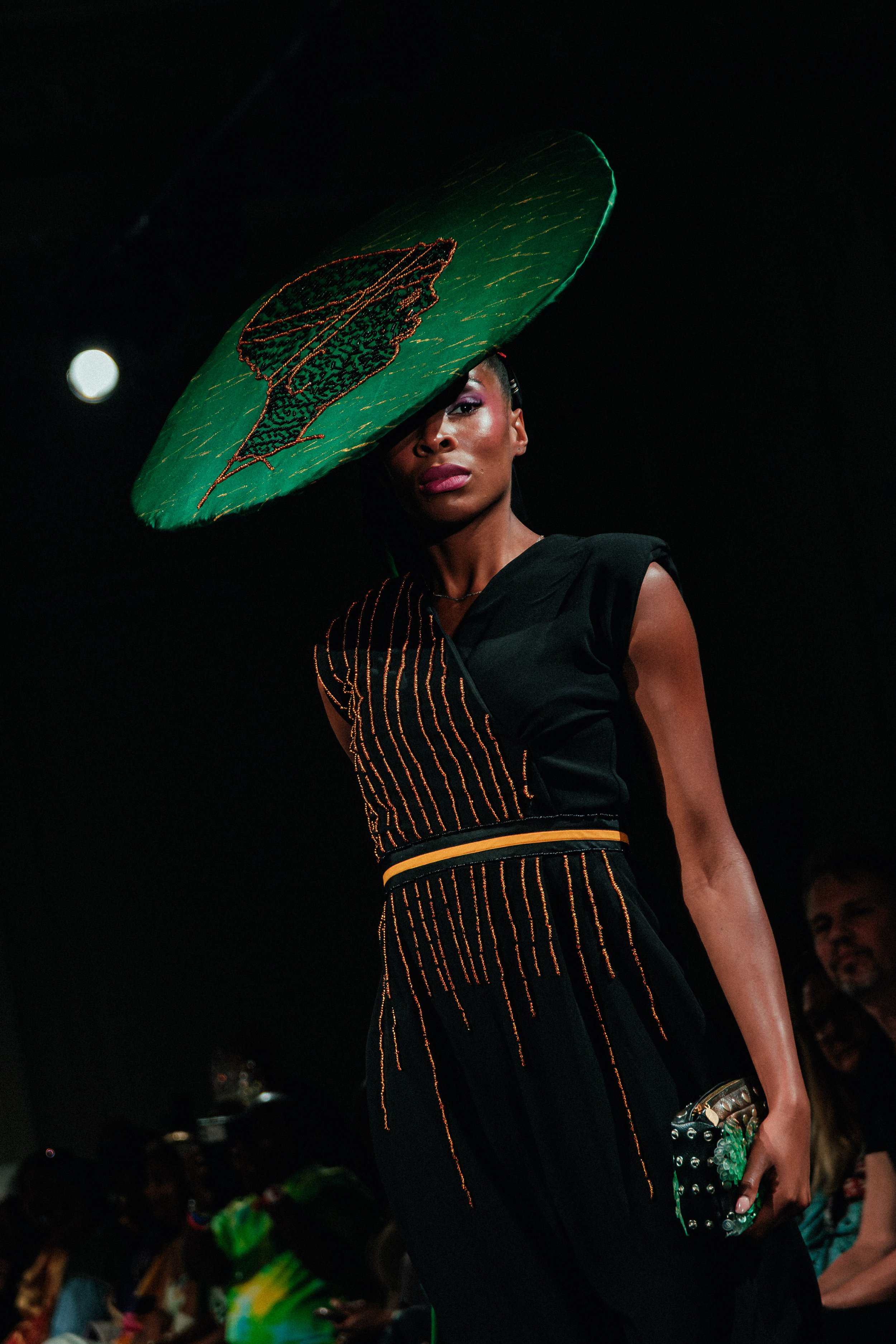
Matheo Studio
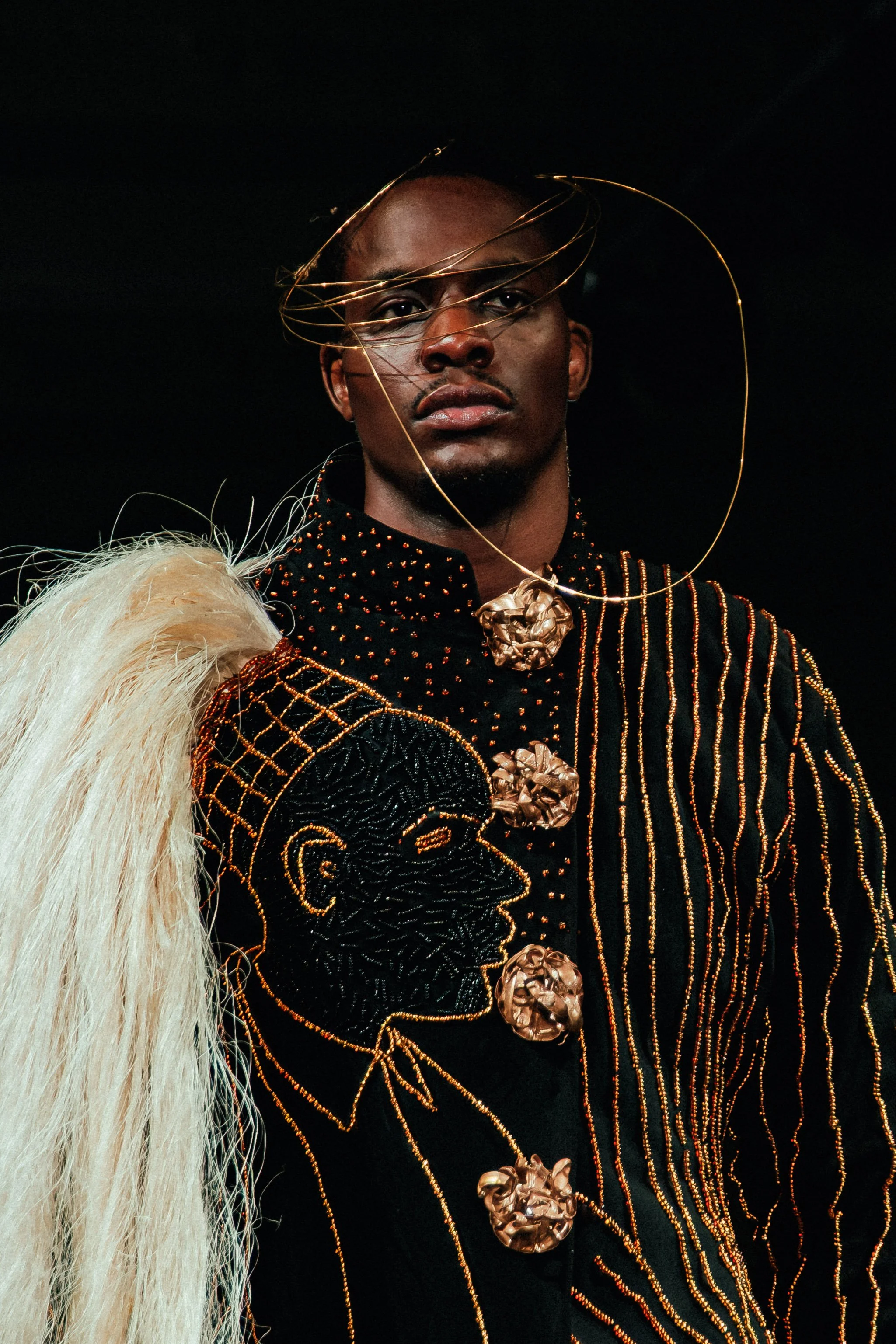
Matheo Studio
Maurice Niyigena came to fashion through costume. Matheo Studio, which he founded in Kigali in 2020, makes Afrofuturist work that leans hard on story; a collection called ‘Rebirth of Rwanda’ asks a single phrase to carry a great weight of national memory, which he trusts the clothes to hold and never spells out. Costume taught him that clothes are legible, that they speak for a person before the person does, and it shows in work built to be read.
“History cannot simply become an aesthetic,” Niyigena asserts. “I don’t want to take cultural symbols, put them on a garment and call that storytelling; there has to be meaning behind it. Rebirth is about transformation and resilience, the ability to imagine a different future. In a young industry you end up inventing everything around the clothes, so you become your own producer, marketer and educator, and I have tried to build Matheo Studio into more than a label: a place where the next generation has a clearer path than I did.”
“We don’t have to choose between being contemporary and being connected to where we’re from. We already live in both worlds"
Ropafadzo Mapira
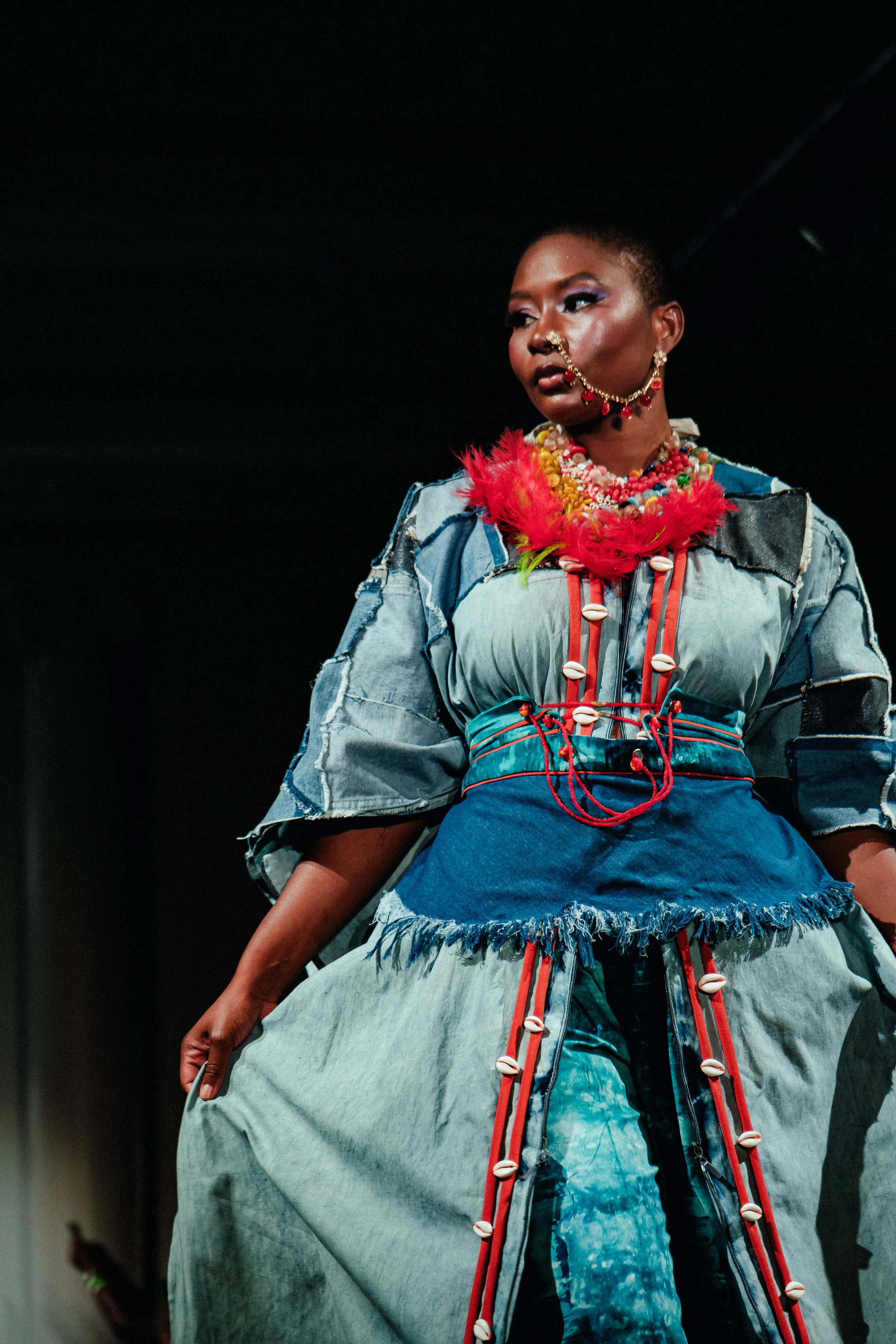
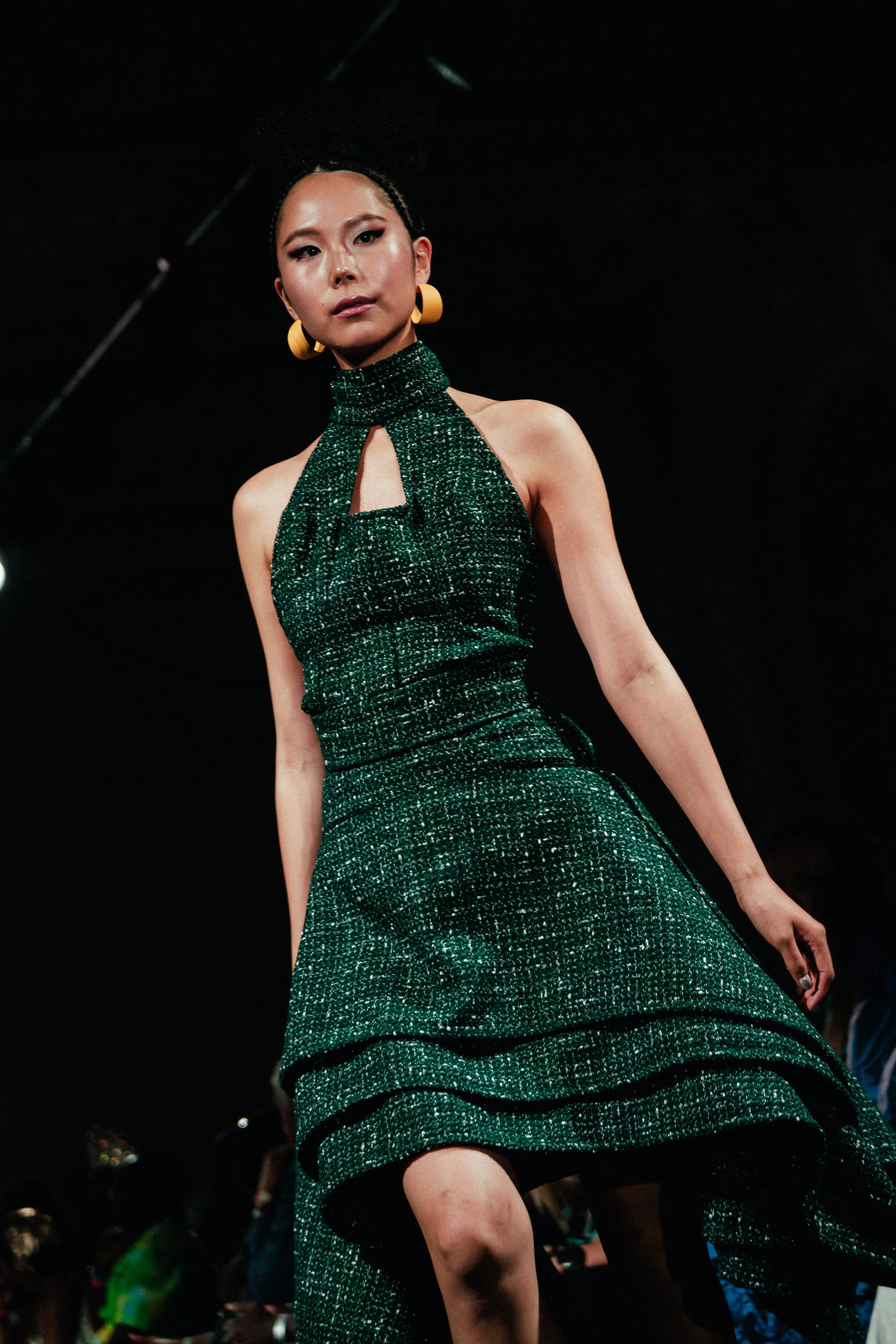
In Harare, Ropafadzo Mapira founded Soleil in 2023 by threading spirituality through her streetwear. The clothes are made from upcycled and locally sourced material, and the brand speaks to what it calls ‘conscious dream chasers’. Streetwear is a language that travels everywhere, risking flattening as it goes, which is exactly why Soleil leans on its local accent, and that accent is unmistakably Zimbabwean.
“I don’t sit down thinking, I need to make a spiritual garment,” Mapira says. “I let my faith shape the way I see the world, and that shapes the way I create, so spirituality can live in the intention behind a garment, in the story it carries, in the symbolism inside it. For one collection we reworked a blazer through patchwork into an abstract of Harare’s cityscape. The silhouette was familiar, but the story embedded in it belonged to Harare.” She adds: “We don’t have to choose between being contemporary and being connected to where we’re from. We already live in both worlds.”
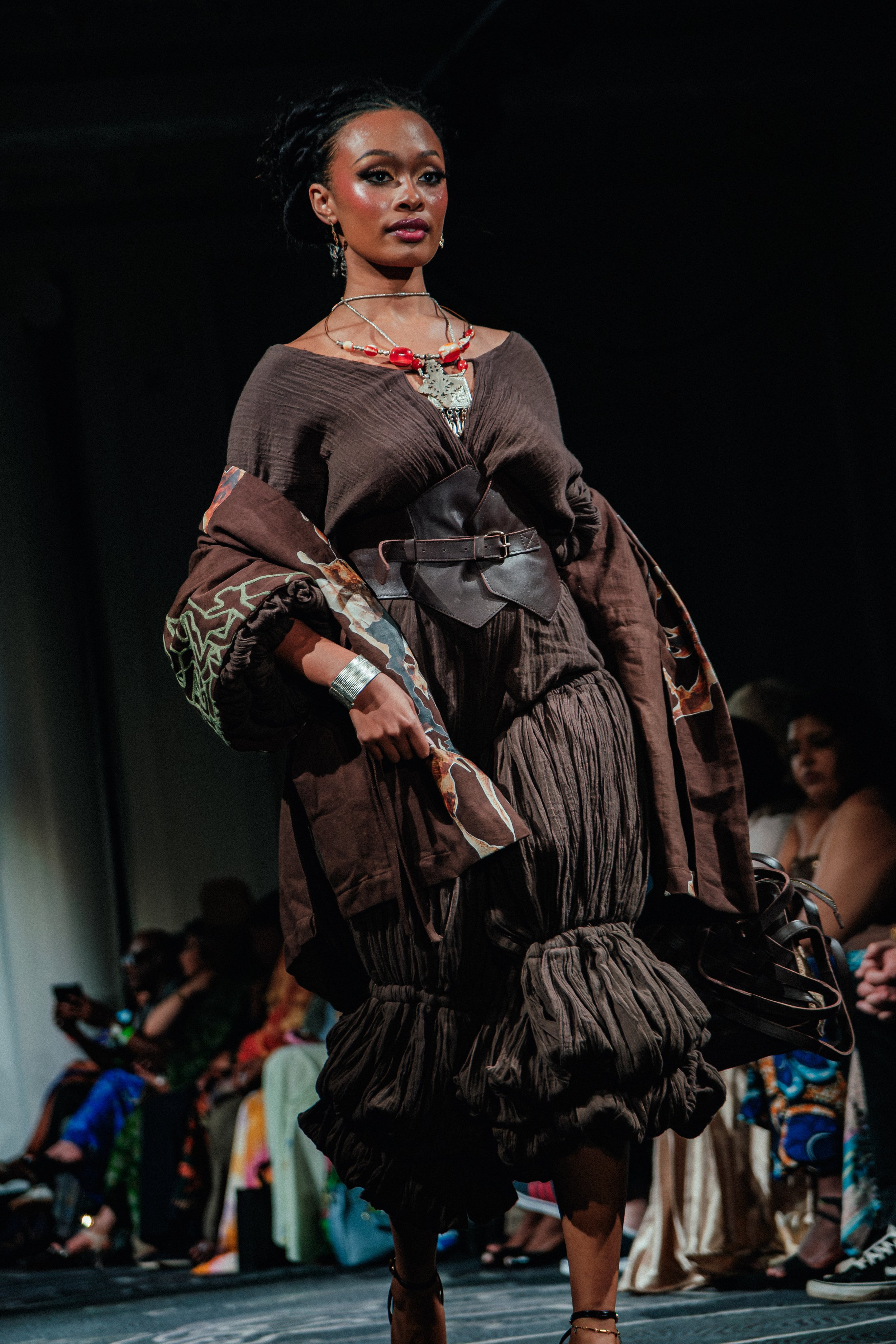
Xufan
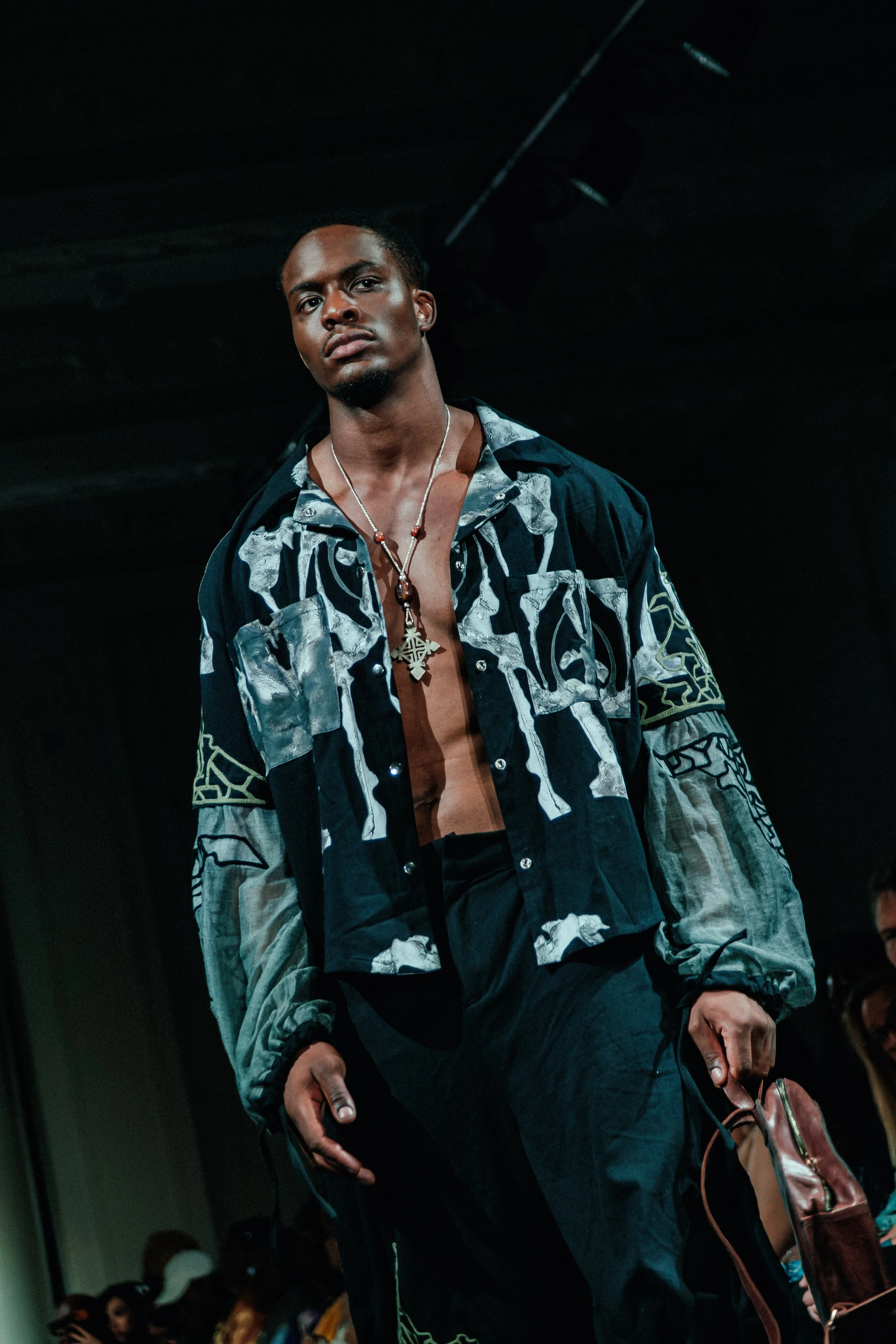
Xufan
Solome Kiflu of Ethiopian unisex label Xufan takes its name from the word for throne, and on the runway she gave the idea a turn nobody quite expects.
“For me the throne is not a destination, it is the journey itself,” Kiflu says. “My work gives the idea a different reading: each look stands for a different identity and a different journey, because we are all sitting on our own thrones. Seeing everyone’s work at AFWL reminded me how powerful it is to have such a diverse group creating together, and it made me think about staying true to my own identity and vision.”
Market and category
Republic of Africa
Republic of Africa
Money, money, money: the designers are refreshingly plain about it. They arrived at AFWL with businesses to grow and market positions to hold, a definition of success the British Council shares. As Ncube puts it, “Creative DNA cannot be measured only by the number of designers trained. The real test is what happens after: whether designers are building sustainable businesses, reaching markets and investment, and creating decent work across the fashion value chain.”
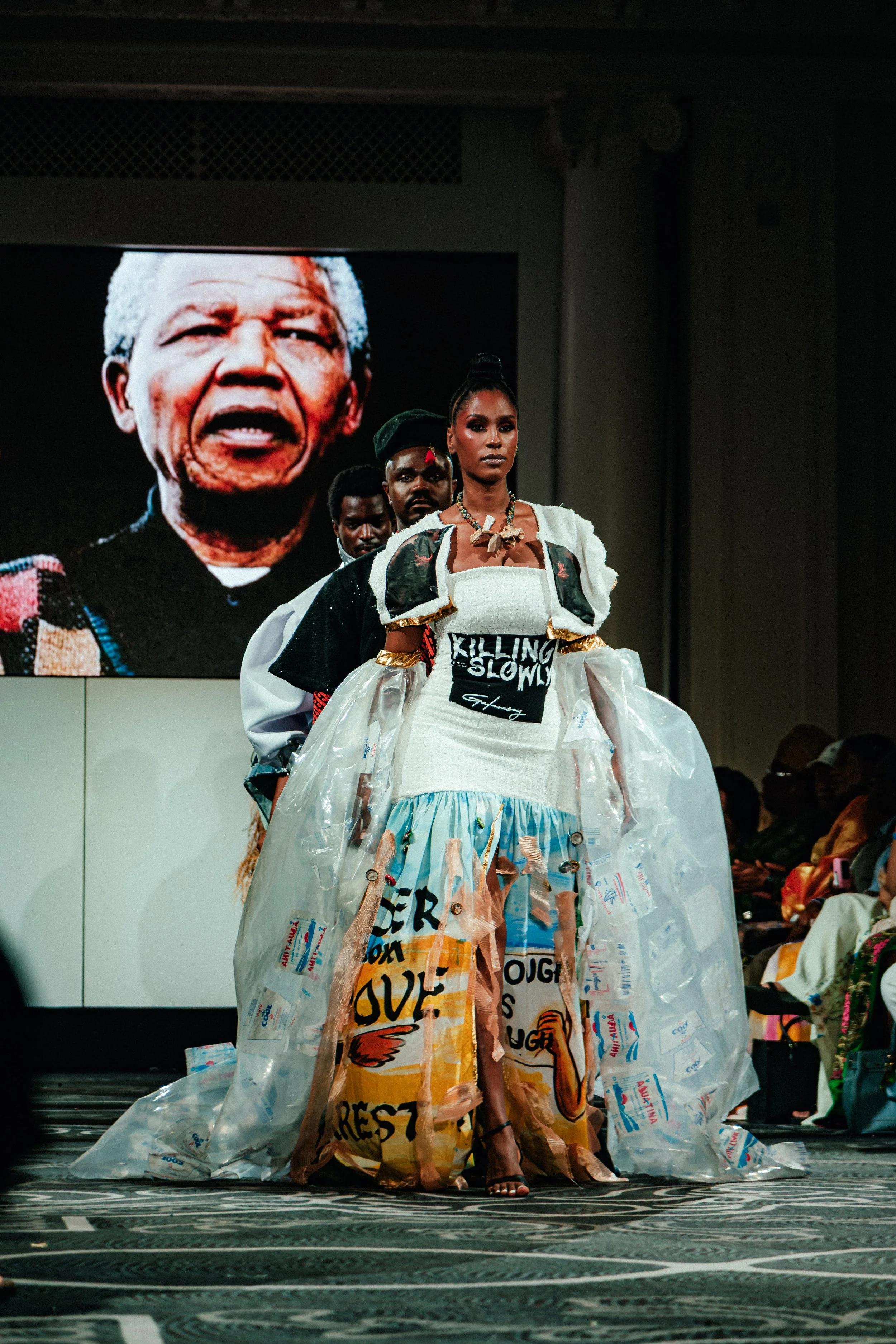
Awura Abena Agyeman’s Republic of Africa carries the loudest ambition of the group. Built on a decade of WEAR Ghana, it aims squarely at a global benchmark, with a stated mission to restore African self-belief through what the continent makes and sells.
“To be commercially successful globally, production and distribution at scale have to be resolved,” Agyeman states. “We recently made merchandise for The Continent, a South African newspaper that reaches readers in more than 48 African countries, and the whole challenge was getting the products to them cheaply. The African Continental Free Trade Agreement gives us hope that one day this will be tariff-free.”
Agyeman’s AFWL collection, ‘Remembering the Future’, turned the same drive toward an emergency at home. It opened on a protest against galamsey, the illegal mining that is poisoning Ghana’s rivers. The first look used fabric hand-painted by artists from the Spread Out Initiative, its sleeves were built from the plastic sachets Ghanaians drink their water from, and its cape carried an image of damaged lungs above the words ‘Killing Us Slowly – Galamsey’. From there the collection opened out into the continent’s gold, water and vegetation, a picture of what the land could still become.
Soleil
Ohana
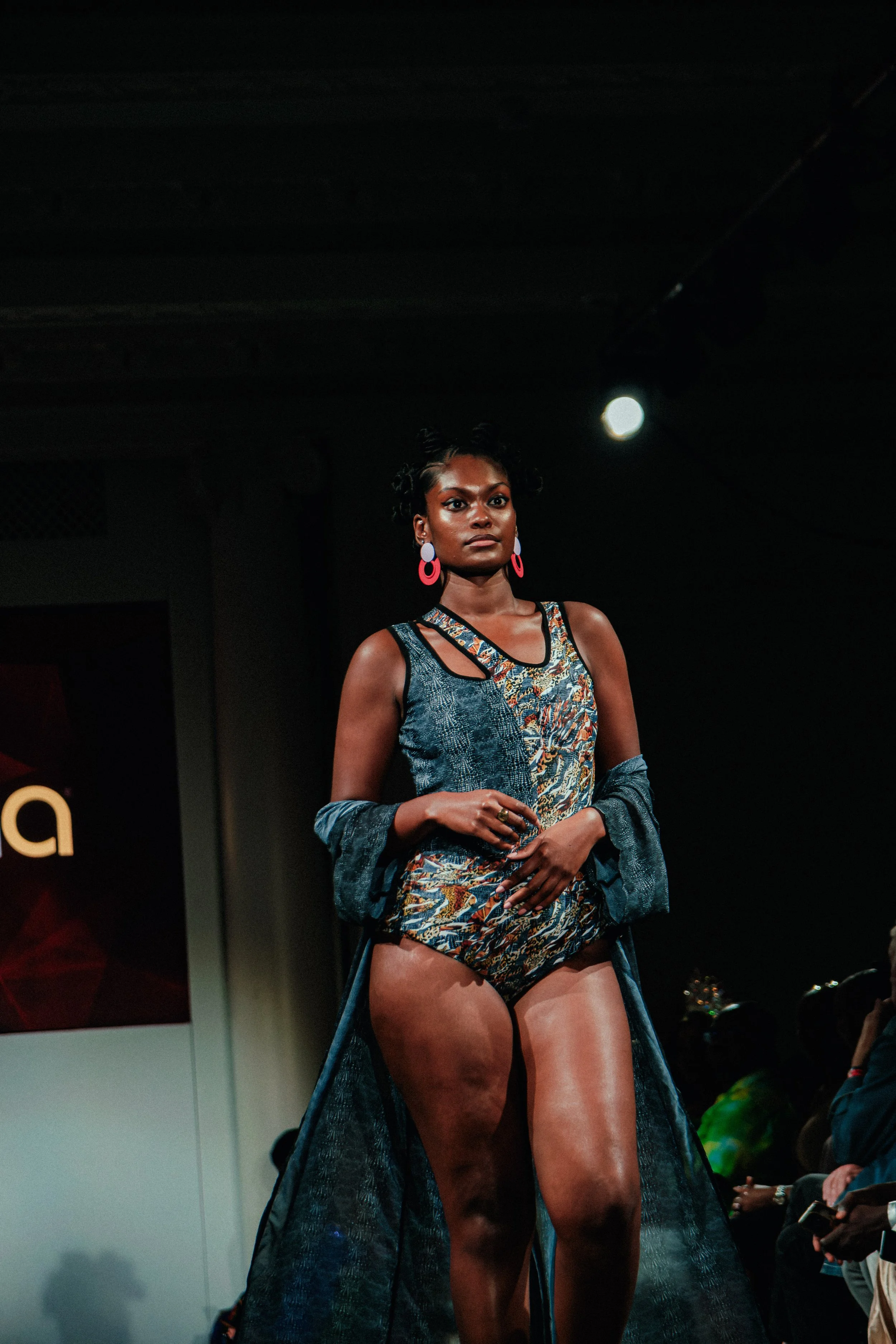
Ohana by Neema Nkatha Kinoti works a stretch of the market that African runways tend to neglect – swim and resortwear – and has grown into one of East Africa’s most closely watched lifestyle labels while doing it, tying its Safari collection to Kenya’s wildlife conservation.
“Swimwear is one of the least represented categories and yet the continent is surrounded by coastlines, lakes and a rich water culture,” Nkatha Kinoti points out. “I wanted Africans to see their heritage and their confidence in what they wear to the water. Our customer is far more diverse than people imagine. She is not defined by where she swims, but by wanting swimwear that holds both culture and individuality, whether bold or modest.”
It would be a mistake to cast a programme like this as a rescue. All of these 10 designers built their brands on their own, often in cities where the infrastructure London takes for granted is still being built or improvised. “Africa does not lack creative talent,” Ncube states. “The greater challenge is the ecosystem around that talent: the infrastructure, the patient capital, the supply chains, the manufacturing capacity, the distribution and the policy support that a creative business needs to survive.”
Which returns us to Tsigie and his lesson. The runway is the wax: the applause at 8 Northumberland Avenue, the photographs, the 20 minutes in which a year of work is spent. The gold takes longer to see but on closer inspection it looks like a weaver outside Addis with steadier orders; a studio in Accra training an apprentice; a label in Nairobi finding customers that the Eurocentric industry didn’t believe was there. Ncube measures the same distance in years. “Five years after taking part in Creative DNA, success should mean that a designer is running a resilient enterprise, employing others and contributing to an interconnected African fashion industry with real global relationships.” That is the gold; it accrues slowly, and is often out of shot. And one Saturday afternoon in London it glimmers under the wax, and it is glorious.
Read NATAAL’s feature on the British Council x Studio Smithfield Creative DNA Ethiopia residency here.
Words Reeme Idris
Photography Rasha Kotaiche
Visit Africa Fashion Week London
Visit British Council Creative DNA
Visit British Council East Africa Arts Instagram
Atieno Studio
Dimeji Ilori
Joan Jade
Mastewal Alemu
Matheo Studio
Ohana
PatCh
Republic of Africa
Soleil
Xufan
Published on 08/09/2026