
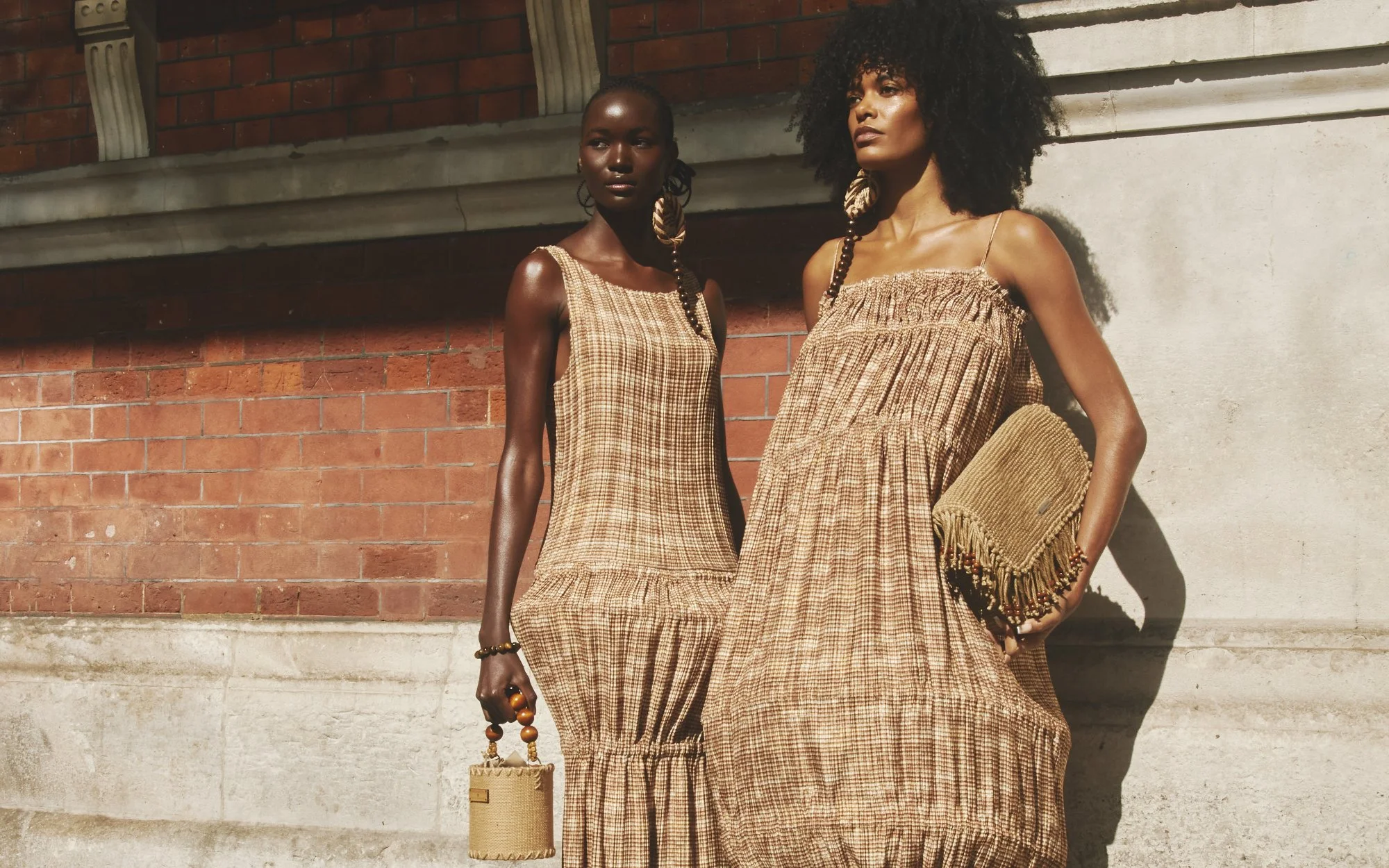
The designers and partners of this year’s Creative DNA x Studio Smithfield residency reflect on the value of peer-to-peer exchange
“In Addis Ababa, I was struck by Haile Selassie’s military uniforms at the National Palace; coming to London, I’m reminded of them in the regalia worn by Buckingham Palace’s royal guards,” says PatCH founder Chido Kaseke. The Zimbabwean designer is reflecting on her time spent in both cities for the Creative DNA X Studio Smithfield programme and how it’s influencing her work. “I’m using a traditional finger weaving technique to connect these two styles of ceremonial dress in my first leather handbag.” This handsomely made piece – its body reminiscent of a dress coat, its strap nodding to an aiguillette and its opening akin to the visor of a military cap – is the physical culmination of her journey through this year-long fashion incubator, yet far from its only outcome. “I also hope it communicates the honour I feel in being selected for the residency and representing my home country,” she adds.
Kaseke is among the latest graduates of the British Council’s flagship creative economies training project, which to date has supported well over 200 Sub-Saharan African fashion designers to reach their potential. This year it raised the bar, partnering with Paul Smith’s Foundation, the esteemed designer’s initiative nurturing early career creatives in London, and Projekt, a social enterprise turning disused buildings into affordable workspaces and venues for creative enterprise across London.
The 2026 edition brings together Chido Kaseke from Zimbabwe, Bettydora Odhiambo from Kenya and Solome Asfaw from Ethiopia (all of whom have been through regional versions of Creative DNA) with London-based designers Renata Brenha, Karoline Vitto and Yaku Stapleton. An initial two-week immersion into Addis Ababa’s fashion ecosystem this spring was followed by a six-week summer residency at Studio Smithfield in Farringdon. This prime London location was afforded to Paul Smith’s Foundation by Projekt and houses its Fashion Residency. Vitto and Stapleton are graduates from its inaugural 18-month iteration and Brenha is part of its second. The three visiting designers joined her here in their own studio spaces.
“We have the talent and this programme helps us build the systems around it to go to market"
Bettydora Odhiambo
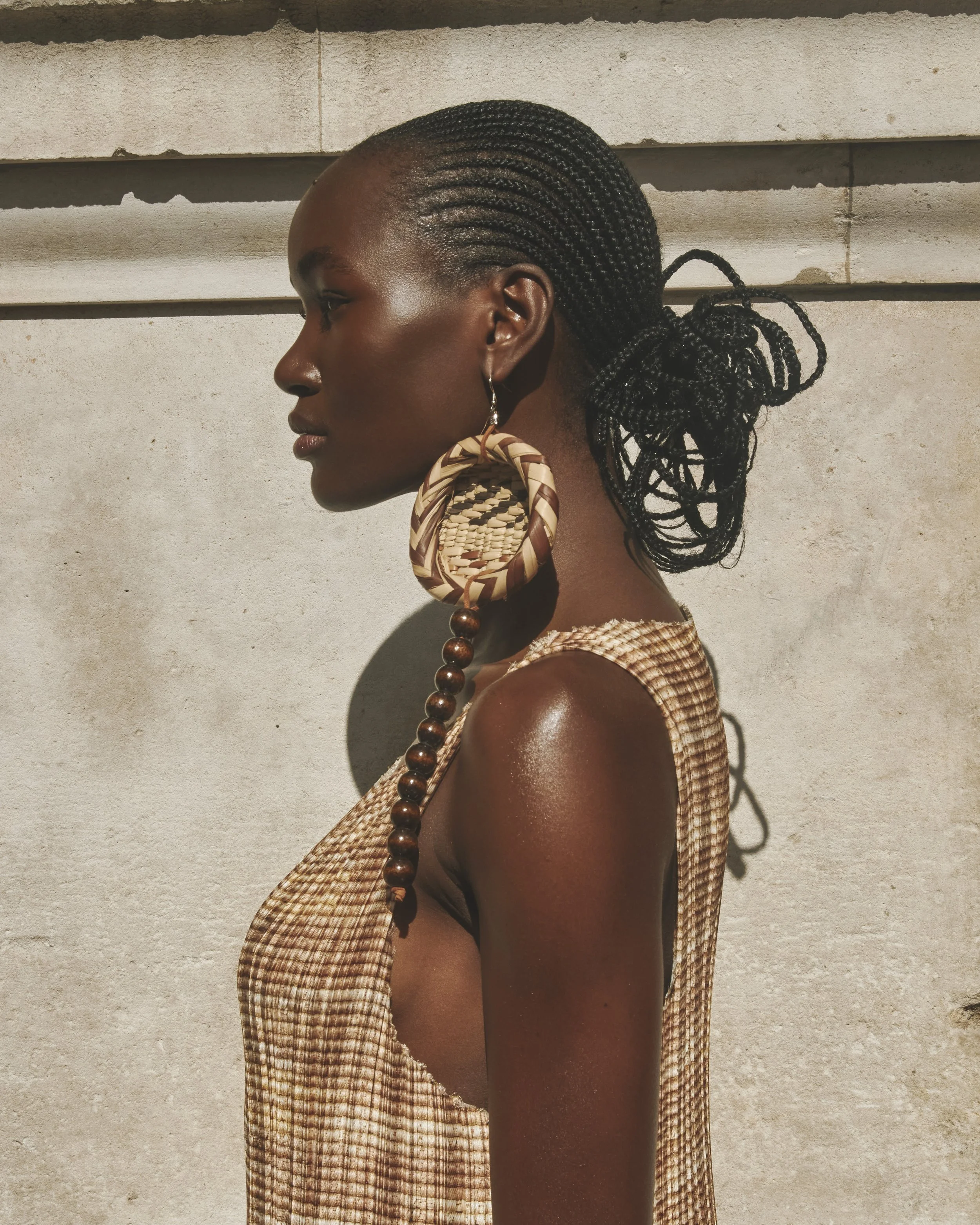
Antonette wears Renata Brenha dress, PatCH earring.
“Fashion is a global business and at Paul Smith’s Foundation we’re interested in developing partnerships that celebrate its ability to unify and communicate with people all over the world,” says Paul Smith’s Foundation Director Martha Mosse. “As a creative, it’s easy to become entrenched in a narrow frame of reference, and through this partnership with the British Council and Projekt we were excited to offer our existing network the chance to visit somewhere they haven’t been before, learn new processes and ways of making, as well as business techniques.”
During their time at Studio Smithfield, the visiting designers undertook a bespoke syllabus including expert mentoring on financial planning, pricing and selling, visits to Central Saint Martins and Condé Nast, and tours of manufacturing facilities and key retailers. They also enjoyed workshops in weaving and natural dying, participated in Africa Fashion Week London and were fully immersed in the city’s fashion and arts calendar. The residency rounded out with an open studio where all six designers presented final pieces to industry media and professionals.
“At its core, the programme is about connecting emerging African designers with London’s creative community and providing them with space, mentorship and networking opportunities to develop their practices while keeping culture, craft and individual perspective at the centre,” comments Nick Hartwright, founder and CEO of Projekt. “In addition, all of the designers stayed with us at Green Rooms – our arts-led social enterprise hotel in Wood Green. Me and my team got to spend time with the designers out of hours and show them our city, which allowed them to engage with London beyond the traditional fashion and design circuit.”
Solome Asfaw, whose Afrofuturistic brand Xufan explores the emotions embedded in fashion, was most struck by London’s permissive atmosphere. “It’s very accepting here. You can do whatever you want with fashion and find people who love it,” she says. “That was eye-opening for me because back home in Addis Ababa I can feel like I have to fit in. But here you can celebrate your identity.” This reflection speaks to her final look, a boned corset and pair of elongated pleated trousers inspired by the parallels between formal statues in London and Addis Ababa. “Statues represent the memory of yourself and embracing a new era – by wearing these pieces you can be your true self.”
“It’s a matter of encouraging everyone to be confident in who they are so that we can instil these skills for future generations"
Chido Kaseke
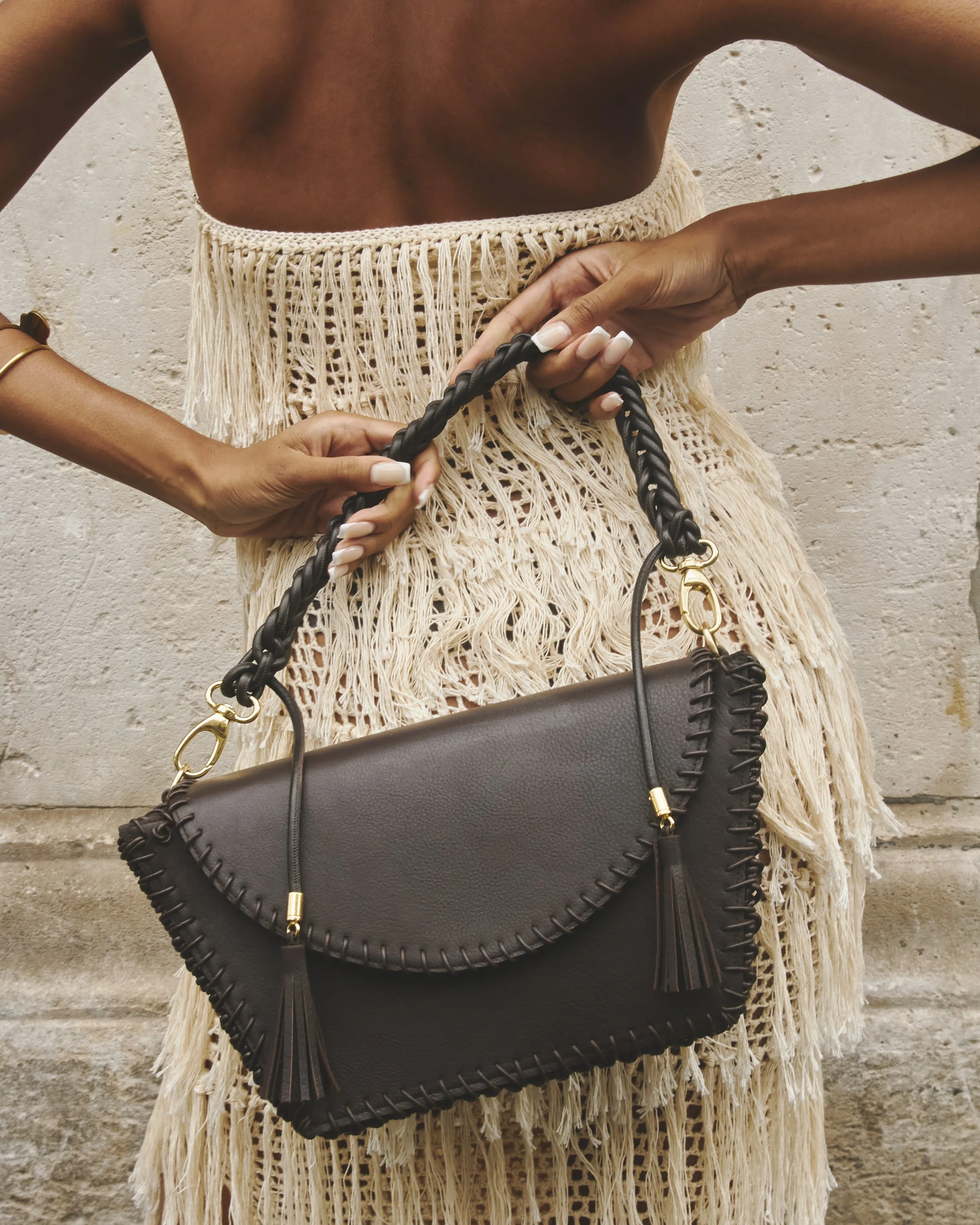
Vilia wears Atieno Studio dress, PatCH bag.
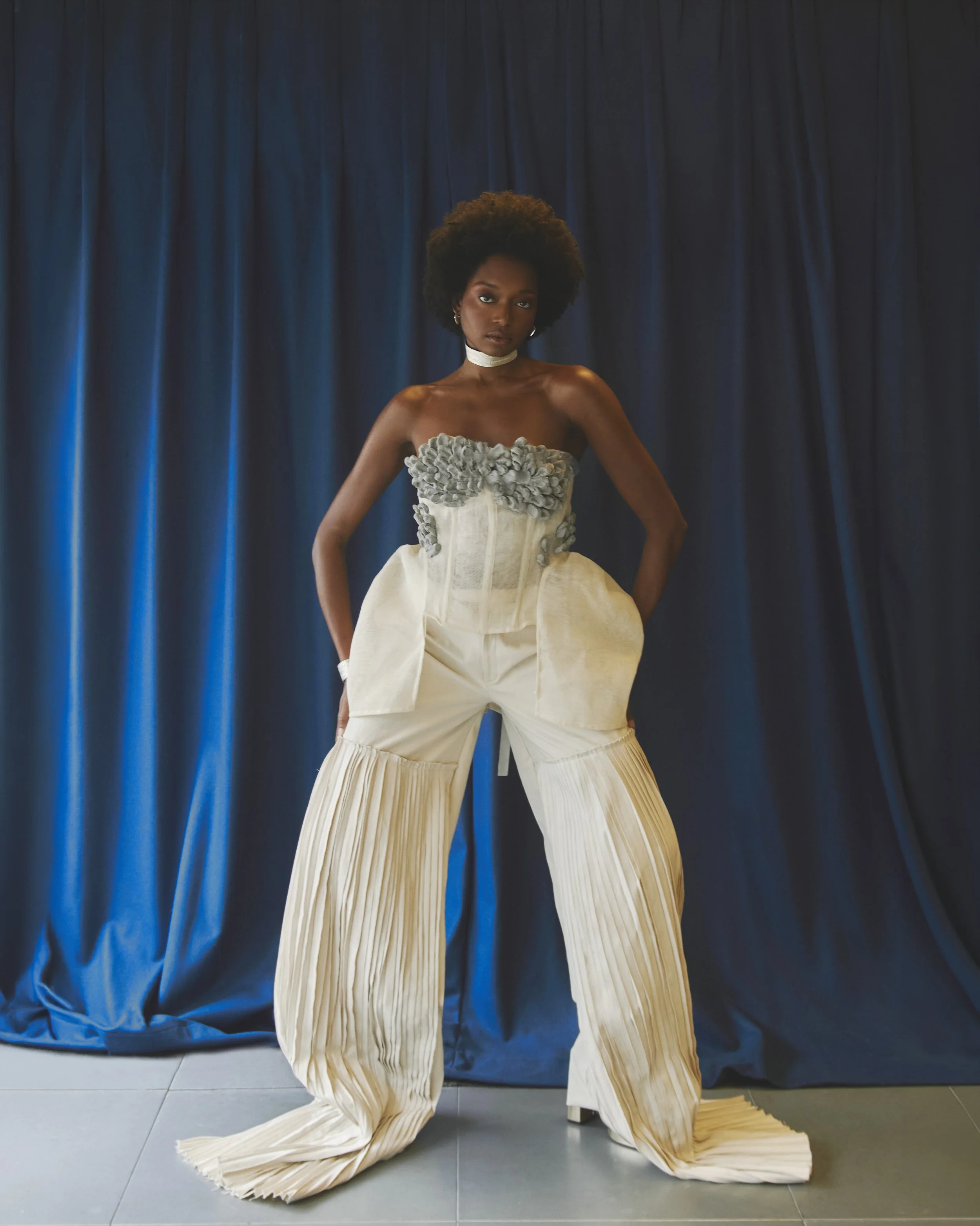
Raihanna wears Xufan corset and trousers, stylist’s own accessories and shoes.
As Bettydora Odhiambo returns to Nairobi, she feels ready to elevate her crochet brand Atieno Studio. “We were chosen for this programme because we have the talent. What they’ve helped us with is building the systems around it to go to market,” she reflects. “Being in London has taught me how brands work here and that’s inspired me to push further with my crochet. I work with artisans so if I scale, they scale too.” Her final piece joins the dots between Ethiopia’s embroidered kemis dress and her research into English formal attire at the V&A Museum. A sexy red ensemble sees Odhiambo experiment with beading and is topped off with a wide-brimmed hat worthy of Ascot.
Her intentions chime with those of Chido Kaseke. While being schooled in moving from wholesale to direct-to-consumer models has given her brand strategy new verve, her biggest hope is that what she’s learnt can benefit the weavers she works with in Harare. “We need to make better use of our indigenous knowledge and crafts. It’s a matter of encouraging everyone to be confident in who they are and be proud of what they know, so that we can instil these skills for future generations.”
Karoline Vitto welcomed the visiting designers into her studio to meet with her team. “It was so valuable to have the time to better get to know each other’s practices and share our experiences,” she says. “It’s those small conversations with people outside of your immediate circle that feel so refreshing.” The Brazilian-born designer has been recognised for her size-inclusive womenswear at both Rio Fashion Week and London Fashion Week. And her final piece, a slinky dress that plays with gravity through a series of rings and drop fastenings, is her ode to Ethiopia’s intergenerational jazz scene.
“It’s that spirit of culture that we’ve tried to offer in London as we share and learn together"
Renata Brenha
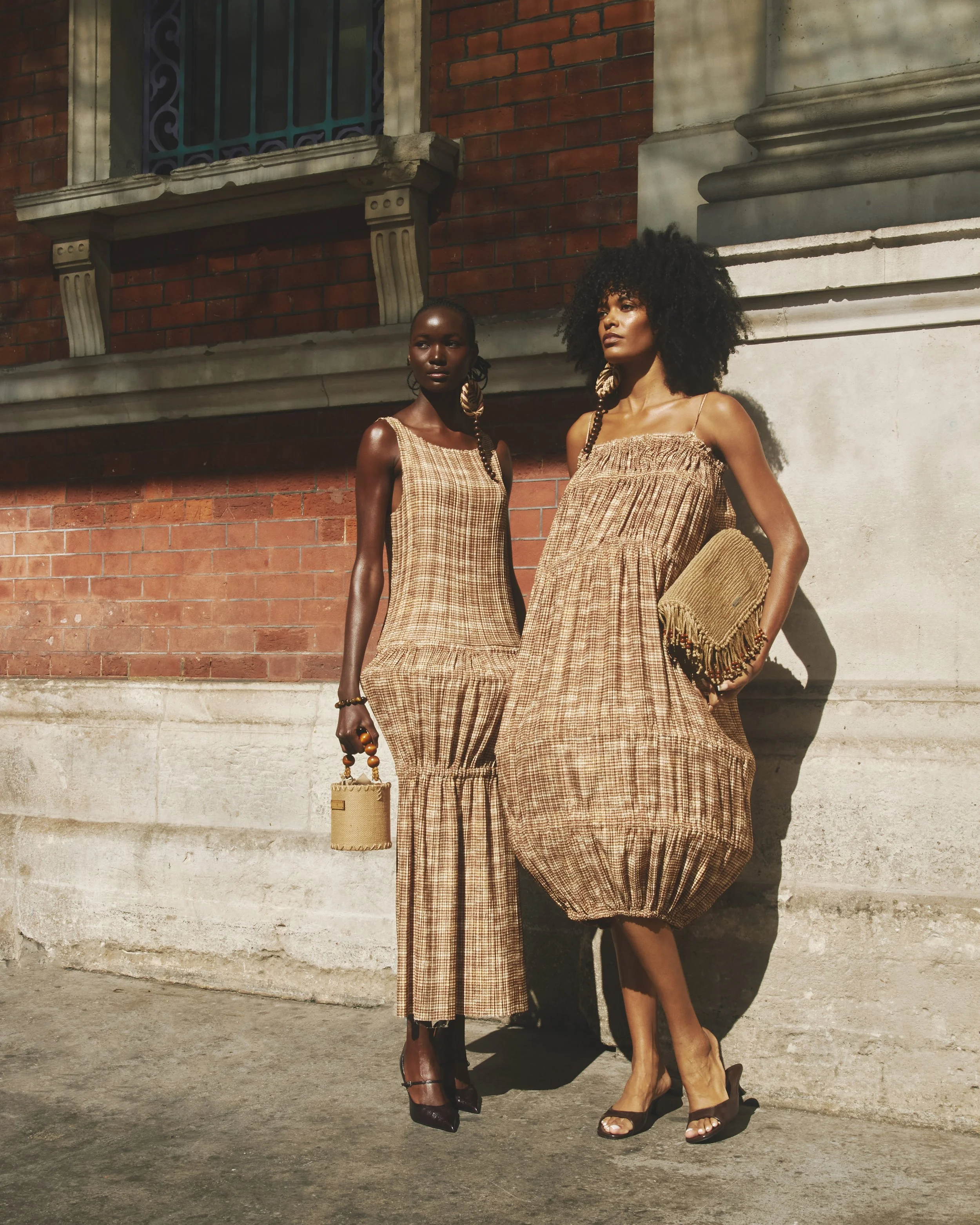
Antonette and Vilia wear Renata Brenha dresses, PatCH bags, stylist’s own shoes.
Similar sessions with Yaku Stapleton were equally fruitful. “It was really beneficial to show rather than tell – the discussions we were able to have in the studio, over meals and at meet-ups, gave us the opportunity to reflect on how we got to where we are, offer some guidance to those earlier along in their journeys, and helped us better understand what we want to do next,” the British-Caribbean designer says. His brand Yaku fuses streetwear influences with storytelling steeped in fantasy and folklore and its immersive installations are a highlight of London Fashion Week. At the open studio, he presented a ferocious wooden chess table referencing iconography from Selassie’s Holy Trinity Church and the Lion of Judah.
“The peer-to-peer aspect of this programme can’t be understated,” adds Mosse of the budding kinships that have formed between the designers. She notes that exchanges can come in many forms, from insider tips on the best haberdasheries to intimate cultural dialogues. “Those relationships will far outlast any official support system you receive, and it’s that access and insight that makes the experience.”
Renata Brenha sees parallels between the collaborative spirit of Creative DNA and Africa’s wider fashion industry. While London may offer more infrastructure and opportunities, it can often lack collective practice. “In Ethiopia everyone knows everyone and it feels like a big family. It’s that spirit of culture that we’ve tried to offer the guest designers in London as we share and learn together,” she says. “I also admire how Betty, Chido and Xufan have such a personal approach to their crafts. It’s inspired me to go back to the essence of my practice – being resourceful with materials that already exist and transforming them through hand techniques.” The Brazilian-born designer reinterpreted Ethiopia’s Mesob baskets into two pleated and printed dresses featuring contrasting proportions.
As the designers complete the programme, armed with new knowledge, friends and purpose, they too can now enrich their own communities, and in turn feed into the next chapter of Creative DNA x Studio Smithfield. While Mosse notes that no training scheme is a “silver bullet” to instant success, this first collaborative edition has opened a two-way door. It’s that path to equilibrium that most excites the British Council’s Regional Arts Director for Sub-Saharan Africa, Farai Ncube. “The programme has created opportunities for learning while connecting designers across Africa and the UK, leading to peer learning, shared market intelligence and new commercial opportunities,” she says. “As we now consider the future, we’re exploring how to strengthen what comes after training: pathways to finance, production, buyers, digital and physical markets, intellectual-property support and more equitable Africa/UK industry partnerships…. Ultimately, It’s about working toward a shared vision, showing up for each other and pushing forward a system within which we are all equal.”
Partners
Paul Smith’s Foundation
Studio Smithfield Instagram
Projekt
Projekt Instagram
British Council Creative DNA
British Council East Africa Arts Instagram
NATAAL Instagram
Words Helen Jennings
Photography Philipp Raheem
Styling Eniafe Momodu
Hair Ana Veronica
Make-up Charli Avery using Skintcare and Armani Beauty
Models Raihanna and Vilia at Another Mother Management, Antonette at PRM Agency
Make-up assistance Gemma Howell
Location Studio Smithfield
Designers
Atieno Studio
Karoline Vitto
PatCh
Renata Brenha
Xufan
Yaku
Published on 30/09/2026